Navigating India’s LPG Market: Subsidies, Geopolitics, and Investment Horizons
India’s energy sector continues to present a complex interplay of consumer welfare, geopolitical volatility, and strategic supply management. As global energy markets grapple with the repercussions of the ongoing West Asia crisis, domestic liquefied petroleum gas (LPG) prices in India witnessed an adjustment on June 7, 2026, with a ₹29 per cylinder increase. Yet, official statements from the Union government firmly assert that Indian households still benefit from substantially lower LPG prices compared to many neighboring nations and even advanced economies, a critical point for investors assessing market dynamics and government intervention.
This latest price revision brings the effective cost for a 14.2 kg LPG cylinder for general consumers in Delhi to ₹942. However, the Ministry of Petroleum and Natural Gas highlighted the stark reality of the underlying economics, noting that the actual cost to supply this cylinder has escalated to over ₹1,600. This significant disparity underscores the depth of government subsidy and market intervention, directly influencing the financial health of the national oil companies and the broader energy supply chain in India.
The PM Ujjwala Yojana: A Cornerstone of Energy Welfare
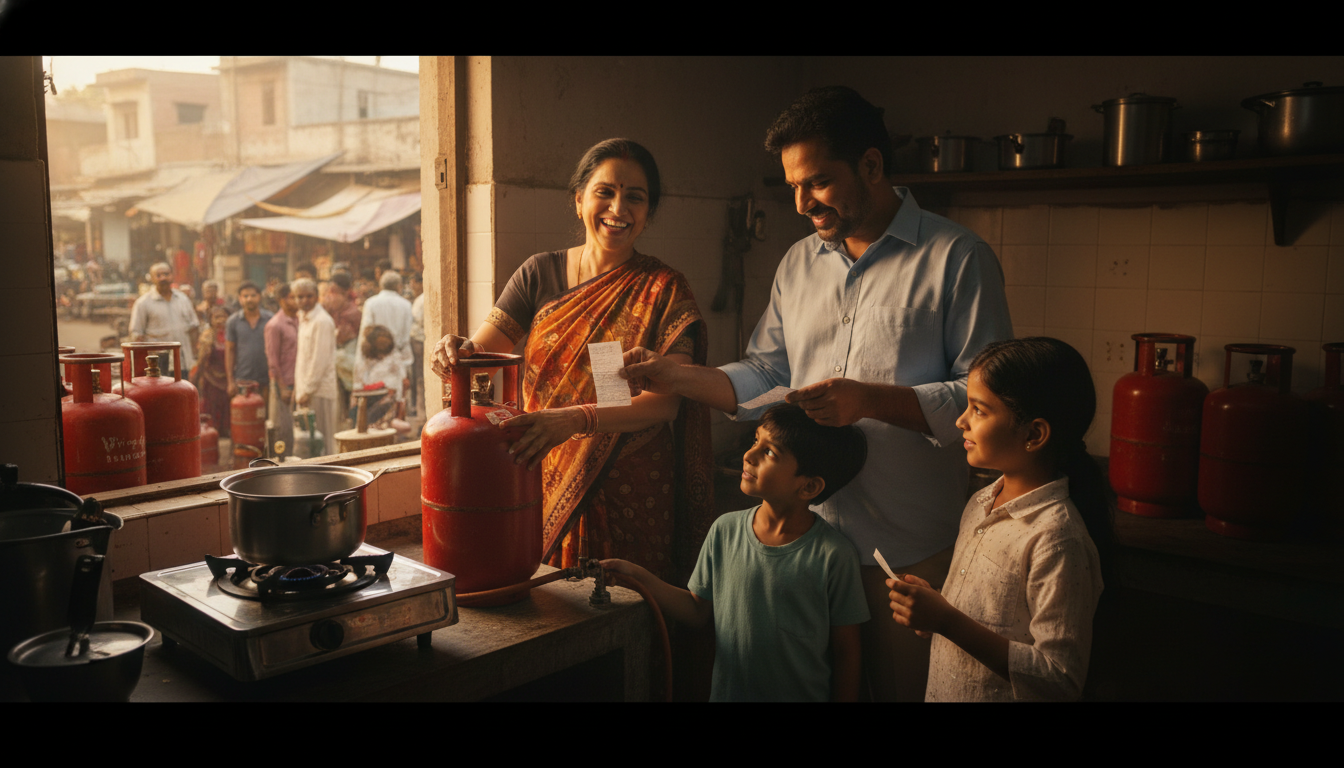
Central to India’s energy affordability strategy is the Pradhan Mantri Ujjwala Yojana (PMUY), a flagship scheme designed to provide clean cooking fuel to economically disadvantaged households. Under this initiative, a PMUY beneficiary now pays an effective price of ₹642 for a 14.2 kg cylinder. This favorable rate is further augmented by a direct benefit transfer (DBT) of ₹300 per cylinder, applicable for the first four refills annually, which aligns with the average consumption patterns of a typical Ujjwala household. Even for non-PMUY households, the government’s absorbed under-recovery amounts to approximately ₹700 per cylinder, insulating consumers from the true market-linked cost. With 10.58 crore connections operating under the PM Ujjwala scheme, the scale of this fiscal commitment is immense, impacting national budgets and the profitability of public sector undertakings in the energy space.
Global Price Disparities and India’s Position
For international investors, understanding India’s unique pricing structure within a global context is paramount. A comparative analysis reveals the significant protection afforded to Indian consumers. While an Indian Ujjwala consumer pays ₹642 per cylinder, a consumer in Pakistan faces a price of ₹1,046. The gap widens further when looking at developed economies: Sri Lankan consumers pay ₹1,241, Americans ₹1,755, Australians ₹1,765, and Canadians a substantial ₹2,411 for a comparable 14.2 kg LPG cylinder. This data clearly illustrates the Indian government’s determined efforts to shield its populace from the full brunt of international energy price volatility, a policy that naturally comes with significant financial outlay and potential market distortions.
Geopolitical Headwinds and Supply Chain Vulnerability
India’s heavy reliance on LPG imports, which account for about 60 percent of its total demand, introduces inherent vulnerabilities, particularly in the face of ongoing geopolitical tensions. A critical choke point in this supply chain is the Strait of Hormuz, through which approximately 90 percent of India’s LPG imports transit. The recent conflict between the US and Iran has predictably led to disruptions in this vital maritime artery, sending ripples across global energy markets.
The impact of these disruptions is tangible. The Saudi Contract Price (SCP) benchmark, a key indicator for Asian LPG imports, has surged by roughly 46 percent since its pre-crisis levels in February. This sharp increase in acquisition costs highlights the significant financial burden on Indian importers and, by extension, on the government, which is absorbing an under-recovery of approximately ₹700 on each domestic cylinder to maintain subsidized prices.
Ensuring Uninterrupted Supply: Strategic Measures
Recognizing these geopolitical and supply chain risks, the Indian government has proactively implemented a series of strategic measures to bolster its energy security and ensure an uninterrupted supply of LPG. A cornerstone of this strategy has been the substantial enhancement of domestic production capabilities. India has successfully ramped up its internal LPG output by more than 60 percent, escalating from approximately 32 TMT (thousand metric tons) to around 52 TMT. This increased indigenous production is a vital step towards reducing import dependency and mitigating external shocks.
Furthermore, significant attention has been directed towards diversifying India’s sources of LPG imports. This includes forging new supply partnerships with nations that do not necessitate transit through the volatile Strait of Hormuz, such as the United States, Canada, and Algeria. This strategic diversification is crucial for building resilience into India’s energy matrix. Critically, during periods of heightened supply constraint, available LPG volumes have been meticulously directed towards households and priority users, including hospitals and educational institutions, underscoring the government’s commitment to maintaining social stability and essential services.
Commercial vs. Domestic: The Price Bifurcation
The stark contrast between commercial and domestic LPG pricing in India further illuminates the extent of market intervention. In Delhi, a 19 kg commercial LPG cylinder, typically utilized by establishments like hotels and restaurants, retails at ₹3,113.50. This equates to approximately ₹164 per kilogram, a price that reflects the cumulative impact of five increases during the West Asia crisis. In contrast, the domestic household consumer pays about ₹66 per kilogram following the latest revision. This significant price bifurcation not only highlights the government’s subsidy burden but also presents a complex environment for businesses and investors operating within India’s energy ecosystem, where market forces are often modulated by policy decisions aimed at consumer protection.
For investors keenly observing the Indian energy landscape, these dynamics offer crucial insights. The government’s unwavering commitment to domestic price stability, even at substantial fiscal cost, signals a predictable, albeit regulated, consumer market. Simultaneously, the aggressive pursuit of supply diversification and enhanced domestic production demonstrates a long-term strategy for energy security. Navigating this environment requires a deep understanding of policy direction alongside traditional market fundamentals, as India continues its journey towards balancing economic growth with social welfare in a volatile global energy paradigm.


