The global energy landscape is perpetually shaped by geopolitical currents, and few chokepoints illustrate this more acutely than the Strait of Hormuz. In recent days, a palpable shift in sentiment has emerged among shipowners regarding transit through this vital waterway, offering a glimmer of hope for a more consistent flow of crude, natural gas, and other critical goods. This cautious optimism, however, remains tempered by the inherent risks and the complex geopolitical tightrope commercial shipping must navigate.
Observations indicate an uptick in vessel traffic departing Hormuz this week, coinciding with enhanced informational support provided by U.S. forces to commercial ships. Multiple shipping executives, speaking confidentially given the sensitive nature of their operations, confirm receiving guidance from American military assets on optimal navigation strategies. While a U.S. Central Command spokesperson reiterated that military forces are not conducting escorts, the provision of advice underscores an active role in regional maritime security.
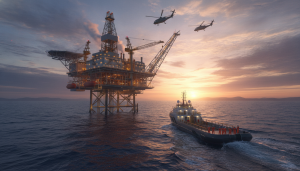
Yet, the reality on the water underscores the persistent dangers. One individual recounted a recent transit where their convoy was approached by suspected Iranian fast boats, only for the situation to be diffused by the sudden appearance of helicopters, allowing their vessel to proceed safely. This incident starkly illustrates the lingering threats. Chevron Corp. CEO Mike Wirth recently highlighted the gravity of the situation, noting that some vessels transiting Hormuz have indeed come under attack. Further complicating matters, the U.S. government recently reaffirmed its stance that any deals with Iran to ensure safe passage through the Strait of Hormuz, even those not involving tolls, remain prohibited.
A Shifting Tide in Commercial Transit?
Intriguingly, market participants report that some of the vessels now traversing Hormuz belong to companies that had previously suspended operations in the strait since the conflict intensified. This suggests a potential expansion beyond the small cadre of shipping entities operating under specific bilateral government arrangements or those willing to absorb elevated risks. Furthermore, intelligence indicates vessels are not only exiting but also entering the Persian Gulf, signaling a broader, albeit still tentative, resumption of activity.
Should this increase in transits prove sustainable, the implications for global energy markets and broader supply chains are significant. A more consistent flow through Hormuz would enhance energy security, potentially stabilizing crude oil and liquefied natural gas (LNG) prices, and reducing freight costs across various commodities. Regional players, including the UAE’s state oil company, have continued to dispatch vessels, and Qatar maintains quiet LNG exports to key international buyers, showcasing the region’s imperative to maintain trade routes.
One notable aspect of these recent movements involves vessels navigating with their satellite transponders switched off, or only reactivating them post-transit. This practice complicates conventional vessel-tracking methods, suggesting that the true volume of maritime traffic through Hormuz might be understated by publicly available data. Such measures highlight the ongoing security concerns that prompt carriers to adopt discreet operational protocols. Moreover, ship-tracking analytics reveal that at least a quarter of the non-Iranian vessels effectively stranded in Hormuz since the conflict erupted have successfully made their departure, alleviating a significant backlog.
Geopolitical Uncertainty and Investor Caution
The broader geopolitical backdrop remains a critical determinant for the Strait of Hormuz’s future. The White House has continued to send mixed signals regarding the prospects of a new agreement with Iran, fostering an environment of uncertainty. A comprehensive diplomatic resolution could potentially pave the way for a more robust and sustained reopening of shipping lanes through the strait. However, shipowners privately express a cautious optimism, hoping for a definitive agreement while acknowledging that full details are paramount. Many remain hesitant to commit vessels to *enter* Hormuz until clearer indications of lasting peace emerge, even if the ability to *exit* has improved.
This corporate prudence is echoed by major industry players. TotalEnergies Chief Executive Officer Patrick Pouyanne recently stated that his company would require clear evidence of enduring peace before resuming vessel traffic into the Persian Gulf. This sentiment underscores the significant risk premium currently attached to operating in the region and the need for long-term stability rather than transient assurances.
The Financial Stakes: A Boon for Tanker Operators?
For investors focused on the shipping sector, a sustained normalization of transit through Hormuz presents a complex but potentially lucrative scenario. The current environment has already pushed oil tanker earnings to levels described as the highest in a generation, reflecting heightened demand for tonnage, increased insurance costs, and the rerouting of vessels to avoid risk areas. A full and stable reopening could initially inject further momentum into these historically high rates.
Gerasimos Kalogiratos, CEO of Capital Tankers Corp., articulated this dynamic, predicting an initial “frenzy phase” upon a complete reopening of Hormuz. He further suggested that tanker costs could remain elevated in the longer term as global oil inventories seek to replenish barrels lost or inaccessible due to ongoing disruptions. This perspective suggests that while immediate spikes might occur, the underlying demand for crude and product transportation could sustain strong freight markets, offering a compelling outlook for investors in the tanker segment. However, any significant de-escalation of tensions could also introduce downward pressure on freight rates if risk premiums dissipate and vessel supply efficiencies improve. Investors must weigh the potential for a stable, high-demand environment against the ever-present geopolitical volatility that defines this critical energy corridor.