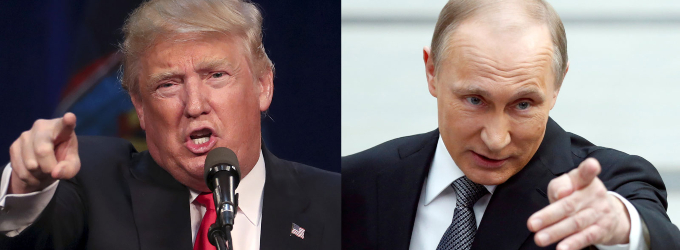
The global oil market is once again navigating a complex web of geopolitical statements and energy policy realities, with India at the epicenter of the latest controversy. Following claims by President Donald Trump regarding a commitment from Prime Minister Narendra Modi to cease Russian oil imports, India’s Ministry of External Affairs swiftly denied any such conversation. This diplomatic spat underscores the delicate balance major economies maintain between strategic alliances and domestic energy security, particularly when facing volatile global crude prices. For investors, understanding India’s unwavering stance on economically viable energy sourcing, juxtaposed with shifting international pressures, is critical for assessing future market dynamics and identifying potential investment opportunities.
Geopolitical Crosscurrents and India’s Energy Imperative
The recent exchange highlights the persistent tension between geopolitical objectives and the practical necessities of national energy supply. India’s foreign ministry spokesman, Randhir Jaiswal, stated unequivocally that he was unaware of any conversation between PM Modi and President Trump on the matter of halting Russian oil purchases. This direct contradiction of President Trump’s public remarks, which suggested a pledge from India, has sent ripples through diplomatic and energy circles. India has consistently prioritized its consumer interests, maintaining that it will continue to acquire Russian crude if it remains economically advantageous. This policy has been a cornerstone of India’s energy strategy since the escalation of conflict in Ukraine in 2022, allowing the nation to secure significant discounts compared to other suppliers.
Indeed, India rapidly emerged as a key importer of Russian oil post-2022, with these purchases still constituting approximately one-third of its total imports last month, despite ongoing pressures from the United States to curb these flows. The surprise expressed by several state-owned Indian refiner executives, who indicated they had received no official briefing on any such import halt, further emphasizes the disconnect between the U.S. assertion and India’s operational reality. While some executives anticipate a short-term dip in Russian oil imports, the broader message from New Delhi remains clear: energy policy will be dictated by economic viability and the needs of its vast consumer base. Russia’s Deputy Prime Minister Alexander Novak echoed this sentiment, expressing confidence in India’s continued purchases, citing their economic rationale.
Current Market Volatility: A Price Response to Supply Uncertainty
The ambiguity surrounding India’s oil import policy, combined with broader market anxieties, has contributed to a noticeable pullback in crude prices. As of today, Brent Crude is trading at $90.38, reflecting a significant daily decline of 9.07%, with prices ranging from $86.08 to $98.97. Similarly, WTI Crude has seen a sharp drop to $82.59, down 9.41% within a daily range of $78.97 to $90.34. This immediate market reaction underscores how sensitive crude prices are to perceived shifts in global supply and demand balances, even if based on unconfirmed diplomatic exchanges. Looking at the broader trend, Brent crude has seen a substantial correction, falling from $112.78 on March 30 to its current level of $90.38 on April 17, representing a nearly 20% decline in just over two weeks. Gasoline prices have followed suit, currently at $2.93, down 5.18% for the day. These figures suggest that markets are pricing in a combination of potential demand concerns and a re-evaluation of supply constraints. India’s role as a major energy consumer means any perceived change in its sourcing strategy can have an outsized impact on global equilibrium, reinforcing current bearish sentiment.
Investor Focus: Pricing the Future and OPEC+’s Pivotal Role
Investors are understandably scrutinizing these developments, with common questions surfacing about the trajectory of crude prices. We’ve noted a significant interest in what the price of oil per barrel will be by the end of 2026, and how current geopolitical events might shape that outlook. India’s continued commitment to purchasing discounted Russian oil, despite U.S. pressure, provides a crucial demand floor for Russian crude, indirectly influencing global supply dynamics. This makes the upcoming OPEC+ Joint Ministerial Monitoring Committee (JMMC) Meeting on April 19, followed by the full OPEC+ Ministerial Meeting on April 20, particularly relevant. These gatherings are critical for setting production quotas and will undoubtedly factor in the latest geopolitical developments and market volatility. Many investors are keenly asking about OPEC+’s current production quotas and how these might be adjusted to stabilize or influence prices in the wake of such supply-side ambiguities.
The decisions made by OPEC+ members will be a key determinant for the latter half of 2026, especially as India’s energy demand continues its upward trajectory. Furthermore, upcoming data releases, such as the API Weekly Crude Inventory on April 21 and 28, the EIA Weekly Petroleum Status Report on April 22 and 29, and the Baker Hughes Rig Count on April 24 and May 1, will provide more granular insights into supply and demand fundamentals. These events, occurring within the next two weeks, will offer concrete data points against which to evaluate the efficacy of current production strategies and project future price movements, directly informing investor predictions for the year-end oil price.
Strategic Implications for Global Energy Markets
India’s firm stance on maintaining its energy sourcing flexibility has profound strategic implications beyond immediate price movements. It highlights the growing multi-polarity in global energy markets, where major consuming nations are increasingly asserting their sovereign interests over external pressures. This approach not only ensures energy security for India but also complicates efforts by Western nations to isolate Russia economically. As India continues to deepen its energy ties with the U.S. while simultaneously pursuing economically advantageous deals with Russia, it exemplifies a pragmatic, multi-vector foreign policy. This strategy allows India to leverage competition among suppliers to secure the best terms for its rapidly expanding economy.
For investment portfolios, this dynamic suggests continued volatility but also potential for strategic plays in companies positioned to navigate these complex trade environments. Entities involved in Indian refining, or those facilitating alternative trade routes and financial mechanisms, may see sustained activity. The long-term trajectory of US-India trade relations, which have recently seen efforts to repair strains and accelerate negotiations for a deal potentially by November, will also play a role. However, India’s energy decisions signal that economic pragmatism will likely continue to trump political demands, ensuring a diversified and competitive global oil market for the foreseeable future. Investors should remain vigilant, tracking both diplomatic signals and concrete trade flows to anticipate shifts in the global energy landscape.