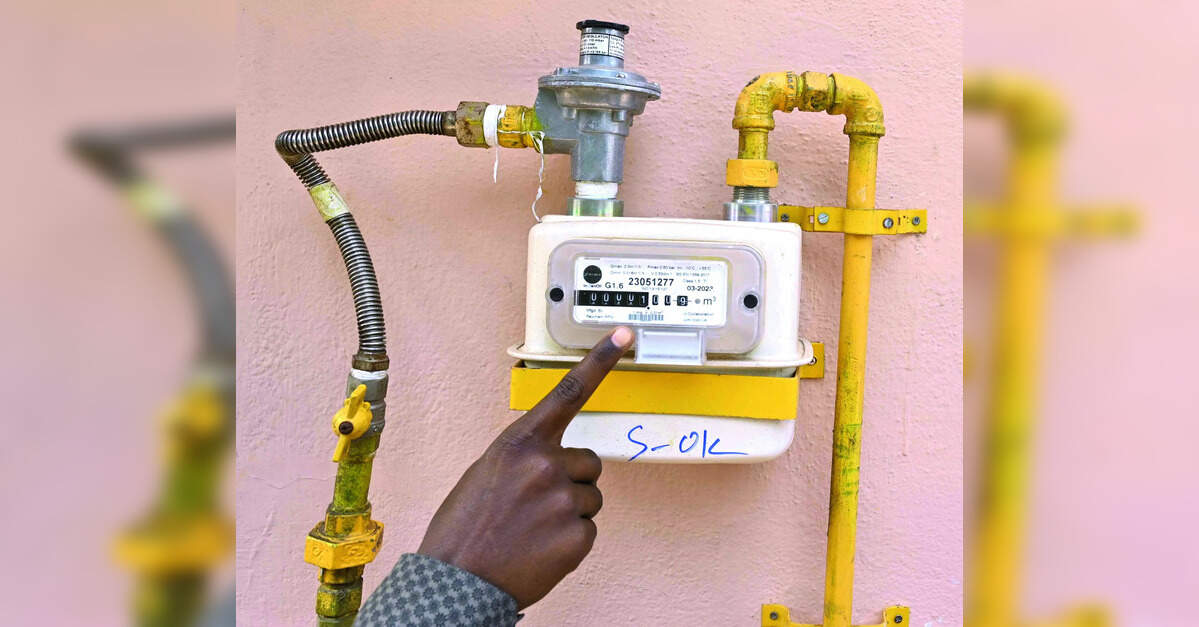
India’s ambitious drive to expand piped natural gas (PNG) access faces a critical hurdle: a significant portion of its existing infrastructure remains dormant. With nearly four out of ten households equipped with PNG meters currently lacking gas supply, the Petroleum and Natural Gas Regulatory Board (PNGRB) has issued a sharp directive to city gas distributors. This isn’t merely a logistical challenge; it represents a substantial untapped demand pool and a crucial test for the efficiency of energy infrastructure investment in one of the world’s fastest-growing energy markets. For investors eyeing the long-term prospects of natural gas in Asia, understanding the nuances of this activation challenge is paramount.
The Dormant Demand: A Glitch in India’s Gas Expansion
The numbers are stark: out of 16.5 million domestic PNG connections in India, a staggering 6.2 million are inactive. These households have meters installed but no gas flowing, representing 40% of the total connected base. This widespread inactivity primarily stems from a lack of last-mile connectivity, a critical failing given the government’s push to transition consumers from liquefied petroleum gas (LPG) cylinders to the more convenient and often more economical PNG. This infrastructure gap highlights a deeper issue in how connections were initially rolled out, often driven by aggressive licensing targets that seemingly prioritized headline connection numbers over actual service delivery. While the Indian energy market is vibrant, with Brent Crude trading today at $92.99, down 0.27%, and WTI at $89.51, down 0.18% — a slight daily dip following a notable 7% decline in Brent over the past 14 days from $101.16 to $94.09 — the efficiency of domestic energy distribution remains a key differentiator for attracting sustained investment. The ability to effectively monetize existing infrastructure by activating these dormant connections could significantly alter the demand landscape for natural gas within the subcontinent, providing a more stable and less volatile revenue stream than the global crude market.
Activating the Base: A Clear Path to Growth for City Gas Operators
The PNGRB’s recent directive is a clear signal: city gas distributors like Indraprastha Gas, GAIL Gas, Mahanagar Gas, and BPCL must urgently bridge the last-mile gap. This regulatory push is complemented by incentives, including free gas worth ₹500 for households and security deposit waivers for commercial customers, designed to encourage activation. For investors, this scenario presents a unique opportunity. Instead of the costly and time-consuming process of acquiring entirely new customers and laying new trunk lines, these companies can focus on activating an already “connected” base. This strategy offers a more capital-efficient pathway to boosting gas sales and improving capacity utilization. Many of our readers are keenly focused on market direction, often asking “Is WTI going up or down?” or “What do you predict the price of oil per barrel will be by end of 2026?” While these questions often center on crude, the success of India’s PNG activation directly impacts future natural gas demand. A successful rollout would solidify India’s position as a growing gas consumer, potentially boosting demand for LNG imports and underpinning the growth of domestic gas distribution companies, offering a compelling diversification play for energy portfolios beyond just crude price speculation. The focus on activating existing connections rather than merely adding new ones speaks to a maturing market approach, signaling a shift from quantity to quality in infrastructure development.
Forward Outlook: Bridging Targets and Tapping Future Demand
The challenge of activating 6.2 million dormant PNG connections is not merely about past missteps; it’s about the future trajectory of India’s energy mix. By December 2025, city gas companies had connected only 16.2 million households, falling significantly short of the ambitious 38.4 million target set by PNGRB. This gap underscores the monumental task ahead. Looking forward, investors should closely monitor upcoming energy reports for broader market context. While the EIA Weekly Petroleum Status Report on April 29th and API Weekly Crude Inventory on April 28th will provide immediate insights into crude stocks and refining activity, the EIA Short-Term Energy Outlook scheduled for May 2nd will be particularly pertinent for natural gas investors. This outlook will offer crucial forecasts on global natural gas supply, demand, and prices, allowing us to contextualize India’s domestic efforts within a broader international framework. Any upward revisions to global LNG demand, potentially driven by successful activation programs in large markets like India, could signal a significant shift for gas producers and infrastructure providers. The ability of Indian city gas companies to accelerate last-mile connectivity and meet these revised regulatory expectations will be a key determinant of their long-term value and India’s energy security strategy.
Investment Implications: Scrutinizing Gas Distribution Fundamentals
For investment analysts, the situation in India’s PNG sector demands a nuanced approach. Superficial metrics like “number of connections” are clearly insufficient. Instead, the focus must shift to “active connections” and the operational efficiency of city gas distributors in converting dormant meters into revenue-generating assets. Companies that demonstrate a robust strategy and execution capability in activating existing infrastructure, rather than just expanding their reported connection base, will likely outperform. The current regulatory environment, with PNGRB pushing for resolution and the oil ministry offering incentives, provides a tailwind, but execution remains the critical factor. Risks include continued infrastructure bottlenecks, customer apathy despite incentives, and the potential for regulatory penalties if targets are not met. However, the reward for successful activation is substantial: unlocking a massive, existing customer base, reducing per-customer acquisition costs, and solidifying the shift towards a cleaner, more convenient fuel source in a rapidly urbanizing nation. Investors should scrutinize the balance sheets and operational reports of key players for capital expenditure on last-mile connectivity, customer activation rates, and the impact of incentives on their bottom line. The path to growth for these companies lies not just in new frontiers, but in fully capitalizing on the infrastructure already in place.


