

India’s Crucial Fuel Lifeline Bolsters Sri Lanka Amidst Mounting Energy Crisis
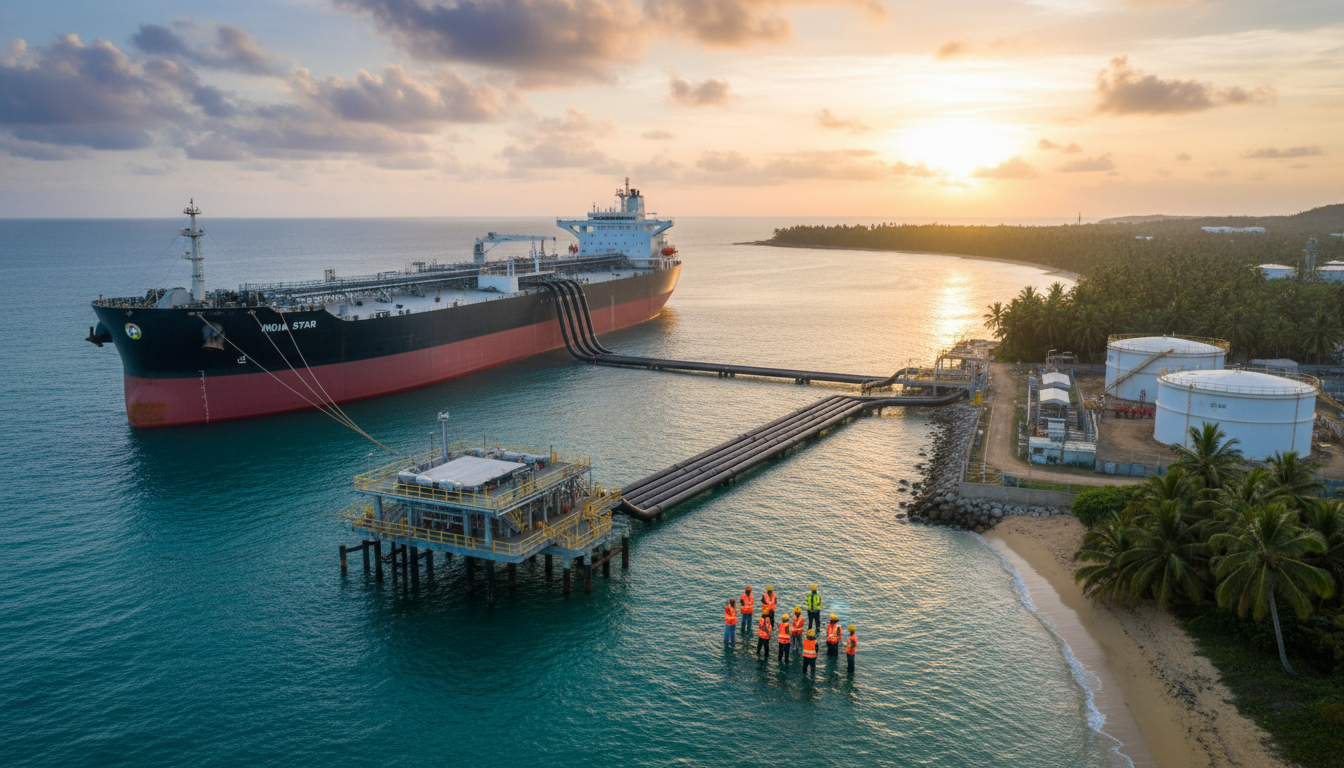
Colombo’s energy outlook received a significant boost as India executed a critical fuel shipment to Sri Lanka. This strategic delivery, comprising 38,000 metric tons of petroleum products, reached the island nation on March 28, 2026. The consignment, specifically 20,000 MT of diesel and 18,000 MT of petrol, materialised rapidly following a direct conversation between Indian Prime Minister Narendra Modi and Sri Lankan President Anura Kumara Dissanayaka on March 24. Further diplomatic coordination was noted by External Affairs Minister Dr. S. Jaishankar’s telephone discussion with his Sri Lankan counterpart, Vijitha Herath, on March 23.
This timely intervention underscores the deepening energy partnership between the two nations, especially crucial for investors monitoring regional stability and supply chain resilience. The need for this emergency supply arose after Lanka IOC, a prominent subsidiary of Indian Oil Corporation Ltd., faced unexpected disruptions to its pre-arranged March fuel contracts. Suppliers, initially slated to deliver from the Middle East and Singapore, were compelled to invoke force majeure clauses, citing insurmountable challenges with product availability and vessel deployments directly attributable to the escalating conflict in the Middle East. Consequently, Sri Lanka urgently requested these rescue supplies from India through IOCL, highlighting the inherent vulnerabilities in global petroleum logistics during periods of heightened geopolitical tension.
President Dissanayaka publicly acknowledged India’s prompt assistance, expressing profound gratitude on social media. His sentiments resonated with Member of Parliament Namal Rajapaksa, who lauded India’s ‘Neighborhood First’ foreign policy. Rajapaksa specifically highlighted India’s consistent role as Sri Lanka’s primary responder in crises, advocating for Sri Lanka’s government to draw lessons from India’s recent fuel tax adjustments. He pointed out that India’s strategy to reduce excise duty aimed not at immediate price cuts, but at stabilising the market and preventing further hikes amidst global oil price volatility. This perspective offers valuable insight for investors assessing fiscal policy and its impact on energy costs in developing economies. Rajapaksa further stressed the imperative for Sri Lanka to strengthen its own economic policies, suggesting that reducing excessive tax burdens, akin to India’s growth-oriented approach, could stimulate investment, alleviate citizen pressure, and foster long-term economic recovery, emphasising that robust international partnerships must be nurtured rather than politicised.
Sri Lanka Grapples with Deepening Energy Crisis
Sri Lanka continues to navigate a severe energy crisis, exacerbated by the ongoing conflict in the Middle East and its profound impact on global energy markets. To conserve precious fuel reserves, the government has implemented drastic measures, including rationing supplies and mandating a four-day working week for the state sector. This policy shift has seen most government institutions, educational facilities, and universities adopt a condensed work schedule, significantly altering daily life and economic activity across the island. The deserted rail and bus stations, shorter banking hours, and increased work-from-home arrangements across private firms underscore the widespread adjustments being made to curb energy consumption.
Investors must note the direct correlation between geopolitical events and local economic stability. Sri Lanka’s government has already hiked fuel prices by a substantial third since the United States and Israel commenced strikes against Iran. These actions triggered retaliatory attacks, severely disrupting global energy supplies and escalating significantly in the second week of March with targeted assaults on critical energy infrastructure, including oil tankers, refineries, and liquefied natural gas (LNG) facilities. These events have created a ripple effect, increasing the cost of essential imports and further straining the nation’s economy.
In response to the crisis, the cabinet has set an ambitious target to slash electricity consumption by 25 percent. Directives include switching off street lamps and encouraging civil servants to opt for energy-efficient table fans over power-intensive air conditioning units. The influential Chamber of Commerce has also urged its members to adhere to government guidelines or transition to remote work models where business continuity can be effectively maintained. For instance, technology firm WSO2 has made working from home mandatory for its 500 employees on Tuesdays and Thursdays, demonstrating corporate responsibility in the face of national energy shortages. President Dissanayaka has even appealed to electric vehicle owners, requesting they charge their vehicles during daylight hours to leverage available solar power and avoid placing additional strain on the already stretched national grid during peak overnight demand. Officials indicate the nation’s diesel reserves are projected to last until mid-May, with petrol supplies extending only a week longer, intensifying the urgency for long-term energy solutions and diversified procurement strategies.
Sri Lanka Explores Russian Oil to Diversify Energy Sourcing
Amidst the acute domestic energy challenges, Sri Lanka is actively pursuing new avenues for crude oil procurement, initiating critical talks with Russia. This strategic shift aims not only to secure immediate fuel supplies but also to foster a long-term bilateral energy cooperation framework. Discussions were led by visiting Russian Deputy Energy Minister Roman Marshavin, signalling a high-level commitment from Moscow to explore potential partnerships in fuel supply, energy security, and extended collaboration. These ongoing negotiations, set to continue with President Dissanayaka, represent a pivotal move for Sri Lanka to diversify its energy portfolio and mitigate future supply chain vulnerabilities.
Foreign Minister Vijitha Herath also engaged in discussions with Russian Ambassador Levan S. Dzhagaryan, specifically addressing the feasibility of acquiring Russian fuel to navigate the current crisis. This marks a significant policy change for Sri Lanka, which previously faced impediments to purchasing Russian oil due to stringent US sanctions. However, the evolving geopolitical landscape and the severe energy transit disruptions stemming from the Middle East conflict have prompted a reevaluation of international energy policies. Crucially, the United States has recently eased certain sanctions, allowing countries to purchase Russian oil and petroleum products already loaded on vessels at sea. This adjustment aims to alleviate global supply constraints and stabilise crude prices, indirectly benefiting nations like Sri Lanka seeking alternative sources. For global oil & gas investors, this development highlights the fluidity of international energy markets, where geopolitical tensions can quickly reshape trade routes and influence commodity prices. Sri Lanka’s pivot towards Russia signifies a pragmatic response to an urgent national need, potentially opening new trade corridors and reshaping the dynamics of its long-term energy security strategy.
