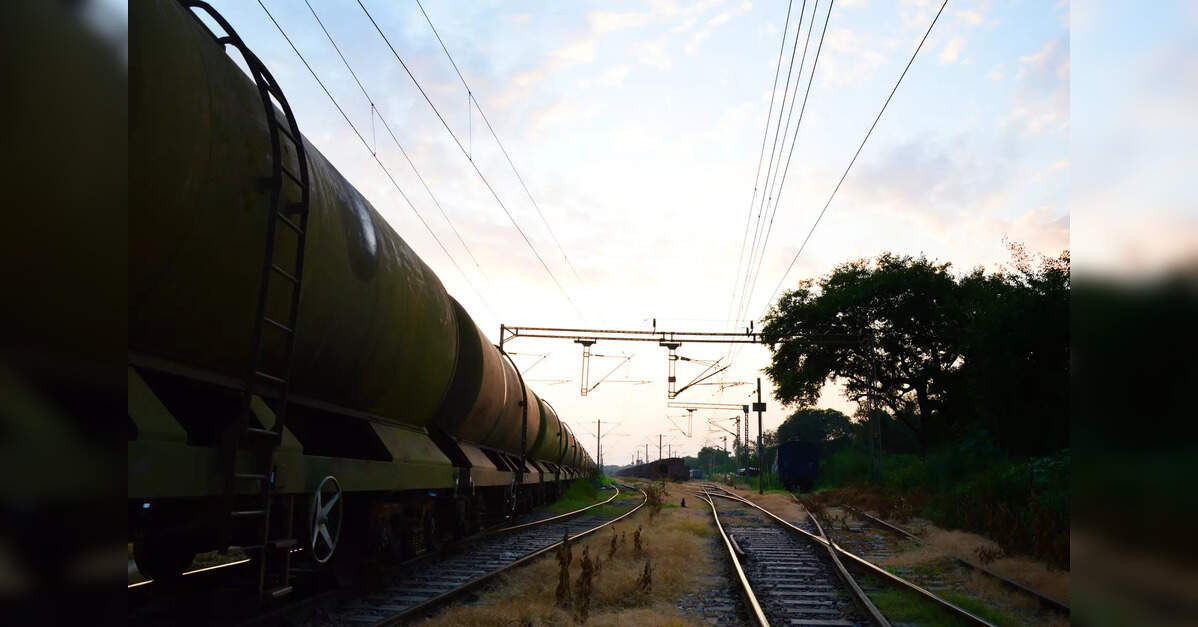
India Oil Train Fire: Supply Concerns Emerge
A recent incident involving a goods train carrying high-speed diesel that caught fire near Tiruvallur, India, serves as a stark reminder of the inherent vulnerabilities within global energy supply chains. While localized in nature, such disruptions can have cascading effects on regional product markets and broader investor sentiment. For astute oil and gas investors, this event underscores the importance of scrutinizing not just macro supply-demand dynamics but also the intricate logistical frameworks that deliver refined products to end-users. This analysis dives into the implications of this incident, juxtaposing it against current market movements and upcoming catalysts, to provide a comprehensive outlook for navigating the evolving energy landscape.
Localized Incident, Regional Product Market Ripples
The fire, which reportedly originated in one wagon and spread to others, necessitated immediate action, including the suspension of overhead power supply for train services, the cancellation or diversion of numerous passenger and express trains, and ongoing restoration efforts. Crucially, the cargo involved was high-speed diesel, a critical fuel for India’s vast transportation and industrial sectors. India, a rapidly growing economy, relies heavily on its railway network for the distribution of essential commodities, including refined petroleum products. Even temporary logistical bottlenecks, such as the rerouting of freight and passenger services, can strain existing supply chains and potentially impact regional diesel availability and pricing. While the immediate cause of the fire remains unknown, the incident highlights the operational risks inherent in transporting volatile fuels across extensive infrastructure networks. Investors should monitor how rapidly normal train operations resume, as prolonged disruptions could lead to localized price spikes for diesel and potentially shift demand to alternative, more expensive transport modes.
Current Market Pulse: Navigating Volatility and Underlying Trends
As of today, Brent crude trades at $94.93, showing a modest +0.15% gain within a day range of $91 to $96.89. WTI crude follows suit at $91.39, up +0.12%, having traded between $86.96 and $93.3. These daily movements, while seemingly minor, occur against a backdrop of significant price volatility. Over the past 14 days, Brent experienced a notable -$9, or -8.8%, decline, sliding from $102.22 on March 25th to $93.22 yesterday. This downtrend suggests that broader market forces have been at play, likely overshadowing the immediate impact of localized incidents like the Indian train fire on global crude benchmarks. However, the price of gasoline, a key refined product, tells a different story: currently at $3 per gallon, it has climbed +1.01% today, trading within a range of $2.93 to $3.03. This divergence underscores how localized events, coupled with regional demand, can exert more direct pressure on product markets than on upstream crude prices, at least in the short term. Investors are keenly observing these subtle shifts, understanding that while crude might appear resilient, the underlying product spreads can reveal emerging supply pressures.
Anticipating Catalysts: Upcoming Events to Shape Supply Outlook
Looking ahead, the oil and gas market is poised for several high-impact events that will undoubtedly shape the forward supply trajectory, overshadowing localized logistical hurdles. Investors must mark their calendars for the upcoming OPEC+ meetings. The Joint Ministerial Monitoring Committee (JMMC) convenes on April 18th, followed by the Full Ministerial OPEC+ Meeting on April 20th. These gatherings are critical for gauging the alliance’s commitment to current production cuts and any potential adjustments to output policy, which will directly influence global crude supply. Concurrently, the market will closely scrutinize key inventory data from the United States, with the API Weekly Crude Inventory report due on April 21st and April 28th, and the EIA Weekly Petroleum Status Report following on April 22nd and April 29th. These reports offer vital insights into real-time supply-demand balances and can trigger significant price reactions. Furthermore, the Baker Hughes Rig Count, scheduled for April 17th and April 24th, will provide an indication of future drilling activity and potential supply growth in North America. These scheduled events, rather than isolated incidents, are the primary drivers of investor sentiment and price discovery in the coming weeks, requiring careful monitoring for any deviations from expectations.
Investor Focus: Decoding Price Forecasts and Demand Signals
Our proprietary reader intent data reveals a consistent theme among investors this week: a burning desire for a clear Brent price forecast for the next quarter and a consensus 2026 outlook. While precise predictions remain elusive in a volatile market, the current landscape offers critical data points for building robust investment theses. The recent Indian train fire, while not a global market mover, serves as a micro-level illustration of supply chain fragility that, when aggregated with other geopolitical or operational risks, can contribute to a higher volatility premium. Investors are also keenly asking about Chinese “tea-pot” refinery run rates, a crucial indicator of global demand for refined products, especially diesel and gasoline. Strong run rates in China signal robust demand from the world’s second-largest economy, providing a counterweight to any supply-side concerns. Conversely, any slowdown could signal broader economic headwinds. The interplay between OPEC+’s supply management, the pace of inventory draws or builds in major consuming nations, and the resilience of demand from key regions like China will ultimately determine Brent’s trajectory through the next quarter and into 2026. Savvy investors are not just looking at the headline price but analyzing these underlying factors to position their portfolios effectively.


