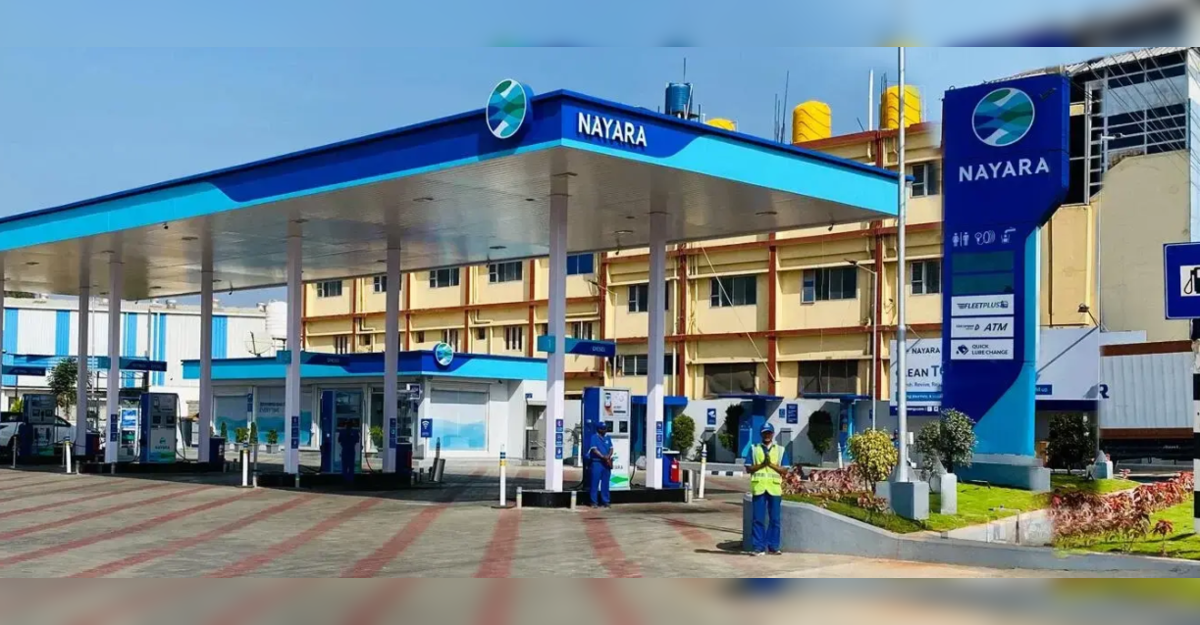
The latest European Union sanctions targeting Nayara Energy and the challenge they present to Reliance Industries Ltd. mark a significant pivot point for India’s crucial refining sector and, by extension, global oil trade flows. As India’s top two fuel exporters, these companies find themselves at a complex geopolitical crossroads, forcing strategic realignments that will reverberate across international markets. This shift demands a clear-eyed assessment from investors, as the interplay of sanctions, discounted crude, and refined product demand creates both risks and opportunities in the coming months.
Geopolitical Pressures Reshape India’s Refining Landscape
The EU’s 18th package of sanctions has placed Nayara Energy under “full-fledged” restrictions, encompassing asset freezes, travel bans, and prohibitions on resource provision. This directly impacts Nayara’s operational stability, with industry executives highlighting potential struggles in accessing banking channels and a risk of losing critical technical support from European technology licensors. Critically, Nayara will be barred from exporting refined products to Europe, a market that has historically been highly profitable for Indian refiners.
Reliance Industries, India’s largest exporter of refined fuels, faces an equally challenging dilemma. With a standing term deal for substantial volumes of discounted crude from Rosneft, Reliance must now weigh the economic benefits of cheap Russian feedstock against continued access to the lucrative European diesel market. Either choice carries a substantial impact on refining margins. This complex situation also casts a shadow over Russian energy giant Rosneft’s reported plans to divest its 49% stake in Nayara, making any such transaction significantly more complicated. India’s Ministry of External Affairs has firmly pushed back against these unilateral measures, underscoring the government’s paramount commitment to energy security for its citizens, indicating a potential for diplomatic engagement to mitigate the impacts.
Market Volatility Amidst Shifting Supply Dynamics
The imposition of new EU sanctions, including a reduction of the Russian oil price cap to $47.6 per barrel effective September 3rd, adds another layer of complexity to an already volatile market. While the enforceability of such caps remains a subject of debate, particularly given the reliance on intermediary traders by Indian refiners, the intent is clear: to further restrict Russia’s oil revenues and reshape global trade routes.
As of today, Brent crude trades at $90.38 per barrel, reflecting a significant -9.07% drop within a day range of $86.08 to $98.97. Similarly, WTI crude sits at $82.59, down -9.41% from its daily high, fluctuating between $78.97 and $90.34. This immediate market reaction underscores the pervasive uncertainty. Over the past 14 days, Brent has seen a notable decline, falling from $112.78 on March 30th to $91.87 on April 17th, an 18.5% decrease. This downward trend, combined with current gasoline prices at $2.93 (-5.18%), highlights the market’s sensitivity to both geopolitical tensions and the broader supply-demand outlook. Investors are keenly aware that these Indian export shifts will contribute to this volatility, potentially creating regional supply deficits in Europe while increasing competition in other refined product markets.
Investor Focus: Navigating New Trade Routes and Price Discovery
The redirection of refined products from India, particularly diesel, away from Europe will inevitably force new market alignments. This could lead to increased competition in other regions of Asia, Africa, or Latin America, or the development of new, less established trade routes. For investors, the critical question becomes: how will these shifts impact global supply-demand balances and, consequently, future oil prices?
Our proprietary reader intent data reveals a strong investor focus on future price trajectories, with many asking, “What do you predict the price of oil per barrel will be by end of 2026?” This Indian export shift represents a fundamental change in the supply chain that will directly influence that outcome. While Europe may face tighter refined product supplies, potentially driving up regional prices, other markets could see an influx of Indian product, dampening prices there. This fragmentation of the market, coupled with the ongoing debate about the enforceability of price caps and secondary tariffs, means investors must closely monitor these evolving trade patterns to anticipate future price discovery.
Upcoming Events to Watch for Market Clarity
In this environment of geopolitical flux and shifting trade dynamics, upcoming energy events will provide crucial signals for investors. Our proprietary event calendar highlights several key dates. Investors are particularly focused on the OPEC+ Joint Ministerial Monitoring Committee (JMMC) meeting on April 18th, swiftly followed by the full OPEC+ Ministerial Meeting on April 19th. Many investors are asking, “What are OPEC+ current production quotas?” and these meetings will be pivotal in determining if the group adjusts its output strategy in response to the changing demand landscape, especially considering potential impacts on Russian crude flows and refined product availability.
Beyond OPEC+, market participants will scrutinize the weekly inventory reports from the American Petroleum Institute (API) on April 21st and 28th, and the official EIA Weekly Petroleum Status Reports on April 22nd and 29th. These reports will offer immediate insights into U.S. crude and refined product stockpiles, providing a critical barometer for global supply-demand health amidst the Indian export realignment. Furthermore, the Baker Hughes Rig Count on April 24th and May 1st will indicate the activity levels of U.S. producers, offering a forward-looking perspective on potential supply responses to these complex market forces. Monitoring these events closely will be essential for investors aiming to position themselves strategically in a rapidly evolving global oil market.


