

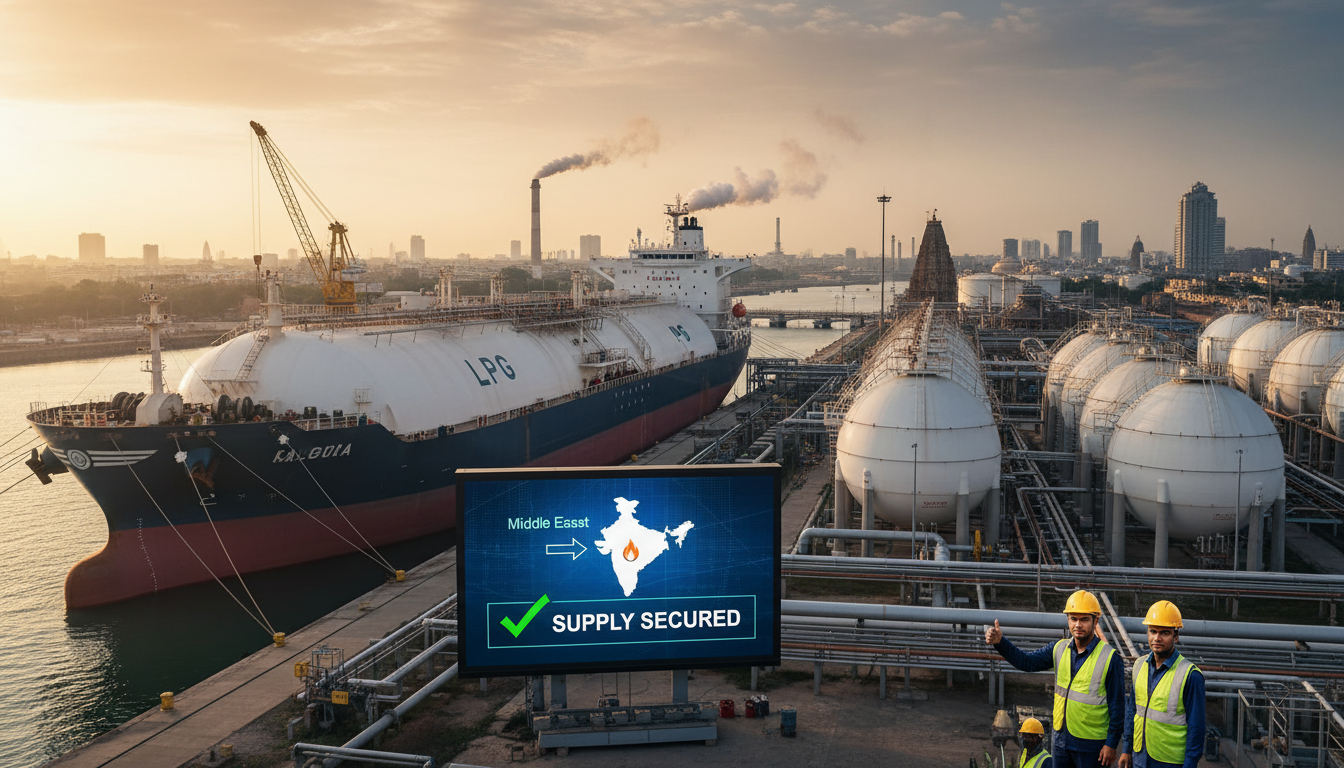
India’s energy landscape, a critical determinant of its economic trajectory, continues to demonstrate remarkable resilience and strategic foresight. As global energy markets grapple with geopolitical uncertainties, particularly from the West Asia conflict, the nation has meticulously orchestrated a series of initiatives to safeguard its domestic fuel supply, ensuring stability for both consumers and investors alike. Recent developments highlight a proactive stance in securing essential liquefied petroleum gas (LPG) imports while simultaneously advancing its long-term natural gas infrastructure. This comprehensive approach underscores India’s commitment to energy security, a vital component for sustaining its robust growth narrative.
Strategic LPG Imports Bolster National Energy Reserves
In a clear signal to the market regarding India’s robust supply chain capabilities, the nation has successfully managed a significant influx of LPG. The arrival of the LPG vessel, Apollo Ocean, flying the flag of Vietnam, at the New Mangalore Port in Karnataka, has notably alleviated concerns surrounding LPG availability, particularly pertinent in light of ongoing geopolitical tensions in West Asia. This crucial delivery supplements earlier arrivals this month, which saw the vessels Shivalik and MT Nanda Devi collectively discharge approximately 92,712 metric tonnes of LPG. These strategic imports are instrumental in fortifying India’s energy reserves, providing a buffer against potential disruptions and ensuring consistent supply to its vast consumer base. For energy investors, these events underscore the operational efficiency and resilience of India’s import infrastructure, demonstrating its capacity to adapt and secure vital resources amidst a volatile global environment.
Navigating Critical Chokepoints: India’s Maritime Prowess
The successful transit of Indian LPG carriers through the strategically vital Strait of Hormuz exemplifies the nation’s adeptness in managing complex maritime logistics. Two Indian-flagged vessels, Jag Vasant and Pine Gas, recently navigated this critical chokepoint, a conduit for a significant portion of the world’s oil and gas trade. These carriers collectively transported a substantial cargo of 92,612.59 metric tonnes of LPG, with visual confirmations showing the Pine Gas making its passage. The operation involved 33 and 27 Indian seafarers onboard the respective vessels, highlighting the human capital and expertise underpinning these critical supply lines. Following their successful transit, these vital shipments are now en route to Indian ports, with expected arrivals between March 26 and March 28, completing their journey from the Gulf. This seamless execution through one of the world’s most sensitive maritime passages reinforces investor confidence in India’s ability to maintain uninterrupted energy flows, a non-negotiable for sustained economic activity and growth.
Government Assurances Stabilize Energy Market Sentiment
Amidst a backdrop of global energy market speculation and occasional misinformation, the Indian Petroleum Ministry delivered unequivocal assurances regarding the nation’s energy supply. In a statement issued on Thursday, the Ministry firmly declared India’s energy supply to be “fully secure and stable,” effectively quashing rumors of shortages. It emphasized that there are no deficiencies in the availability of petrol, diesel, or LPG anywhere across the country. All retail outlets are reported to be operating at full capacity, backed by adequate inventories. The Ministry proactively countered “misinformation and panic-driven narratives,” urging citizens and stakeholders to rely solely on official government sources for accurate updates. This transparent communication strategy aims to maintain market stability and investor confidence, affirming the government’s unwavering commitment to ensuring uninterrupted energy access for every citizen. Such clarity is vital for energy sector participants, providing a stable regulatory and operational environment.
Prioritizing Piped Natural Gas: A Vision for Future Energy
Beyond immediate supply management, the Indian government is strategically pivoting towards long-term energy sustainability, with a pronounced emphasis on Piped Natural Gas (PNG). While confirming ample availability and unchanged pricing for petrol and diesel, the Centre is actively prioritizing the expansion of PNG infrastructure. At an inter-ministerial briefing, Sujata Sharma, Joint Secretary within the Ministry of Petroleum and Natural Gas, underscored the government’s commitment to achieving 100 percent domestic PNG supply. This ambitious goal is being supported by significant policy initiatives, including the issuance of new notifications that establish a streamlined and time-bound framework for the laying and expansion of natural gas pipelines across the nation. These efforts are not just about meeting current demand; they represent a fundamental commitment to developing a robust natural gas infrastructure, positioning India for a greener and more diversified energy future. For investors, this signals substantial opportunities in gas infrastructure development, distribution networks, and associated technologies, aligning with global energy transition trends while meeting growing domestic demand.
As of late March 2026, India’s multi-pronged strategy to secure its energy future is clearly unfolding. Through vigilant management of critical LPG imports and maritime transits, coupled with strong government communication to stabilize market sentiment, the nation is effectively navigating current geopolitical complexities. Concurrently, the determined push towards expanding its PNG network showcases a forward-looking vision for a sustainable and self-reliant energy ecosystem. This dual approach offers compelling prospects for investors looking for stability and growth in a dynamic energy market.
