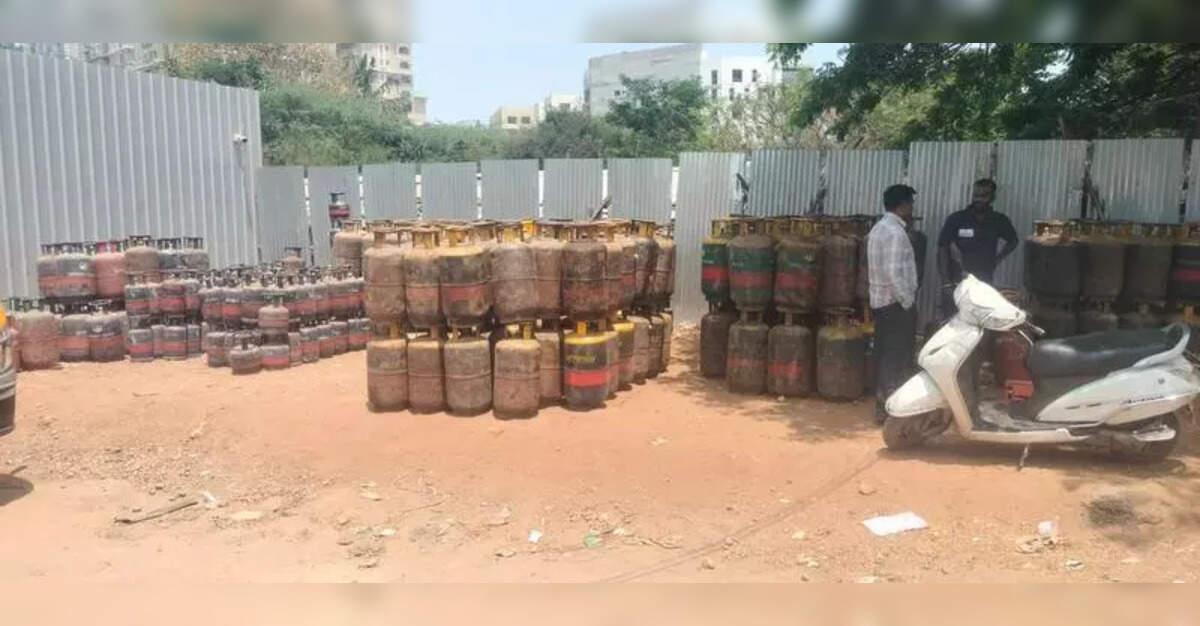
The recent seizure of 1,000 commercial LPG cylinders and the arrest of a gas agency owner in India’s Coimbatore region highlight a critical vulnerability within global energy supply chains, particularly in rapidly growing emerging markets. This incident, driven by significant black market premiums for essential commodities, serves as a potent signal for energy investors. While global crude markets navigate their own dynamics, localized product shortages and price distortions can create immense operational and regulatory risks for companies and present unique challenges for portfolio managers. This analysis delves into the implications of this event, connecting it to broader market trends, investor concerns, and upcoming catalysts that will shape the energy investment landscape.
India’s LPG Hoarding Exposes Supply Fragility and Price Dislocation
The crackdown in Coimbatore, where authorities discovered 1,000 filled commercial LPG cylinders being hoarded and sold at more than double the official price, underscores acute supply chain fragilities. With the official price fixed at approximately 2,100 units of local currency, black market rates surged to between 4,500 and 5,000, signaling extreme demand-supply imbalance for this critical cooking fuel. The arrest of the agency owner under the Essential Services Maintenance Act (ESMA) is a significant development, indicating severe governmental intent to protect consumers and stabilize prices for essential goods. For investors, this incident reveals the inherent risks of operating in markets where demand can rapidly outstrip regulated supply, leading to price controls, illicit trade, and increased government intervention. Such scenarios elevate the importance of robust distribution networks and strong regulatory compliance for any energy company with exposure to similar developing economies, where social stability is often prioritized over pure market mechanics.
Navigating Global Crude Trends Amidst Localized Product Crises
This localized LPG crisis in India occurs against a backdrop of a nuanced global crude market. As of today, Brent crude trades at $92.9, reflecting a 0.36% decline for the day, with its price range holding between $92.57 and $94.21. Similarly, WTI crude stands at $89.25, down 0.47%, oscillating between $88.76 and $90.71. This daily fluctuation follows a notable trend over the past two weeks, where Brent crude shed over $7, dropping from $101.16 on April 1st to $94.09 by April 21st. This broader market softening, however, starkly contrasts with the acute, localized price surges seen in India’s LPG market. Investors are keenly asking about the direction of WTI and the overall trajectory of oil prices by the end of 2026. The India incident highlights that even if global crude prices moderate, specific product markets can experience severe dislocations due to regional supply constraints, infrastructure bottlenecks, or regulatory hurdles. This fragmentation means investors cannot simply rely on headline crude prices but must conduct deeper due diligence into downstream product markets, especially in energy-hungry nations like India where demand growth remains robust.
Regulatory Scrutiny and Operational Risks in Emerging Markets
The application of the Essential Services Maintenance Act (ESMA) in the Coimbatore case sends a clear message about the regulatory environment surrounding essential commodities in India. ESMA is a powerful tool allowing the government to prohibit strikes and ensure the delivery of essential services, but its use in this context against hoarding signals a broader willingness to intervene directly in supply and pricing. For international energy companies and investors eyeing opportunities in India or similar emerging markets, this poses significant operational and financial risks. Such aggressive regulatory action can impact profit margins, create compliance burdens, and even lead to asset seizures or operational disruptions. Companies must meticulously assess political and regulatory risks, ensuring their supply chain resilience and operational transparency are paramount. The incident underscores the delicate balance governments must strike between ensuring affordable energy access for their populations and allowing market forces to drive efficient supply, a balance that often tips towards intervention in times of perceived crisis.
Upcoming Catalysts and the Forward Outlook for Energy Investors
The coming weeks are packed with critical energy market data releases that will undoubtedly influence investor sentiment and potentially impact product markets like LPG. Today, investors are closely watching the EIA Weekly Petroleum Status Report for fresh insights into U.S. crude and product inventories. This will be followed by the Baker Hughes Rig Count on Friday, offering a pulse check on North American production activity. Next week brings another round of API and EIA inventory data, culminating in the highly anticipated EIA Short-Term Energy Outlook (STEO) on May 2nd. The STEO, in particular, will provide updated forecasts for global supply and demand, which could shift expectations for crude prices and, by extension, the cost of LPG feedstock. While these reports do not directly address India’s localized LPG situation, a tightening global market signaled by these data points could exacerbate regional shortages and pricing pressures by pushing up import costs. Conversely, signs of a well-supplied global market might offer some indirect relief. Investors must integrate these forward-looking signals into their risk assessments, understanding that global trends can either amplify or mitigate the challenges posed by regional supply disruptions and regulatory actions.


