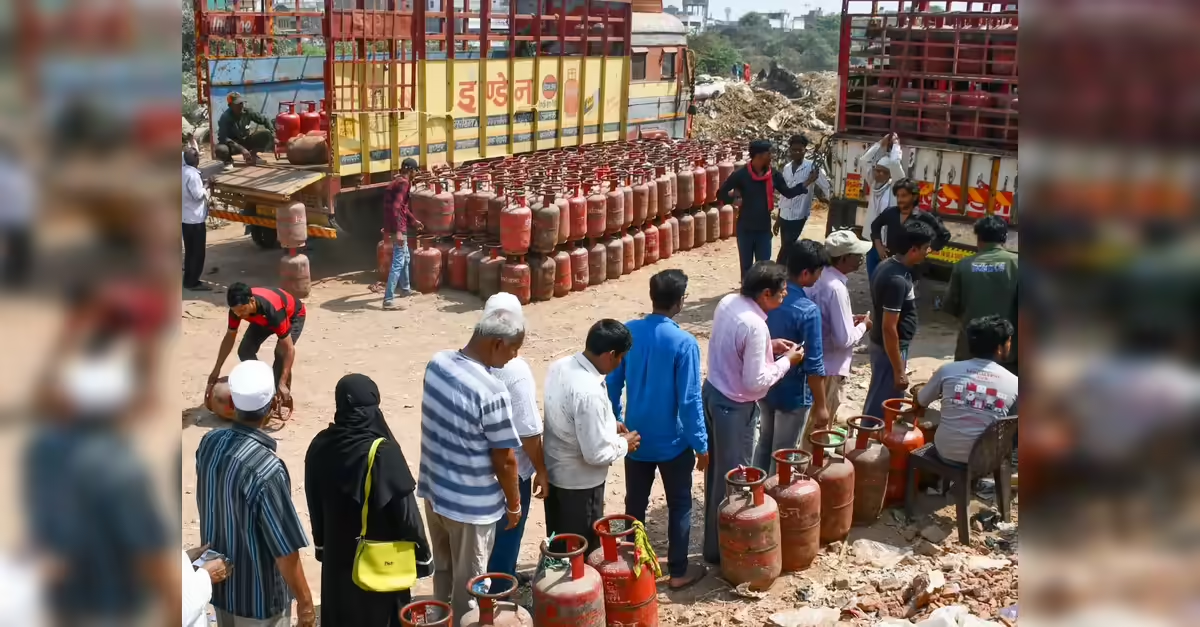
India, a colossal energy consumer and a critical player in global demand dynamics, is currently navigating a complex landscape of energy security challenges. Its recent proactive stance on Liquefied Petroleum Gas (LPG) supply, urging state governments to tighten monitoring and prevent hoarding, underscores the nation’s vulnerability to global energy disruptions. For oil and gas investors, India’s management of its domestic energy situation, particularly for a crucial commodity like LPG, offers vital signals about broader market stability, demand resilience, and the effectiveness of strategic policy responses amidst escalating geopolitical tensions. This analysis delves into the underlying factors driving India’s concerns, its strategic countermeasures, and what these developments mean for the global energy investment outlook.
Navigating Geopolitical Headwinds and Strategic Shifts in Sourcing
The impetus behind India’s heightened vigilance on LPG supply is deeply rooted in the current global geopolitical climate. An ongoing conflict, specifically the US-Israel war with Iran, has now escalated for 20 days, directly impacting energy infrastructure across key regions. Notably, recent attacks on Qatar’s LNG facilities are a significant concern for India, given that the nation imports approximately 20% of its gas from Qatar. Such disruptions have immediate implications for supply security and price stability, resonating through global markets.
This volatile environment is reflected in recent market movements. As of today, Brent Crude trades at $92.1, experiencing a 1.22% decline from its daily high, while WTI Crude stands at $88.39, down 1.43%. Gasoline prices have also followed suit, currently at $3.09, a 1.28% dip. This minor daily correction follows a more pronounced trend over the past two weeks, where Brent shed approximately 7%, moving from $101.16 on April 1st to $94.09 by April 21st. This broader downward shift indicates market sensitivity to both supply fears and potential demand adjustments.
In response to these persistent threats, India has aggressively diversified its energy import portfolio. The government has strategically shifted its crude sourcing, with a significant 70% of its oil now originating from outside the Gulf region. This includes a notable increase in crude imports from the United States, a move that enhances India’s energy resilience by reducing dependence on historically volatile Middle Eastern supplies. This strategic pivot is a crucial development for investors monitoring long-term energy trade flows and risk mitigation strategies in emerging markets.
Bolstering Domestic Supply Chains and Curbing Market Malpractice
Beyond external sourcing strategies, the Indian government is also taking robust internal measures to ensure LPG availability and prevent market manipulation. The Ministry of Petroleum and Natural Gas has urged state governments to step up vigilance, monitor the overall LPG situation daily, and take stringent action against hoarding and black marketing. This proactive approach aims to stabilize domestic supply chains and prevent misinformation that could fuel panic among citizens.
A key long-term strategy involves facilitating new Piped Natural Gas (PNG) connections for both domestic and commercial LPG consumers. To incentivize this transition, the government has announced that any state supporting the expansion of the PNG network will receive an additional 10% commercial LPG allocation. This policy not only aims to ease pressure on LPG demand but also to promote a cleaner, more efficient energy source. The impact of these efforts is already visible: over the past two weeks, approximately 1.25 lakh new domestic, commercial, and industrial connections have been provided. Furthermore, online bookings for LPG refills have surged to 94%, with 83% of refill deliveries now being carried out through delivery authentication codes, signifying a significant shift towards digital efficiency and transparency in the supply chain.
These domestic initiatives demonstrate a concerted effort to manage a critical energy commodity through a combination of regulatory oversight, strategic incentives, and technological adoption. For investors concerned about market stability and the potential for supply disruptions impacting consumer sentiment, these actions indicate a strong governmental commitment to maintaining order and ensuring essential energy access, a factor that can underpin economic resilience.
Forward Momentum: Anticipating Market Shifts and Policy Impacts
As India solidifies its domestic LPG supply and diversifies its energy imports, the broader global energy market remains a dynamic arena, with several key events on the horizon that will influence investor sentiment and price trajectories. Investors are keenly focused on understanding future price movements, as reflected in frequent inquiries about the trajectory of WTI crude and predictions for oil prices by the end of 2026. This ongoing uncertainty underscores the importance of monitoring forthcoming market data.
The upcoming EIA Weekly Petroleum Status Reports, scheduled for April 22nd, April 29th, and May 6th, will provide crucial insights into U.S. crude oil, gasoline, and distillate inventories, offering a barometer for global supply-demand balances. Similarly, the API Weekly Crude Inventory reports on April 28th and May 5th will offer an early indication of these trends. Furthermore, the Baker Hughes Rig Count on April 24th and May 1st will shed light on North American drilling activity, a key indicator of future production capacity.
Perhaps most significant for longer-term outlooks will be the EIA Short-Term Energy Outlook, slated for release on May 2nd. This comprehensive report will offer projections for crude oil, natural gas, and refined product prices, providing vital directional cues that investors frequently seek for their year-end price predictions. India’s strategic moves, while primarily domestic, contribute to global demand patterns and can mitigate price spikes by ensuring stable internal supply. This complex interplay of geopolitical events, policy responses, and market data makes the coming weeks particularly crucial for informed investment decisions in the energy sector.
Investment Implications: Resilience in Volatility
For discerning oil and gas investors, India’s current actions provide a multi-faceted lens through which to view market opportunities and risks. The proactive measures to secure LPG supply and promote PNG adoption highlight a strategic commitment to energy security that can stabilize domestic demand patterns. Companies involved in India’s energy infrastructure, particularly those in gas distribution or LPG supply chains, might find reduced operational risks due to clearer regulatory frameworks and government support for expansion.
India’s aggressive diversification of crude and gas imports also signals a broader shift in global trade flows. This benefits suppliers outside traditional Gulf regions, such as the United States, and potentially creates new opportunities for shipping and logistics firms. While geopolitical risks, exemplified by the conflict impacting Qatar’s LNG facilities, remain a significant overhang on global energy markets, India’s resilience strategy offers a template for emerging economies navigating similar challenges. Investors should continue to monitor commodity prices, particularly Brent and WTI, in conjunction with the upcoming market data releases, to assess the balance between global supply concerns and demand stability driven by major consumers like India.


