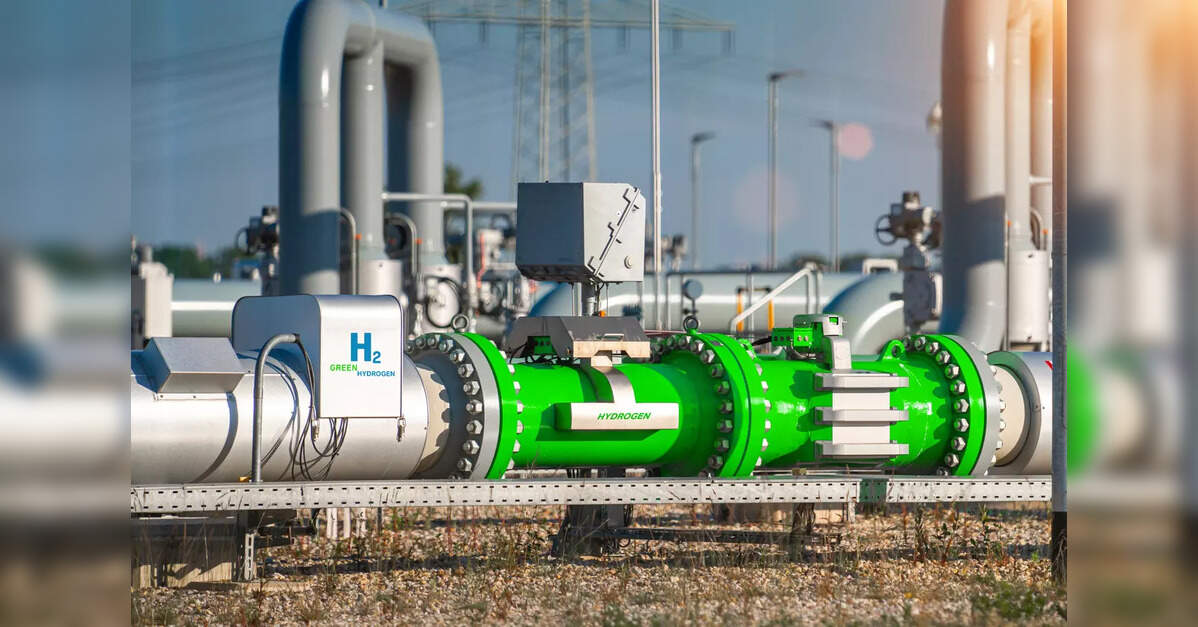
India is positioning itself as a future powerhouse in the global green hydrogen economy, with ambitious plans to scale production and meet surging domestic demand. Projections indicate the nation’s hydrogen demand is set to climb at a compound annual growth rate (CAGR) of 3% to reach 8.8 million metric tonnes per annum (MTPA) by 2032. This represents a significant opportunity for investors looking to capitalize on the energy transition. However, despite the impressive pipeline of announced green hydrogen projects – exceeding 9.2 MTPA – a critical challenge remains: only a handful have secured Final Investment Decisions (FID) or long-term offtake agreements. This gap between aspiration and execution creates both a bottleneck and a compelling entry point for strategic capital.
India’s Green Hydrogen Ambition: A Funding Chasm?
The sheer scale of India’s green hydrogen ambitions is undeniable. With projected demand growth of 3% annually, reaching nearly 9 MTPA in less than a decade, the market signal is clear. Project developers have responded enthusiastically, announcing capacities that collectively surpass the anticipated 2032 demand. Yet, the transition from announcement to actual commissioning is proving difficult. The current landscape reveals that a significant majority of these projects are still seeking the necessary financial commitments and guaranteed buyers to move forward. Under a baseline scenario, even if 30% of the announced green hydrogen capacity is commissioned within the next ten years, electrolytic and bio-hydrogen supply would only meet approximately 31% of India’s domestic demand by 2032. This substantial shortfall highlights the urgent need for accelerated investment and market maturation. Geographically, the opportunity is concentrated, with four states – Odisha (38%), Gujarat (26%), Karnataka (12%), and Andhra Pradesh (6%) – accounting for a dominant 82% of all announced green hydrogen projects, signaling key hubs for future development.
Policy Support vs. Market Realities: The Cost Equation
Recognizing the funding and execution challenges, the Indian government has initiated robust policy interventions through the National Green Hydrogen Mission (NGHM) and the Strategic Initiative for Green Hydrogen Transition (SIGHT). These schemes are designed to de-risk investments and stimulate growth, with significant allocations for subsidies under GH2 Tranche 1 and 2, electrolyzer manufacturing (ELY Tranche 1 and 2), and green ammonia (GNH3 aggregation) tenders. These policies aim to bridge the gap between project viability and market readiness, particularly given that 72% of announced projects specifically target green hydrogen use for ammonia production, a clear industrial off-taker. However, 20% of projects still lack announced end-use applications, indicating a need for broader market development beyond just industrial ammonia. Investors must scrutinize the Levelized Cost of Hydrogen (LCOH) for these projects, which is heavily influenced by three critical factors: the cost of landed electricity, the capital expenditure (CAPEX) for electrolyzer stacks and the balance of plant, and the capacity utilization of the electrolyzer. Success hinges on these cost drivers aligning with competitive market prices, making policy support crucial in the initial phases.
Navigating Oil Market Volatility Amidst the Green Transition
The investment landscape for green hydrogen is not immune to the broader dynamics of the global energy market. As of today, Brent crude trades at $90.38 per barrel, marking a significant 9.07% decline within the day’s range of $86.08 to $98.97. Similarly, WTI crude sits at $82.59, down 9.41% over a range of $78.97 to $90.34. This acute daily volatility follows a more extended downtrend, with Brent crude having shed over $20 per barrel, plummeting from $112.78 on March 30th to $91.87 just yesterday. Such pronounced shifts in conventional energy prices introduce complexity for green hydrogen investors. While the long-term imperative for decarbonization remains, short-term oil price swings can impact the perceived economic competitiveness of nascent clean energy alternatives. Our proprietary data indicates investors are actively querying the future trajectory of oil prices, with “what do you predict the price of oil per barrel will be by end of 2026?” being a top question. This reflects a broader uncertainty that influences capital allocation decisions across the entire energy spectrum, challenging investors to differentiate between short-term market noise and long-term structural shifts towards cleaner fuels.
Upcoming Catalysts and the Path Forward for Hydrogen Investors
For investors eyeing the Indian green hydrogen market, understanding both macro energy trends and specific project catalysts is paramount. While global oil market dynamics will continue to influence sentiment – with key events like the OPEC+ Joint Ministerial Monitoring Committee (JMMC) meeting on April 18th and the full Ministerial meeting on April 19th, alongside regular API and EIA inventory reports throughout late April, shaping near-term crude prices – the immediate drivers for green hydrogen adoption in India are more localized. The critical catalysts for accelerating the Indian green hydrogen sector will be the successful disbursement of funds under the NGHM and SIGHT schemes, coupled with the announcement of further winning bids for electrolyzer manufacturing and green ammonia aggregation tenders. Investors need to closely monitor these policy implementation milestones, as they directly address the current funding and offtake challenges. The transition of announced projects from concept to FID, supported by clear financial de-risking mechanisms and long-term buyer commitments, will be the true forward-looking indicator of India’s success in cultivating a robust and investable green hydrogen ecosystem. This progress will provide the necessary visibility and confidence for private capital to flow more freely into this high-potential sector.


