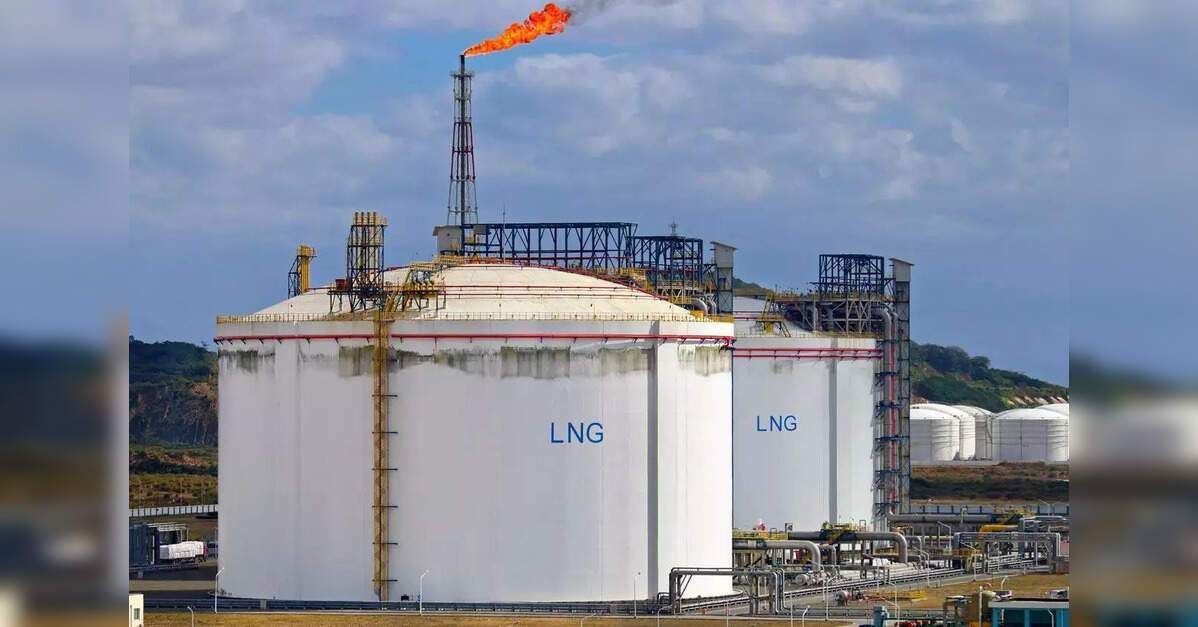
India’s natural gas market presents a nuanced picture for energy investors, revealing a temporary dip in overall consumption alongside robust growth in key segments. While total gas consumption moderated by 4.6% during April-October of FY26, driven primarily by reduced demand from the power sector, a closer look at the underlying dynamics and strategic policy shifts highlights compelling long-term investment opportunities. Our analysis leverages proprietary market intelligence and reader intent data to cut through the noise, offering an investor-centric perspective on where the value truly lies in this critical emerging market.
Understanding the Drivers Behind India’s Gas Demand Moderation
India’s natural gas consumption averaged approximately 190 million metric standard cubic metres per day (mmscmd) between April and October FY26, a notable decline from the roughly 200 mmscmd recorded during the same period last year. This 4.6% dip was primarily attributed to several factors. A significant contributor was the lower offtake from the power sector, where an early onset of the southwest monsoon reduced cooling demand. This contrasted sharply with the previous fiscal year’s summer, which saw gas consumption peak at around 203 mmscmd due to policy support for gas-based power generation. Adding to the moderation were scheduled maintenance shutdowns in the refinery and fertilizer sectors, along with the influence of seasonal fluctuations in liquefied natural gas (LNG) prices. Specifically, spot LNG prices averaged around $13 per MMBtu, marking a substantial 34% increase year-on-year, which consequently pushed gas-based generation out of the merit order and limited incremental demand. However, the market found a floor during the monsoon season, with consumption recovering by 1.2% from summer levels to approximately 191 mmscmd. This rebound was supported by a nearly 9% correction in spot LNG prices and the resumption of operations in the refinery and fertilizer industries. Policy interventions designed to prevent fertilizer plant shutdowns further helped stabilize base demand, even as power sector offtake remained subdued. For investors, this indicates the sensitivity of industrial gas demand to pricing and seasonal factors, emphasizing the importance of diversified exposure.
City Gas Distribution: The Unsung Growth Engine
While the overall gas consumption figures might suggest a slowdown, a deeper dive into specific sectors reveals a powerful growth story in City Gas Distribution (CGD). CGD consumption expanded robustly, rising by 8.8% year-to-date to approximately 44 mmscmd. This impressive growth has elevated CGD’s share in India’s total gas demand from about 20% last year to around 23% in the current period. This expansion is anchored by significant network growth, with the number of Compressed Natural Gas (CNG) stations reaching 8,477 and domestic Piped Natural Gas (PNG) connections totaling 15.9 million. Notably, 361 new CNG stations and 0.9 million new connections were added by October alone. A strategic shift in incremental CNG additions towards non-metros and Tier 2/3 cities has also reduced concentration risk and broadened the market base. This sustained growth in the CGD segment offers a compelling investment thesis, as it represents a more resilient and less price-sensitive demand stream compared to the power sector, driven by increasing urbanization and government initiatives to expand access to cleaner fuels. Companies with strong footprints in India’s CGD network are strategically positioned for long-term value creation.
Policy Tailwinds and Evolving Supply Dynamics
The Indian gas market is not only shaped by demand fundamentals but also by evolving supply dynamics and proactive policy interventions. There has been a notable shift in gas sourcing, with the allocation of administered price mechanism (APM) gas to CGDs declining from 55-65% last year to 35-40% currently. This has consequently increased the sector’s dependence on new-well gas, high-pressure high-temperature (HPHT) gas, and re-gasified LNG, pushing India’s import dependence for gas to about 36% during April-October, up from around 32% a year earlier. While this increases reliance on global markets, calibrated retail price pass-through mechanisms have effectively limited the volume impact on consumers. Crucially, investors should note the petroleum regulator’s notification of a two-zone pipeline tariff framework, which will become effective on January 1, 2026. This framework places priority CGD segments under a uniform tariff of ₹54 per MMBtu, irrespective of distance. This policy change is a significant catalyst, as it is expected to reduce transportation costs for distant CGD markets by approximately 50% compared to previous distance-linked bands. Such a reduction in logistics costs will substantially improve affordability, directly supporting volume ramp-up and enhancing the profitability potential for CGD operators, particularly those expanding into remote regions. These policy tailwinds underscore the government’s commitment to gas penetration and provide a clear path for sustained sector growth.
Navigating Global Volatility: Investor Outlook and Upcoming Catalysts
As senior analysts, we understand that India’s domestic gas market operates within a broader, often volatile, global energy landscape. Our proprietary market snapshot reveals that as of today, Brent crude trades at $90.66 per barrel, showing a modest 0.25% increase. This stands in stark contrast to the significant decline observed over the past 14 days, with Brent plummeting nearly 20% from $118.35 on March 31st to $94.86 on April 20th. WTI crude, similarly, stands at $87.37 per barrel. This volatility directly impacts investor sentiment, as evidenced by our reader intent data, which shows a strong focus on crude price direction, with questions like “is WTI going up or down?” and predictions for year-end oil prices dominating queries. The interplay between crude and natural gas prices, particularly LNG, is crucial, as high oil prices can make gas a more competitive alternative in some industrial applications, while elevated LNG prices can dampen demand. Investors are keenly watching upcoming events for market signals. The OPEC+ JMMC Meeting scheduled for April 21st is a critical near-term catalyst. Any decisions regarding production quotas could significantly influence global crude supply and, by extension, prices. Furthermore, the EIA Weekly Petroleum Status Reports on April 22nd and April 29th will provide vital insights into U.S. inventory levels and demand trends, which often set the tone for global energy markets. The EIA’s Short-Term Energy Outlook on May 2nd will offer a more comprehensive forecast, shaping expectations for the remainder of the year. For investors in India’s gas sector, these global developments are not merely external noise; they directly impact the competitive positioning of LNG imports and the broader energy cost structure. While India’s domestic gas growth story, particularly in CGD, remains robust due to structural demand and supportive policies, monitoring these global indicators and upcoming events is paramount for making informed investment decisions in the dynamic energy sector.


