

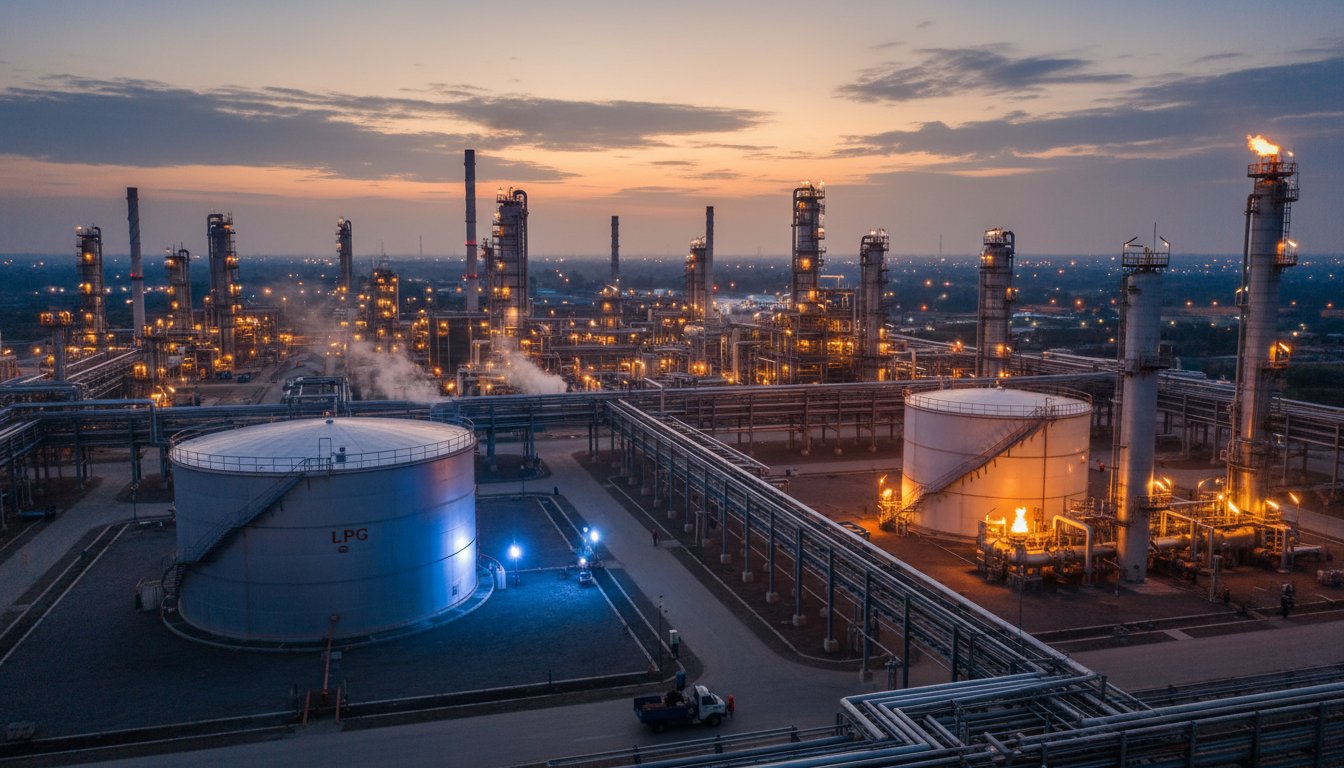
India, a colossal player in global energy demand, has affirmed its robust energy security posture, assuring investors and markets of stable fuel supplies despite ongoing geopolitical turbulence in West Asia. Recent statements from the Ministry of Petroleum and Natural Gas underscore the nation’s proactive measures to mitigate supply chain disruptions impacting crude oil, liquefied natural gas (LNG), and liquefied petroleum gas (LPG).
India’s Strategic Inventory Management and Refining Prowess
At a recent inter-ministerial briefing, Sujata Sharma, Joint Secretary (Marketing & Oil Refinery), provided a comprehensive update on India’s energy reserves and operational capabilities. She confirmed that India currently holds ample crude oil inventories, securing fuel supplies for a comfortable two-month horizon. This strategic reserve management is a critical factor for investor confidence, signaling resilience against short-term market shocks.
Further bolstering this positive outlook, India’s refining sector is operating at impressive levels. Ms. Sharma highlighted that domestic refineries are consistently running at full capacity, with many exceeding 100% utilization. This aggressive operational efficiency ensures a steady conversion of crude into refined products like petrol and diesel, meeting domestic consumption needs without relying heavily on external refined product markets. The nation’s robust refining infrastructure, a key component of its energy independence strategy, continues to perform as a linchpin for stability.
Moreover, domestic LPG production has witnessed a significant boost, increasing by approximately 20%. This upward trend in indigenous output is particularly vital for a nation with high LPG consumption, providing an important buffer against volatile international prices and supply chain vulnerabilities. For investors tracking downstream energy sectors, these figures point to strong domestic operational health and reduced exposure to import-driven price fluctuations.
Navigating Global Headwinds: Geopolitical Impact on Energy Markets
The prevailing “war-like situation” in the Middle East has undeniably cast a shadow over global energy markets, manifesting in increased international prices for crude oil, LPG, and LNG. This geopolitical instability has directly impacted supply routes and commodity costs, creating a challenging environment for major energy importers like India. However, the Indian government has demonstrated a clear commitment to proactive intervention, implementing a series of calibrated decisions to manage the situation and ensure internal market stability.
These strategic interventions aim to shield domestic consumers and industries from the full brunt of international price volatility. The emphasis on securing supplies for the next two months, combined with high refinery utilization, illustrates a comprehensive approach to maintaining energy continuity, even as global tensions persist. Such assertive policy measures are crucial for maintaining investor confidence in India’s ability to navigate external crises impacting its energy matrix.
Prioritizing Domestic Needs: The LPG Import Conundrum
India’s significant reliance on LPG imports, with nearly 90% historically transiting through the Strait of Hormuz, presents a unique vulnerability in times of heightened regional conflict. Recognizing this critical dependency, the government made a decisive move to prioritize the availability of LPG for domestic consumers. This policy shift involved a temporary curtailment of commercial LPG supplies to ensure households had uninterrupted access to essential cooking fuel.
This prioritization, while necessary for social stability, naturally impacted commercial enterprises. However, the government has since initiated a phased restoration of commercial LPG supplies, demonstrating a flexible and adaptive supply management strategy. Initially, 20% of commercial supplies were reinstated, followed by an additional 10% specifically allocated to support the expansion of the Piped Natural Gas (PNG) network. This incremental approach was further expanded to 50%, and currently, commercial LPG supplies stand at 70% of pre-curtailment levels. These gradual adjustments reflect a nuanced balancing act between ensuring household energy security and supporting commercial activity, a dynamic keenly observed by investors in the energy distribution and commercial gas sectors.
Targeted Distribution and Supply Chain Stabilization
As part of these concerted efforts to normalize commercial LPG availability, approximately 30,000 tonnes of commercial LPG have been supplied to businesses since March 14. This targeted distribution strategy has focused on essential segments of the economy, ensuring that vital industries and services can continue their operations. Priority has been accorded to establishments serving the public and supporting economic activity, including restaurants, dhabas (roadside eateries), hotels, and industrial canteens.
Beyond these, key industrial sectors are also receiving preferential treatment. Industries such as steel, automobile manufacturing, textiles, dyes, chemicals, and plastics have been designated as priority segments, recognizing their foundational role in the broader economy. This strategic allocation aims to prevent widespread disruption and maintain industrial output, which is a positive signal for investors monitoring India’s manufacturing resilience.
In a compassionate move to support vulnerable populations, approximately 30,000 small 5-kilogram LPG cylinders have also been distributed to migrant laborers under the Free Trade LPG (FTL) category. This initiative underscores the government’s commitment to ensuring energy access across all strata of society, even amidst supply challenges. The overall impact of these measures has been a significant stabilization of supply chains, ensuring the continued availability of essential fuels across the vast geography of the nation. For energy investors, India’s multi-pronged approach to energy security and supply management, balancing geopolitical risks with domestic needs and economic continuity, presents a compelling case for sustained market confidence.
