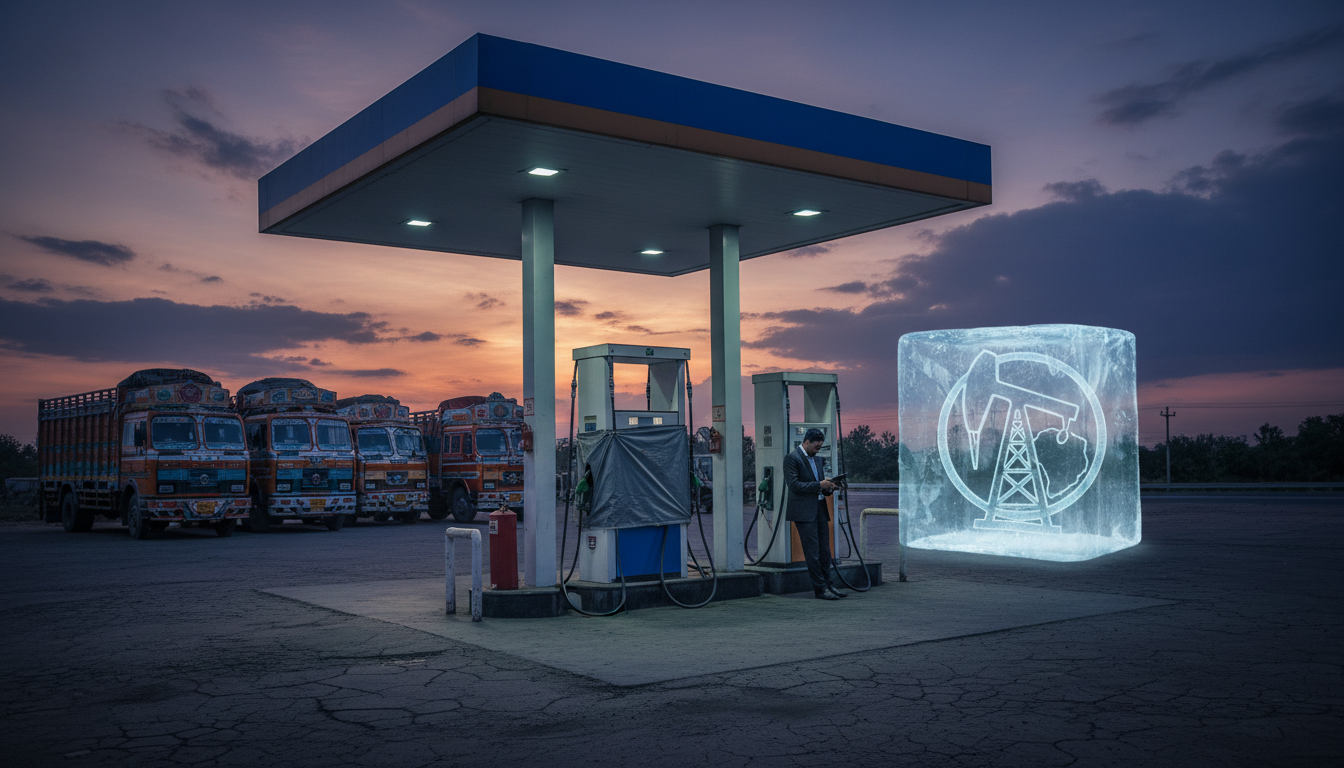
India, a colossal energy consumer and the world’s third-largest crude importer, stands at a critical juncture. Its state-owned oil marketing companies (OMCs) are currently navigating an increasingly challenging financial landscape, shouldering substantial losses to shield the nation’s vast populace from volatile global energy prices. This delicate balancing act, maintaining consumer affordability at the expense of corporate profitability, presents a significant dilemma for both the government and investors monitoring the Indian energy sector.
The Mounting Financial Strain on India’s Energy Giants
For months, major Indian OMCs have been selling essential fuels like gasoline and diesel below their true market cost. This policy, designed to insulate consumers in the world’s most populous country from the sharp spikes in international crude oil prices, has come with an undeniable financial toll. Oil Minister Hardeep Singh Puri recently articulated this concern, highlighting the unsustainability of these mounting losses for the state-owned fuel retailers.
The financial impact on these companies is staggering. Minister Puri revealed that OMCs absorb the full brunt of elevated crude, gas, and LPG import costs. To protect end-users, they then distribute final products at significantly lower rates, leading to “massive mounting losses” that can reach up to ₹1,000 crore per day. Despite these formidable financial headwinds, these corporations have commendably ensured uninterrupted energy imports and consistent supply across the nation. However, the long-term viability of this strategy, and its implications for the financial health of these vital enterprises, remains a paramount concern for market observers and potential investors.
Government’s Dual Challenge: Consumer Relief vs. Corporate Health
The Indian government, under Prime Minister Narendra Modi, faces a complex policy challenge. While committed to mitigating inflationary pressures for its citizens, the financial integrity of its key energy infrastructure providers cannot be indefinitely compromised. Prime Minister Modi recently urged citizens to embrace fuel conservation, advocating for work-from-home arrangements and reduced travel. Minister Puri echoed this sentiment in a social media post, emphasizing India’s unique position in largely maintaining steady energy supplies and stable prices despite global crises. He underscored that “Our energy sector is absorbing the brunt of the impact,” clearly signalling the hidden costs of this consumer-friendly approach.
This policy creates a stark divergence between international energy market realities and domestic retail pricing. As global geopolitical events and supply dynamics continue to drive crude prices higher, the gap between the cost of acquisition for OMCs and their regulated selling prices widens. This expanding disparity directly translates into enhanced financial pressure on the companies’ balance sheets, impacting their profitability, cash flow, and ultimately, their capacity for future investment and growth.
Analyzing the Financial Buffers and Future Outlook
India has previously intervened with fiscal measures to ease the burden, including cuts to taxes on gasoline and diesel prices. However, such interventions, while providing temporary relief, do not address the fundamental market mismatch. Analysts widely agree that these measures are insufficient for a prolonged global energy shock. Dhiraj Nim, an economist at ANZ bank, recently provided a clear forecast: “I am assuming that sometime in Q2, rather sooner than later, they will have to hike retail fuel prices because neither the fiscal buffers nor (the) buffers with the OMCs (oil marketing companies) are enough to withstand a prolonged shock.”
This assessment highlights two critical constraints: the government’s fiscal capacity to absorb subsidy costs through tax revenue and the OMCs’ corporate balance sheets. Both possess finite limits. Prolonged under-recovery of costs erodes the OMCs’ net worth, diminishes their ability to fund capital expenditure, potentially affects their credit ratings, and reduces their attractiveness to investors. For companies like Indian Oil Corporation, Bharat Petroleum Corporation, and Hindustan Petroleum Corporation, which are central to India’s energy security, their financial robustness is not merely a corporate concern but a strategic national imperative.
Investor Implications: Navigating the Inevitable Price Adjustment
For investors eyeing the Indian energy sector, the impending decision on retail fuel prices represents a pivotal moment. A hike in retail prices, while potentially unpopular with consumers, would significantly improve the OMCs’ financial performance, boosting their margins and profitability. This would directly translate into stronger earnings, healthier balance sheets, and potentially higher stock valuations for these state-owned entities. However, such a move could also trigger inflationary pressures across the economy, impacting consumer spending and other sectors.
Conversely, a continued deferral of price increases, while politically expedient in the short term, would further degrade the OMCs’ financial health. This scenario could lead to sustained earnings pressure, reduced dividends, and a dampened investor sentiment towards these crucial players. Investors should closely monitor governmental communications, global crude price trends, and the financial disclosures of major OMCs for indicators of when and how this inevitable market adjustment will occur. The timing and magnitude of any price correction will dictate the trajectory of profitability for these integral components of India’s energy infrastructure and profoundly influence the investment landscape within the country’s dynamic oil and gas sector.


