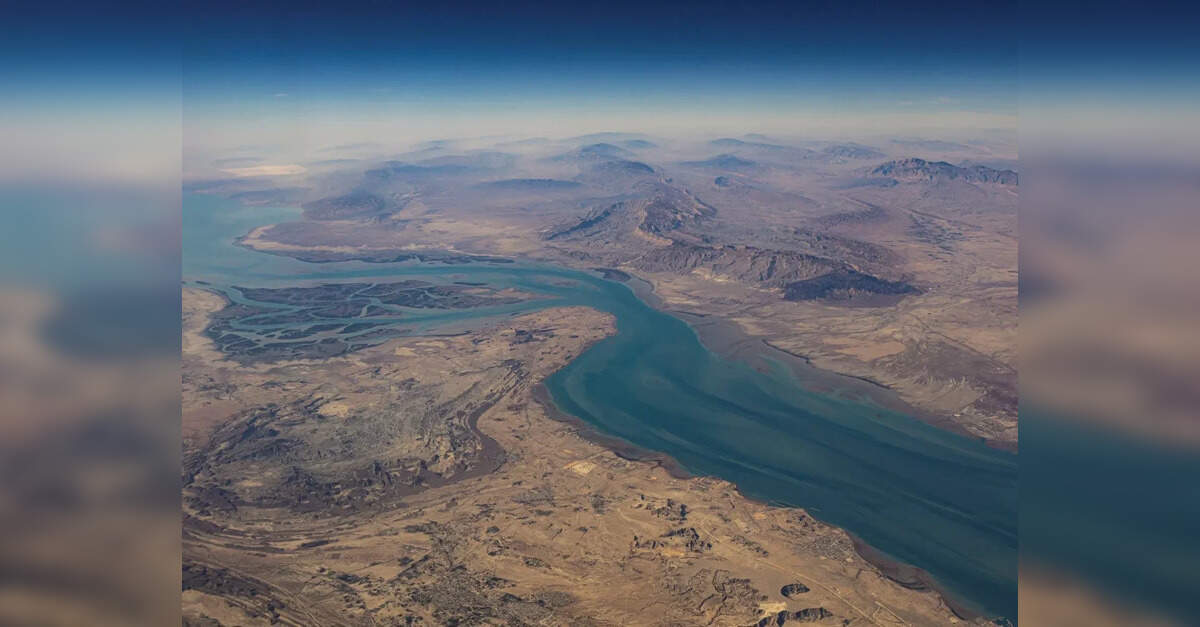
The global energy market is constantly navigating a complex interplay of supply, demand, and geopolitical risk. Recently, tensions in vital maritime corridors, particularly the Strait of Hormuz, have intensified, drawing the attention of major energy importers worldwide. India, heavily reliant on seaborne crude and natural gas, has taken decisive action to fortify its supply chain, deploying naval assets to safeguard its energy lifelines. This strategic move by a nation critical to global energy consumption underscores the persistent vulnerability of maritime trade routes and introduces a new layer of consideration for investors assessing the stability and pricing dynamics of the oil and gas sector.
India’s Proactive Stance Amidst Rising Maritime Threats
The Arabian Sea and the Strait of Hormuz represent an indispensable artery for global oil and gas flows, with a significant portion of the world’s crude passing through its narrow choke points. In an environment of escalating regional conflict, India has moved to protect its commercial shipping, initiating a heightened state of alert and deploying warships to escort tankers and cargo vessels bound for its shores. This protective measure, part of “Operation Sankalp” which has been active since 2019, demonstrates a robust commitment to supply chain resilience.
Concrete actions include the deployment of two Indian Navy task forces strategically positioned near Hormuz, conducting escort missions for India-flagged vessels carrying crucial LPG and crude oil. A recent incident highlighted the immediate need for such vigilance: an Indian warship was observed escorting the tanker Jag Laadki in the Arabian Sea after the vessel narrowly avoided an attack while loading crude at Fujairah port in the UAE. This event, reportedly involving a suspected Iranian drone, underscores the direct and tangible threats to commercial shipping in the region. The comprehensive coordination between India’s Ministry of Defence, Ministry of External Affairs, Ministry of Shipping, and Ministry of Petroleum and Natural Gas ensures that all possible assistance is provided, signaling a unified national effort to secure vital energy imports.
Geopolitical Risks vs. Market Realities: A Current Snapshot
Despite the visible escalation of maritime security measures and the palpable geopolitical tensions in the Gulf, the immediate reaction in crude oil prices has been somewhat subdued. As of today, April 22, 2026, Brent crude trades at $92.99 per barrel, reflecting a slight decrease of 0.27% within a daily range of $92.57 to $94.21. Similarly, WTI crude stands at $89.51 per barrel, down 0.18% for the day, trading between $88.76 and $90.71. This modest daily movement comes against a backdrop of a more significant downtrend over the past two weeks; Brent crude has actually shed over 7% of its value since April 1st, falling from $101.16 to $94.09 by April 21st.
This divergence between heightened geopolitical risk and relatively stable, even declining, oil prices suggests that the market may be pricing in the containment of these incidents rather than anticipating a full-blown supply disruption. Factors such as global demand concerns, adequate inventory levels, and the perception that military escorts might mitigate worst-case scenarios could be dampening the risk premium. However, the omnipresent threat of supply chain interruptions remains a foundational element supporting current price levels, preventing a deeper market correction that might otherwise occur absent these tensions. Investors are keenly aware that any miscalculation or further escalation in the Strait of Hormuz could rapidly reintroduce significant volatility and upward price pressure.
Addressing Investor Concerns: Navigating Price Outlooks
Amidst these dynamic market conditions, a recurring question from our readers revolves around the future trajectory of oil prices: “is WTI going up or down?” and “what do you predict the price of oil per barrel will be by end of 2026?” These questions highlight the market’s inherent uncertainty, particularly when geopolitical factors intertwine with fundamental supply and demand. The fortified Indian supply chain, while a national security imperative, also plays a role in the global energy equilibrium by ensuring consistent access for a major consumer.
For the short term, predicting precise movements for WTI or Brent is challenging due to the unpredictable nature of geopolitical events. However, the proactive measures by nations like India to secure their energy imports can paradoxically inject a degree of stability by reducing the immediate risk of a major supply shock for a significant portion of global demand. Looking towards the end of 2026, the price of oil will be a function of several variables: the pace of global economic recovery, OPEC+ production policies, the rate of energy transition, and crucially, the sustained stability of key maritime choke points. While India’s actions bolster its own energy security, a broader regional escalation could still send ripples across the entire crude complex, making the geopolitical risk premium a persistent feature of price forecasts for the foreseeable future.
Forward Catalysts: Upcoming Data and Geopolitical Watchpoints
For investors seeking to position themselves in the volatile energy market, a close watch on both fundamental data and geopolitical developments is paramount. While military deployments in the Gulf are a constant watchpoint, several key economic data releases are scheduled that will provide crucial insights into the market’s underlying health and potential price direction. The EIA Weekly Petroleum Status Report, a critical barometer for U.S. crude oil and product inventories, is due on April 22nd, April 29th, and May 6th. These reports offer fresh data on supply and demand balances that can significantly influence daily trading.
Further insights into the supply side will come from the Baker Hughes Rig Count on April 24th and May 1st, indicating future production trends. On the demand and inventory front, the API Weekly Crude Inventory reports on April 28th and May 5th will offer an industry-side view ahead of the official EIA numbers. Perhaps most impactful for the medium-term outlook will be the EIA Short-Term Energy Outlook (STEO) scheduled for May 2nd. This comprehensive report provides updated forecasts for crude oil, natural gas, and refined products, offering a benchmark against which market participants can adjust their own projections. Against the backdrop of India’s fortified supply chain and ongoing tensions, these fundamental releases will serve as critical catalysts, either reinforcing existing market sentiment or triggering significant re-evaluations of crude oil’s price trajectory. Investors should meticulously track these dates, as their implications can be amplified by the prevailing geopolitical uncertainty.


