India’s Energy Sector: A Beacon of Growth Amidst Global Volatility
The global energy landscape continues its relentless dance of volatility, yet India’s oil and gas sector is not merely surviving but thriving. As a leading voice in energy investment analysis, we at OilMarketCap.com observe a nation strategically fortifying its energy security through a multi-pronged approach encompassing robust refining expansion and aggressive upstream exploration. This resilience offers a compelling narrative for investors seeking stability and growth in an otherwise turbulent market, particularly against the backdrop of fluctuating crude prices.
India’s Refining Prowess: A Strategic Advantage in Volatile Markets
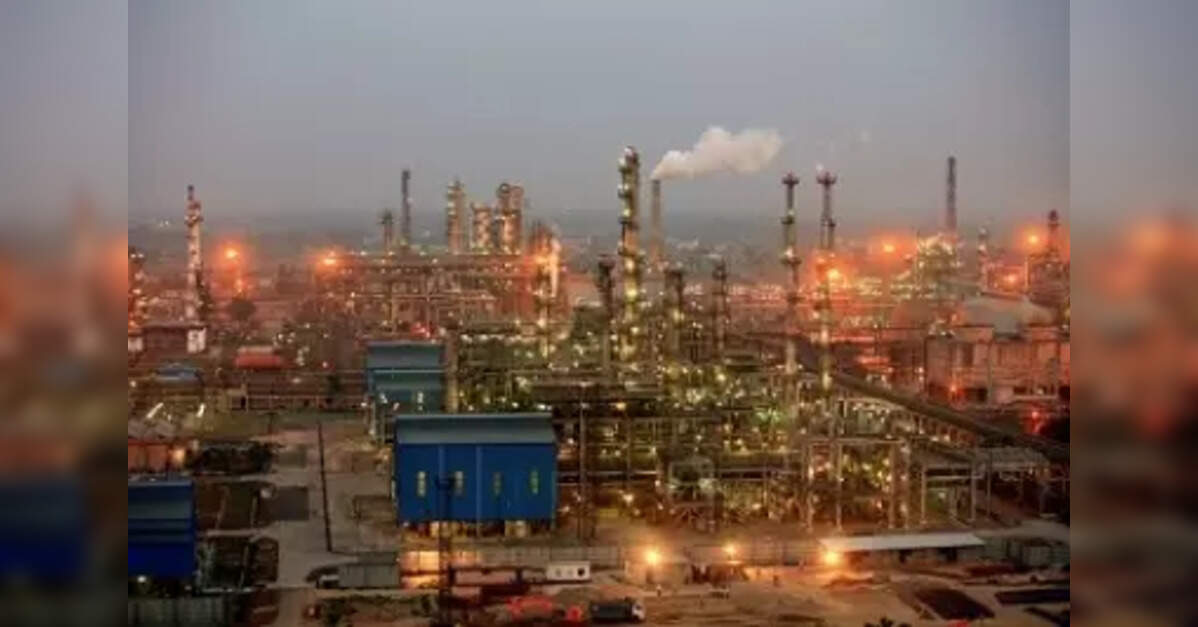
India’s refining capabilities stand as a formidable bulwark against global price swings. The nation has significantly expanded its oil refining capacity, escalating from 215 million metric tonnes per annum (MMTPA) to a robust 258 MMTPA. This expansion is epitomized by facilities like Jamnagar, which now proudly holds the title of Asia’s largest refinery, extending India’s petroleum product exports to over 100 countries. This strategic build-out allows India to capitalize on global crude price differentials, importing raw crude and exporting value-added products, thereby insulating its economy and creating revenue streams.
The timing of this strength is particularly relevant. As of today, Brent Crude trades at $90.38, marking a significant daily decline of 9.07% within a range of $86.08 to $98.97. Similarly, WTI Crude stands at $82.59, down 9.41% for the day. This recent downturn follows a broader trend; Brent has shed $20.91, or 18.5%, over the past 14 days, falling from $112.78 on March 30 to $91.87 yesterday. Such pronounced shifts in crude benchmarks underscore the critical importance of a domestic refining sector that can convert volatile inputs into stable, exportable products. This capacity mitigates the direct impact of crude price fluctuations on domestic consumers while maintaining export revenues, a clear signal to investors of India’s strategic foresight.
Unlocking Upstream Potential: Driving Domestic Energy Security
Beyond refining, India is making substantial strides in its upstream oil and gas exploration and production (E&P) segment. The government’s reforms are designed to foster ease of doing business and attract investment. The Open Acreage Licensing Policy (OALP) Round 10, for instance, has successfully opened up an additional 2.5 lakh square kilometers for exploration and production activities. Furthermore, the regulatory burden has been significantly eased, with the number of clearances required for E&P operations slashed from 37 to 18. This streamlined process, coupled with an investment exceeding $1.3 billion in the upstream segment, signals a determined push to enhance domestic oil and gas output.
A pivotal move in this drive for self-reliance was the opening of nearly one million square kilometers of previously restricted ‘No-Go’ offshore areas in 2022. This policy change has already yielded tangible results, with E&P companies operating in India reporting 172 hydrocarbon discoveries since 2015, 62 of which are in offshore regions. Investors are keenly focused on the long-term trajectory of oil prices, often asking what price per barrel we predict by the end of 2026. India’s aggressive investment in domestic E&P is a clear response to this uncertainty, aiming to secure energy independence regardless of global market dynamics. This reduces reliance on imports, positioning India favorably against future price surges and supply disruptions.
The Andaman Basin: A New Frontier for Hydrocarbon Discoveries
One of the most exciting developments in India’s E&P story is the renewed focus on the Andaman and Nicobar (AN) basin. This geologically promising region, situated at the confluence of the Andaman and Nicobar Basins within the larger Bengal-Arakan sedimentary system, boasts a unique tectonic setting. Its location at the boundary of the Indian and Burmese plates has created numerous stratigraphic traps, ideal conditions for hydrocarbon accumulation. The basin’s proximity to proven petroleum systems in Myanmar and North Sumatra further amplifies its potential, attracting significant international interest following recent gas discoveries in South Andaman offshore Indonesia.
State-owned giants ONGC and Oil India Ltd (OIL) have launched an ambitious exploration campaign in the Andaman ultra-deepwater region, targeting drilling depths of up to 5,000 meters for the first time. Early indications are highly encouraging. A wildcat well, ANDW-7, drilled in a carbonate play in the East Andaman Back Arc region, has yielded promising geological insights. These include traces of light crude and condensate in cutting samples, alongside heavy hydrocarbons like C-5 neo-pentane in trip gases. These findings are groundbreaking, establishing the existence of an active thermogenic petroleum system in the region, akin to those in Myanmar and North Sumatra. While commercial reserves are yet to be definitively established, these initial results significantly de-risk future exploration and highlight the substantial potential for future discoveries in this frontier basin.
Navigating Global Headwinds: Upcoming Events and India’s Strategic Position
The global energy market remains highly sensitive to key events, and India’s strategic positioning allows it to navigate these influences effectively. Investors are closely monitoring upcoming dates, particularly the OPEC+ Joint Ministerial Monitoring Committee (JMMC) meeting tomorrow, April 18th, followed by the Full Ministerial OPEC+ Meeting on April 19th. These gatherings are crucial, as potential adjustments to production quotas could significantly impact global supply and, consequently, crude oil prices. Many readers are asking about current OPEC+ production quotas, underscoring the market’s anxiety over supply stability.
Further insights into market fundamentals will emerge with the API Weekly Crude Inventory report on April 21st and the EIA Weekly Petroleum Status Report on April 22nd. These reports provide vital data on U.S. crude stockpiles and demand trends, influencing short-term price movements. The Baker Hughes Rig Count, due on April 24th, will offer a snapshot of drilling activity, a bellwether for future production. While these events can introduce volatility, India’s dual strategy of expanding refining capacity and intensifying domestic E&P offers a degree of insulation. By enhancing internal capabilities, India aims to reduce its vulnerability to global supply shocks and price fluctuations stemming from international policy decisions or inventory surprises, reinforcing its position as a resilient and attractive investment destination in the global energy landscape.


