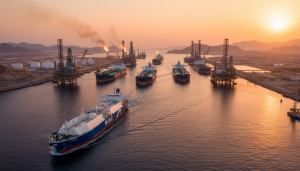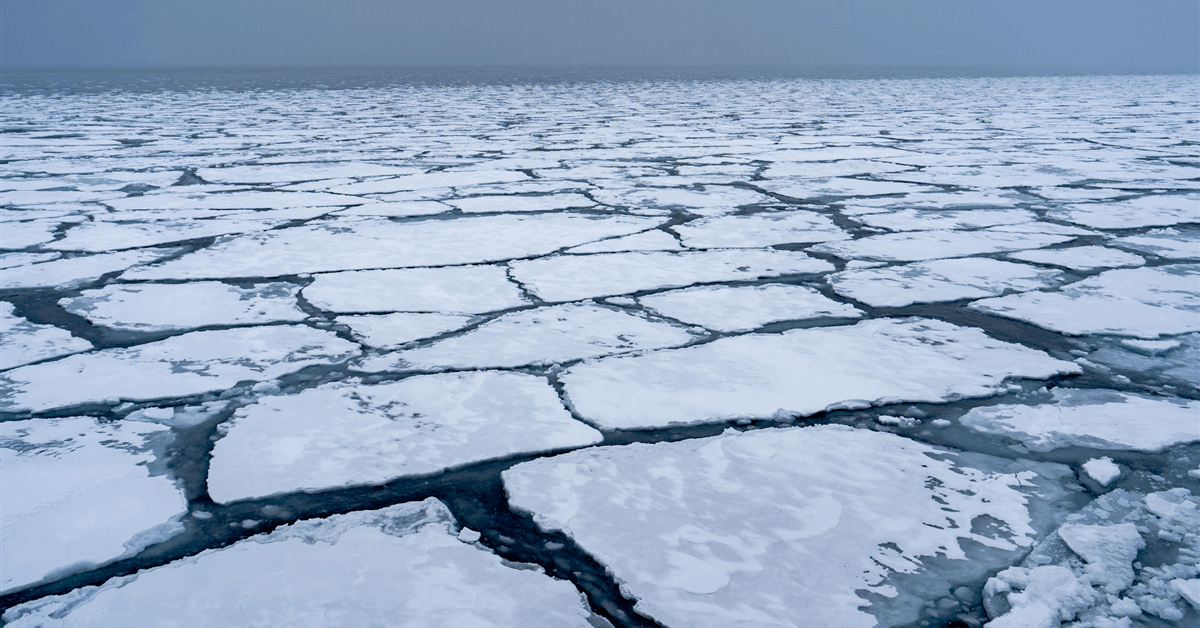
The most extensive sea ice in 15 years around Russia’s key Baltic Sea commodity ports could curb a chunk of the nation’s vast exports program because of a shortage of vessels that can cope with the conditions.
From Monday, the key oil terminal of Primorsk, and the Vysotsk fuel port stipulated non-ice-class ships must have individual ice-breaker escorts, according to orders from the two facilities, published on the website for the administration of Russia’s Baltic ports.
The Gulf of Finland, home to 40% of Russia’s seaborne oil exports, is now mostly covered with ice and the affected area continues to grow, according to Alexander Kolesov, chief weather forecaster of St. Petersburg. Similar developments were last seen in February 2010 and 2011, he said in a Telegram post.
The icy conditions, combined with a shortage of vessels with strengthened hulls, are complicating exports of crude, fuels and other cargoes from the region, according to five people involved in the industry.
Russia’s energy ministry and the nation’s five largest oil producers didn’t immediately respond to Bloomberg requests for comment.
To deal with the issue, Russia is redeploying ice breakers — the Sibir and the Murmansk — from the Arctic — taking the fleet in the Gulf of Finland up to six by the end of this month.
Russia’s transport ministry has told vessel operators “to take this circumstance into account when making a decision to send ships to the Gulf of Finland” — a reference to the ice breakers not arriving until month-end.
Kommersant reported on Tuesday that metals and fertilizer industry groups have complained to the country’s transport ministry that a lack of ice-breaker vessels is affecting commodity exports. The waiting time for vessels at the assembly point for ice-breaker convoys to enter Baltic ports has increased by 5 to 7 days, according to Roman Sokolov, director of the Moscow-based Price Benchmark Center.
It’s uncertain how the conditions are affecting the oil trade so far. There were 23 tankers in the area as of Monday. Of those, only three arrived last week but haven’t yet loaded, vessel tracking compiled by Bloomberg show.
However, oil exports from Primorsk fell to 490,000 barrels a day in the first half of February, a drop of a third from a year earlier and 50% from the same period in 2024.
Sanctions, Ruble, Prices
The freeze is one more problem for Russia and its oil producing giants, who’re already being squeezed by western sanctions, a strong ruble, and depressed prices for the country’s crude.
Moscow’s oil shipments are down by about 500,000 barrels a day from a pre-Christmas peak. Also, piped deliveries to Hungary and Slovakia have been halted after a pump station in western Ukraine, part of the conduit to Europe, was hit during Russian strikes in the area.
Meanwhile about 140 million barrels of crude are held on tankers, with vessels forced to make longer voyages to China amid a pull-back by Indian refiners and some ships idling for weeks. The amount of Russian oil at sea has jumped by about 60% since the end of August.
The discounts against benchmark Brent crude that Russia’s oil shippers have to offer to shift their barrels has widened to about $15 a barrel, according to data from Argus Media. That’s up from about $3 a barrel in November.
Meanwhile, Russia’s hull requirements could get tougher in less than two weeks.
If the ice thickens to 30-50 centimeters — as little as 5 centimeters more than current levels — then the ports of Ust-Luga, Primorsk and Vysotsk will all ban entry of all non-ice-class ships from March 1, irrespective of escort availability, according to orders from all three ports.
Currently, Ust-Luga still allows non-ice class vessels to enter without restrictions.
Russia’s transport ministry said it expects ice thickness to reach 30 to 40 centimeters by March. It’s working on a system to evaluate individual ships’ ice-breaking capabilities to alleviate the situation.
There are different standards of ice-class tanker, allowing them to operate in different ice conditions.
Generated by readers, the comments included herein do not reflect the views and opinions of Rigzone. All comments are subject to editorial review. Off-topic, inappropriate or insulting comments will be removed.
element
var scriptTag = document.createElement(‘script’);
scriptTag.src = url;
scriptTag.async = true;
scriptTag.onload = implementationCode;
scriptTag.onreadystatechange = implementationCode;
location.appendChild(scriptTag);
};
var div = document.getElementById(‘rigzonelogo’);
div.innerHTML += ” +
‘ ‘ +
‘ +
”;
var initJobSearch = function () {
////console.log(“call back”);
}
var addMetaPixel = function () {
if (-1 > -1 || -1 > -1) {
/*Meta Pixel Code*/
!function(f,b,e,v,n,t,s)
{if(f.fbq)return;n=f.fbq=function(){n.callMethod?
n.callMethod.apply(n,arguments):n.queue.push(arguments)};
if(!f._fbq)f._fbq=n;n.push=n;n.loaded=!0;n.version=’2.0′;
n.queue=[];t=b.createElement(e);t.async=!0;
t.src=v;s=b.getElementsByTagName(e)[0];
s.parentNode.insertBefore(t,s)}(window, document,’script’,
‘https://connect.facebook.net/en_US/fbevents.js’);
fbq(‘init’, ‘1517407191885185’);
fbq(‘track’, ‘PageView’);
/*End Meta Pixel Code*/
} else if (0 > -1 && 74 > -1)
{
/*Meta Pixel Code*/
!function(f,b,e,v,n,t,s)
{if(f.fbq)return;n=f.fbq=function(){n.callMethod?
n.callMethod.apply(n,arguments):n.queue.push(arguments)};
if(!f._fbq)f._fbq=n;n.push=n;n.loaded=!0;n.version=’2.0′;
n.queue=[];t=b.createElement(e);t.async=!0;
t.src=v;s=b.getElementsByTagName(e)[0];
s.parentNode.insertBefore(t,s)}(window, document,’script’,
‘https://connect.facebook.net/en_US/fbevents.js’);
fbq(‘init’, ‘1517407191885185’);
fbq(‘track’, ‘PageView’);
/*End Meta Pixel Code*/
}
}
// function gtmFunctionForLayout()
// {
//loadJS(“https://www.googletagmanager.com/gtag/js?id=G-K6ZDLWV6VX”, initJobSearch, document.body);
//}
// window.onload = (e => {
// setTimeout(
// function () {
// document.addEventListener(“DOMContentLoaded”, function () {
// // Select all anchor elements with class ‘ui-tabs-anchor’
// const anchors = document.querySelectorAll(‘a .ui-tabs-anchor’);
// // Loop through each anchor and remove the role attribute if it is set to “presentation”
// anchors.forEach(anchor => {
// if (anchor.getAttribute(‘role’) === ‘presentation’) {
// anchor.removeAttribute(‘role’);
// }
// });
// });
// }
// , 200);
//});