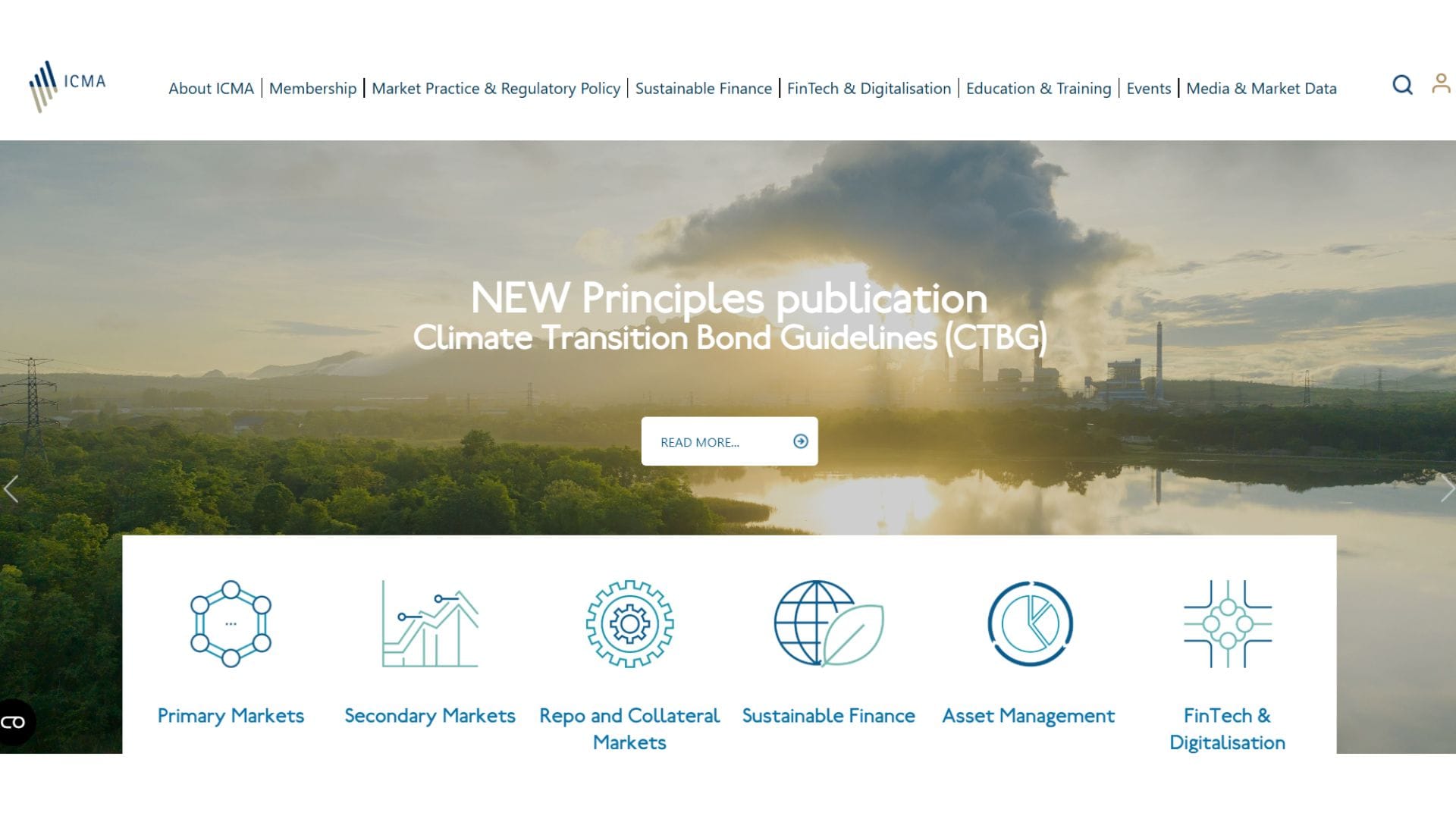
The global energy landscape is in constant flux, but few developments signal a more profound shift than the introduction of new financial instruments designed to funnel capital into decarbonization. The International Capital Market Association (ICMA) has just unveiled its Climate Transition Bond Guidelines (CTBG), a significant step that redefines how capital markets will finance the energy transition, especially for hard-to-abate sectors. For savvy oil and gas investors, these guidelines are not merely a regulatory update; they represent a crucial framework for evaluating future capital allocation, risk management, and growth opportunities within an evolving industry.
Strengthening the Framework for Decarbonization Finance
The newly published Climate Transition Bond Guidelines (CTBG) mark an expansion of the established sustainable bond market, now valued at over $6 trillion. Unlike traditional green bonds, which often focus on readily identifiable green projects, CTBGs introduce a distinct “use-of-proceeds” label specifically for “Climate Transition Projects.” This distinction is critical for the oil and gas sector because it targets activities that drive measurable emissions reductions or support systemic decarbonization in high-emission industries such as steel, cement, and transportation – areas traditionally underserved by standard green finance. For integrated energy companies, this means new pathways to fund initiatives like carbon capture and storage (CCS), blue hydrogen production, or significant industrial process overhauls, allowing them to participate more directly and credibly in the transition economy. The accompanying Climate Transition Finance Handbook (CTFH) further bolsters this framework by offering detailed methodologies for assessing issuer credibility, providing investors with robust tools to scrutinize transition plans.
Navigating Market Volatility with Strategic Capital Allocation
The timing of these new guidelines is particularly poignant, arriving amidst a period of significant volatility in crude markets. As of today, Brent crude trades at $90.38, marking a sharp decline of 9.07% within the day, with its price swinging between $86.08 and $98.97. This recent downturn is part of a broader trend, with Brent having shed $22.4, or nearly 19.9%, from its $112.78 perch just two weeks ago. WTI crude has followed a similar trajectory, currently priced at $82.59, down 9.41% today. Gasoline prices have also seen a drop to $2.93, a 5.18% decrease. This market instability underscores the critical need for energy companies to diversify their capital allocation strategies and secure financing for long-term, decarbonization-focused projects. For investors, the sharp crude price correction highlights the inherent risks of relying solely on fossil fuel revenues and reinforces the attractiveness of companies demonstrating credible pathways to a lower-carbon future. The CTB framework provides a standardized and transparent mechanism to fund these strategic shifts, potentially offering a more stable investment thesis compared to the fluctuating short-term commodity markets.
Investor Queries: De-risking Portfolios and Long-Term Outlook
Our proprietary data indicates that investors are keenly focused on the future trajectory of energy companies and the broader oil market. Questions such as “How well do you think Repsol will end in April 2026?” and “What do you predict the price of oil per barrel will be by end of 2026?” clearly signal a desire for clarity amidst uncertainty. While specific price predictions are always challenging, the emergence of the CTBG offers a lens through which to assess the resilience and adaptability of integrated energy players. Companies like Repsol, with diversified operations and stated decarbonization targets, can leverage these new bonds to fund their transition initiatives, potentially enhancing their financial performance by attracting a wider pool of sustainability-focused capital. This commitment to transition, backed by verifiable financing, becomes a crucial factor in de-risking investor portfolios against future carbon liabilities and market shifts. Furthermore, inquiries about “OPEC+ current production quotas” underscore the ongoing relevance of supply-side fundamentals. However, the CTBG signals that even as immediate supply decisions drive short-term price action, the long-term investment landscape is increasingly shaped by robust, transparent, and credible transition strategies.
Upcoming Events and the Strategic Imperative for Transition
The immediate horizon for the energy sector is packed with events that could sway market sentiment, yet the strategic imperative for transition remains paramount. The upcoming OPEC+ Joint Ministerial Monitoring Committee (JMMC) Meeting on April 19th, followed by the full OPEC+ Ministerial Meeting on April 20th, will undoubtedly influence near-term crude supply dynamics. While these meetings, alongside the weekly API and EIA inventory reports on April 21st, 22nd, 28th, and 29th, and the Baker Hughes Rig Count on April 24th and May 1st, offer critical insights into market fundamentals, they operate within a larger context of evolving capital flows. The introduction of the CTBG provides a standardized playbook for energy companies to align their funding with climate goals, irrespective of short-term supply adjustments. Investors should closely watch how major energy players integrate these guidelines into their financing strategies. Expect to see increased adoption of CTBs by companies seeking to fund initiatives like blue hydrogen infrastructure, carbon capture projects, or renewable energy expansions. This structured approach to transition finance will be a key differentiator, allowing investors to identify companies that are not just talking about decarbonization but are actively securing capital to achieve it.
A New Era for Sustainable Oil and Gas Investing
The ICMA’s Climate Transition Bond Guidelines represent more than just a new financial product; they are a critical evolution in sustainable finance, providing a much-needed framework for credible decarbonization efforts in hard-to-abate sectors. For oil and gas investors, this means a clearer path to identify companies genuinely committed to and capable of navigating the energy transition. In a market where crude prices can plunge nearly 20% in two weeks, as Brent has recently demonstrated, the stability and long-term vision offered by well-structured transition projects funded through CTBs become increasingly attractive. As the industry approaches crucial OPEC+ decisions and weekly inventory updates, the broader trend is undeniable: capital is flowing towards verifiable sustainability. Investors who understand and incorporate the CTBG framework into their analysis will be better positioned to identify leaders in the new energy economy and capitalize on the immense opportunities within the evolving oil and gas landscape.


