

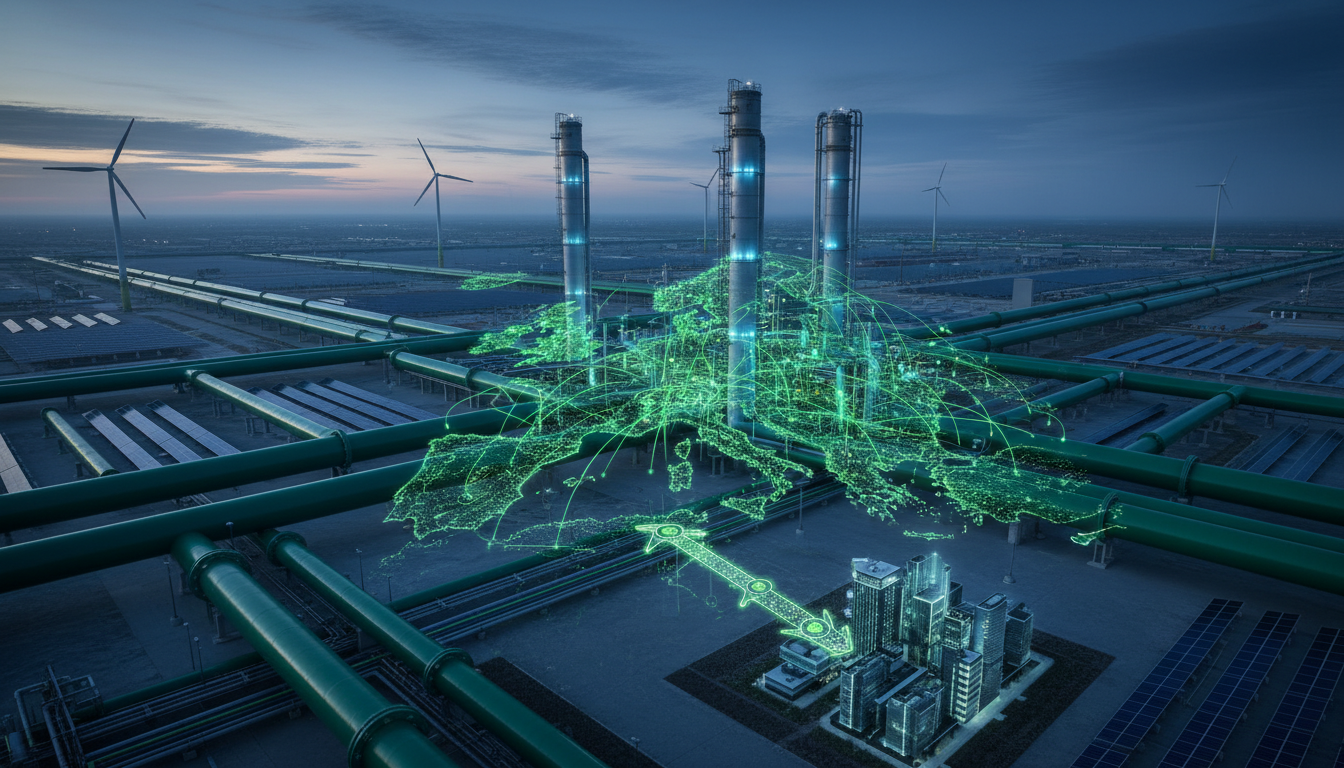
Etzel Project Achieves Landmark: Underground Hydrogen Storage Accelerates Green Energy Transition
The pursuit of robust, scalable energy storage solutions for a decarbonized future took a significant leap forward in mid-March with the successful completion of the initial hydrogen filling phase at the H2CAST Etzel pilot project in Germany. This pivotal achievement, spearheaded by leading energy infrastructure entities STORAG ETZEL and Gasunie, signals a major stride toward proving the viability of large-scale underground hydrogen storage – a critical component for stabilizing future renewable energy grids and fueling industrial decarbonization.
Investors keenly watching the evolving hydrogen economy will note the precision and scale of this initial operation. The consortium meticulously injected approximately 90 tonnes, equating to an impressive 1 million standard cubic metres, of hydrogen into the project’s two purpose-adapted caverns. This substantial quantity, delivered via the sequential emptying of 200 trailers, underscores the logistical capability and technical readiness already being demonstrated at Etzel. It represents not just a technical fill, but a tangible commitment to developing the necessary infrastructure for a hydrogen-powered future.
Strategic Importance: Unlocking the Hydrogen Economy’s Full Potential
The successful filling of these caverns represents far more than a mere operational milestone; it signifies a critical validation point in the broader energy transition narrative. As global economies increasingly pivot towards intermittent renewable energy sources like wind and solar, the challenge of energy storage grows paramount. Hydrogen, particularly green hydrogen produced via electrolysis, offers a compelling solution for storing vast amounts of energy over extended periods, effectively acting as a chemical battery for the grid.
Underground storage in geological formations, such as the salt caverns utilized at Etzel, stands out as the most economical and efficient method for storing hydrogen at the gigawatt-hour scale. This capability is essential for balancing seasonal demand fluctuations, ensuring energy security, and supporting industrial processes that require a continuous, high-volume supply of clean energy. The H2CAST consortium’s explicit aim to demonstrate the comprehensive feasibility of underground hydrogen storage directly addresses one of the most pressing infrastructure gaps in the emerging hydrogen value chain.
Leveraging Existing Infrastructure: A Pathway to Scalability
A key strategic advantage of the Etzel project lies in its utilization of existing salt caverns, traditionally employed for natural gas storage. This repurposing of established infrastructure offers a compelling blueprint for accelerated development and potentially lower capital expenditure compared to constructing entirely new facilities. STORAG ETZEL, with its deep expertise in cavern operations, and Gasunie, a leading European gas infrastructure company, bring unparalleled experience to this innovative conversion, minimizing risk and maximizing the potential for successful scaling.
The meticulous process of adapting these caverns for hydrogen presents unique engineering challenges, particularly concerning material compatibility, sealing integrity, and operational safety. The achievement of this initial fill phase indicates the consortium’s robust technical approach and their capability to overcome these hurdles, laying groundwork that could be replicated across other mature gas storage regions globally. This transferable expertise holds significant appeal for investors eyeing long-term infrastructure plays in the green energy sector.
The Road Ahead: Advanced Testing and Commercialization Prospects
While the initial filling marks a significant accomplishment, the journey for the H2CAST Etzel project is still unfolding. The next critical phase involves the construction and commissioning of a unique pilot test plant, currently underway, specifically designed to evaluate the efficiency of hydrogen purification processes and the dynamics of multi-cyclic cavern operation. This facility is slated to be ready for its inaugural tests in 2026, marking the next major data-collection and validation point for the project.
The focus on purification is crucial, as hydrogen stored in geological formations can interact with residual gases or minerals, potentially affecting its purity. For many industrial applications and fuel cells, high-purity hydrogen is non-negotiable. Furthermore, multi-cyclic operation – repeatedly injecting and withdrawing hydrogen – will test the long-term integrity and performance of the storage solution under real-world demand fluctuations. The data gleaned from these rigorous tests will be instrumental in de-risking future commercial-scale projects and informing global best practices for underground hydrogen storage.
Investment Horizon: Opportunities in Hydrogen Infrastructure
For sophisticated investors, the H2CAST Etzel project represents a tangible indicator of the accelerating momentum within the hydrogen sector. Successful large-scale storage is not merely a technicality; it is a lynchpin that unlocks broader investment opportunities across the hydrogen value chain, from production and transportation to end-use applications. Companies proficient in repurposing existing infrastructure, developing advanced purification technologies, and managing complex energy assets stand to benefit significantly.
The strategic collaboration between STORAG ETZEL and Gasunie exemplifies the kind of cross-sector partnerships essential for de-risking pioneering energy infrastructure projects. Their combined financial strength, technical acumen, and strategic vision position this project as a frontrunner in demonstrating viable, grid-scale hydrogen storage. As the world races to meet decarbonization targets, projects like Etzel will serve as foundational pillars, transforming ambitious climate goals into concrete, commercially viable energy solutions and offering compelling long-term value propositions for discerning investors.
