Hungary’s latest energy maneuver, initiating discussions to secure nuclear fuel from the United States while simultaneously upholding its long-standing supply agreements with Russia, signals a profound recalibration in global energy strategy. For astute investors, this isn’t merely a diplomatic balancing act; it’s a blueprint for de-risking national energy matrices in an era of heightened geopolitical uncertainty and fluctuating commodity markets. This two-pronged approach underscores a strategic commitment to bolstering domestic energy security and meeting escalating power demand, positioning nuclear power as an increasingly indispensable, stable, and low-carbon baseload source. The implications ripple across the energy sector, highlighting burgeoning opportunities in nuclear infrastructure, fuel supply, and related technologies, even as traditional fossil fuel markets navigate significant headwinds.
Hungary’s Strategic Nuclear Expansion and Supply Diversification
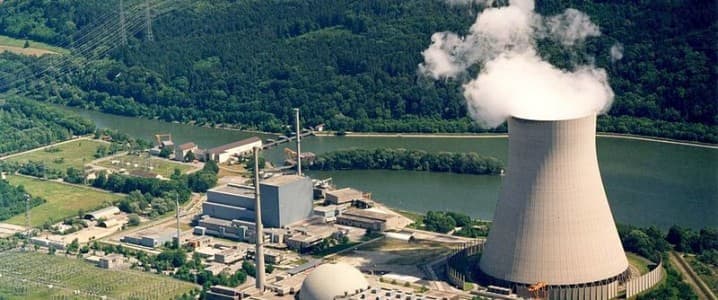
At the core of Hungary’s strategy lies the ambitious expansion of its Paks nuclear plant. Currently, Paks operates four Russian-built VVER 440 reactors, collectively generating 2,000 megawatts for the national grid. However, Budapest is poised to dramatically increase this capacity with the addition of two new 1.2 gigawatt reactors, known as Paks II, to be constructed by Russia’s state-owned nuclear giant, Rosatom. This expansion will nearly triple Hungary’s nuclear energy footprint, inherently escalating its demand for nuclear fuel. Foreign Minister Peter Szijjarto has explicitly stated that consultations with the United States for nuclear fuel are not a departure from Russia, but rather a strategic enhancement, designed to ensure the safe and diversified supply necessary for this expanded capacity. This pragmatic approach to energy resilience, minimizing single-source dependencies, provides a compelling investment thesis in nations committed to long-term energy stability through diversified nuclear portfolios.
The Evolving U.S. Nuclear Fuel Landscape and Investment Opportunities
Hungary’s interest in U.S. nuclear fuel comes at a transformative moment for the American nuclear industry. Historically, the U.S. has been a significant net importer of uranium concentrate, with the U.S. Energy Information Administration (EIA) reporting that approximately 99% of the roughly 32 million pounds of uranium concentrate (U3O8) consumed annually is imported, with domestic production accounting for a mere 0.05 million pounds. Key suppliers have traditionally included Canada, Australia, Russia, Kazakhstan, and Uzbekistan. However, a concerted effort by the U.S. federal government is underway to revitalize and diversify its domestic nuclear fuel supply chain. In 2024, the U.S. Department of Energy (DOE) received a substantial $2.7 billion in government funding, specifically earmarked to strengthen domestic nuclear fuel production and reduce reliance on Russian enriched uranium. This funding aims to boost enrichment capacity, particularly for High-Assay, Low-Enriched Uranium (HALEU), which is critical for advanced reactor designs. Companies like Centrus Corp. (NYSE:LEU), based in Maryland, are at the forefront of this domestic resurgence, presenting direct investment opportunities in the re-shoring of critical nuclear energy components.
Nuclear as a Hedge Amidst Volatile Hydrocarbon Markets
The strategic appeal of nuclear diversification is amplified by the current volatility in global hydrocarbon markets. As of today, Brent crude trades at $90.38 per barrel, marking a significant 9.07% decline from its opening, with its daily range spanning $86.08 to $98.97. Similarly, WTI crude has fallen to $82.59, down 9.41% within a range of $78.97 to $90.34. This sharp downturn is a stark reminder of the market’s inherent instability, particularly following a 14-day Brent trend that saw prices drop from $112.78 on March 30th to today’s $90.38, representing a nearly 20% contraction. Gasoline prices reflect this trend, currently standing at $2.93, a 5.18% decrease. For investors seeking stability, these price swings underscore the value of baseload nuclear power, which offers predictable generation costs largely insulated from the geopolitical forces and supply-demand dynamics that frequently whipsaw oil and gas markets. Governments, like Hungary’s, recognizing this inherent stability, are actively de-risking their energy portfolios, making nuclear energy infrastructure and fuel supply chains increasingly attractive long-term investments.
Navigating Future Energy Shifts: Key Investor Questions and Upcoming Catalysts
Our proprietary reader intent data reveals that investors are keenly focused on future oil price trajectories and the actions of key market players. Questions like “what do you predict the price of oil per barrel will be by end of 2026?” and “What are OPEC+ current production quotas?” dominate discussions. This forward-looking perspective highlights the ongoing uncertainty in fossil fuel markets, which further bolsters the investment case for stable energy sources like nuclear. This week, the market is closely watching several critical events. The OPEC+ JMMC Meeting on April 19th and the subsequent OPEC+ Ministerial Meeting on April 20th are pivotal, as any decisions on production quotas could significantly impact global supply and price stability. Furthermore, the API Weekly Crude Inventory report on April 21st and the EIA Weekly Petroleum Status Report on April 22nd will provide fresh insights into U.S. supply dynamics, while the Baker Hughes Rig Count on April 24th offers a pulse on drilling activity. These recurring events, alongside the subsequent API and EIA reports on April 28th and 29th, and another Baker Hughes count on May 1st, will continue to shape the near-term outlook for oil and gas. For investors, these ongoing uncertainties reinforce the strategic imperative of diversifying into sectors like nuclear, which offer a hedge against the inherent volatility and geopolitical sensitivities of the hydrocarbon complex, promising greater energy independence and predictable returns over the long term.


