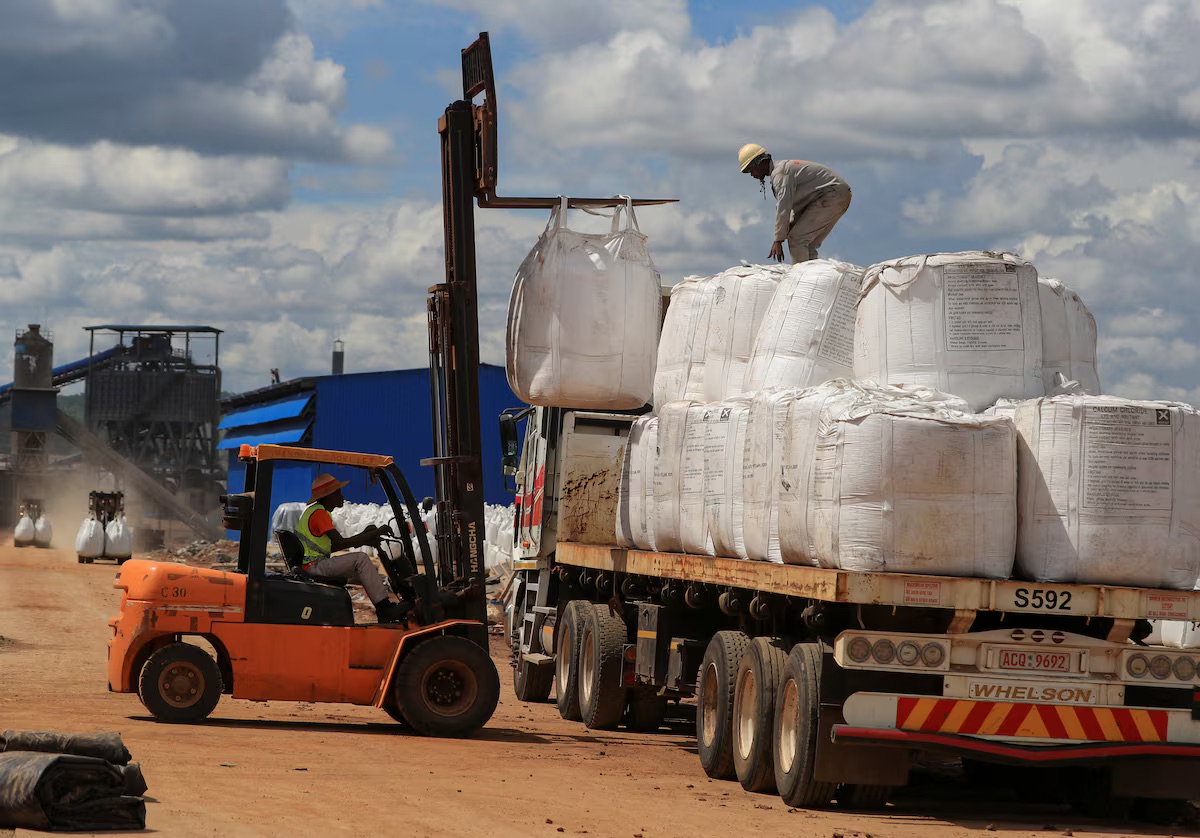
The global energy landscape is undergoing a profound transformation, with critical minerals like lithium increasingly taking center stage alongside traditional hydrocarbons. A recent announcement from China’s Zhejiang Huayou Cobalt underscores this shift, with the company confirming plans to commence lithium sulphate production from its new $400 million plant in Zimbabwe during the first quarter of 2026. This move, stemming from its wholly-owned Prospect Lithium Zimbabwe’s Arcadia mine, is not merely an operational update; it represents a significant strategic pivot in securing the burgeoning electric vehicle (EV) supply chain and has broad implications for energy investors.
Huayou’s investment in an intermediate processing facility, capable of exceeding 50,000 metric tons of lithium sulphate annually, aligns directly with Zimbabwe’s national ambition to localize mineral processing. This development will see the southern African nation, already Africa’s top lithium producer, transition from primarily exporting raw concentrates to producing higher-value processed materials. For investors keenly watching the future of energy, understanding these parallel developments in both conventional and new energy sectors is paramount.
Navigating Volatility: The Broader Energy Market Context
While the focus on critical minerals intensifies, the traditional oil and gas market continues to set the overarching tone for investor sentiment in the energy sector. As of today, Brent crude trades at $90.38 per barrel, reflecting a significant 9.07% decline from its previous close. Similarly, WTI crude has seen a substantial drop of 9.41%, now priced at $82.59. This recent market turbulence is part of a broader trend; in the past 14 days alone, Brent has fallen from $112.78 to its current level, a nearly 20% depreciation. This kind of volatility in crude prices, alongside gasoline trading at $2.93 per gallon, underscores the ongoing supply-demand dynamics and geopolitical uncertainties that impact all energy investments. For companies like Huayou, operating within this fluctuating macro environment, the strategic importance of securing diversified, localized supply chains for critical minerals becomes even clearer. Stable and predictable access to these resources can act as a counterbalance to the price swings seen in the fossil fuel markets, offering a different facet of energy security and investment stability.
Forward-Looking Catalysts: Zimbabwe’s Processing Push and Global Supply Chains
Huayou’s early 2026 timeline for lithium sulphate production is a critical marker for the future of the EV battery supply chain. Lithium sulphate, as an intermediate product, is a crucial step towards battery-grade lithium hydroxide or carbonate. The projected output of more than 60,000 metric tons will significantly enhance the global availability of processed lithium, moving beyond mere raw concentrate exports. This move is accelerated by Zimbabwe’s forward-looking policy to ban the export of lithium concentrates starting in 2027, an aggressive push to force local value addition. This calendar event is not merely a local regulation; it’s a powerful signal to global miners and investors about the long-term direction of critical mineral supply. Other Chinese firms, including Sinomine, are following suit, with Sinomine announcing its own $500 million lithium sulphate plant at its Bikita mine. These synchronized efforts point to a profound restructuring of the global lithium supply chain, emphasizing in-country processing. While these developments unfold, the broader energy market will also be shaped by upcoming events. Investors will be closely watching the OPEC+ Joint Ministerial Monitoring Committee (JMMC) Meeting on April 19th and the subsequent Ministerial Meeting on April 20th for cues on crude production quotas. Additionally, the API Weekly Crude Inventory reports on April 21st and 28th, along with the EIA Weekly Petroleum Status Reports on April 22nd and 29th, will offer crucial insights into short-term supply and demand. These events, though focused on traditional oil, collectively influence the capital flow and risk appetite across the entire energy sector, including investments in critical minerals. The stability and predictability these reports offer can indirectly bolster investor confidence in long-term critical mineral projects like Huayou’s.
Addressing Investor Concerns: Supply Security and Long-Term Trends
Our proprietary data indicates that investors are keenly focused on several critical questions this week, notably “what do you predict the price of oil per barrel will be by end of 2026?” and inquiries surrounding the reliability and diversification of energy supply chains. Huayou’s substantial investment directly addresses the latter, offering a tangible example of efforts to secure future energy resources. By establishing a robust processing capability within Zimbabwe, Huayou is mitigating geopolitical risks and reducing reliance on a single point of processing, a concern amplified by current global trade dynamics. The company, which acquired the Arcadia lithium mine for $422 million in 2022 and commissioned a $300 million lithium concentrator in 2023, is clearly executing a long-term strategy. In 2024, Huayou exported 400,000 tons of lithium concentrate from Zimbabwe, highlighting the sheer volume of raw material involved. The upcoming ban on concentrate exports in 2027 by Zimbabwe is a powerful government mandate forcing this localization, creating a more resilient and integrated supply chain for battery manufacturers. For investors looking at the long-term energy transition, understanding these localized processing initiatives is vital. They represent a fundamental shift away from simple resource extraction towards integrated supply chains that reduce vulnerability to export restrictions and enhance the overall security of critical mineral supply for the global EV industry.
Strategic Implications: China’s Dominance and Global Diversification
The move by Huayou, alongside other Chinese metals firms like Sinomine, Chengxin Lithium Group, Yahua Group, and Tsingshan Holding, solidifies China’s dominant position in Zimbabwe’s lithium mining and processing landscape. These companies collectively control a significant portion of Zimbabwe’s lithium output, funneling concentrates and now intermediate products back to China. This strategic vertical integration, from mining to initial processing, grants China a substantial competitive advantage in the global EV battery manufacturing sector. For Western automakers and battery producers, Huayou’s project underscores the urgent need for accelerated investment in alternative supply chains and processing capabilities outside of China. The 2027 export ban by Zimbabwe is a double-edged sword: while it promotes local value addition, it also concentrates processing capacity, at least initially, within the sphere of the dominant Chinese players already operating there. Investors must consider how this consolidation impacts the broader market for lithium, influencing pricing, availability, and the geopolitical dimensions of critical mineral sourcing. The capacity of Prospect Lithium Zimbabwe’s Arcadia mine to exceed 50,000 metric tons of lithium sulphate annually, with an executive noting it could be “more than 60,000 metric tons” depending on plant configuration, is a significant volume that will shape the global lithium market for years to come. This robust output will contribute substantially to meeting the burgeoning demand from the EV sector, while simultaneously reinforcing Zimbabwe’s role as a critical mineral processing hub.


