

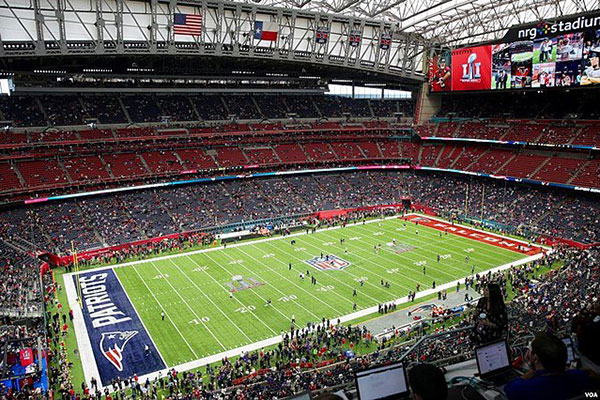
While most fans are focused on kickoff, commercials, and party plans, the lead-up to Super Bowl LX is already showing up clearly in the freight market.
What’s Related
New data from Truckstop shows a sharp rise in inbound truckload volumes into the San Jose, Calif., market in the weeks leading up to the game, with flatbed and reefer equipment seeing the biggest gains.
According to Truckstop, inbound load volumes for the week ending Jan. 31 jumped across all three major equipment types compared to the prior week, with flatbed leading the way.
Flatbed inbound volumes rose 30% week over week and were up more than 200% year over year. Reefer volumes increased 18% week over week, while dry van loads climbed 10%.
Those volume increases translated into higher spot rates for some carriers. Reefer rates averaged $2.72 per mile, up 12.4% week over week and 22% year over year. Flatbed rates averaged $3.02 per mile, up 3.4% from the prior week. Van rates, however, slipped to an average of $2.18 per mile, down slightly both week over week and year over year.
How does this year compare to last year’s Super Bowl?
Truckstop also compared inbound load volumes for this year’s Super Bowl in San Jose with last year’s event in New Orleans over the three-week period leading up to the game.
The data shows a clear difference in timing. In New Orleans, inbound volumes peaked earlier, about two weeks before the event, then tapered heading into game week. In San Jose, volumes have increased steadily and continue to rise into the final lead week.
That pattern suggests more late-stage freight activity this year, likely tied to temporary infrastructure, event equipment, and last-minute shipments rather than just food and beverage demand.
Super Bowl vs. other major sporting events
When stacked up against other large sporting events, the Super Bowl still stands apart.
Truckstop’s comparison of inbound volumes tied to the Super Bowl, the Indy 500, and the Daytona 500 shows that Super Bowl host cities see the largest and fastest build-up. Inbound truckload volumes tied to the Super Bowl rose roughly 22% over a two-week span, with the sharpest increase occurring in the final lead week.
By comparison, the Indy 500 and Daytona events showed more gradual increases and lower overall peaks.
What carriers and shippers should expect
Based on the data, Truckstop says host cities can expect inbound load volumes to increase by roughly 20% to 25% in the one- to three-week window before a major event.
For carriers, that creates short-term opportunities, especially for flatbed and reefer operators. For shippers, it reinforces the need to plan early, lock in capacity ahead of the final week, and expect tighter conditions as the event approaches.
In other words, while the Super Bowl may last only a few hours on Sunday, its freight footprint shows up well before kickoff.
