
Close Menu
  • Home
  • Market News
    • Crude Oil Prices
    • Brent vs WTI
    • Futures & Trading
    • OPEC Announcements
  • Company & Corporate
    • Mergers & Acquisitions
    • Earnings Reports
    • Executive Moves
    • ESG & Sustainability
  • Geopolitical & Global
    • Middle East
    • North America
    • Europe & Russia
    • Asia & China
    • Latin America
  • Supply & Disruption
    • Pipeline Disruptions
    • Refinery Outages
    • Weather Events (hurricanes, floods)
    • Labor Strikes & Protest Movements
  • Policy & Regulation
    • U.S. Energy Policy
    • EU Carbon Targets
    • Emissions Regulations
    • International Trade & Sanctions
  • Tech
    • Energy Transition
    • Hydrogen & LNG
    • Carbon Capture
    • Battery / Storage Tech
  • ESG
    • Climate Commitments
    • Greenwashing News
    • Net-Zero Tracking
    • Institutional Divestments
  • Financial
    • Interest Rates Impact on Oil
    • Inflation + Demand
    • Oil & Stock Correlation
    • Investor Sentiment

Subscribe to Updates

Subscribe to our newsletter and never miss our latest news

Subscribe my Newsletter for New Posts & tips Let's stay updated!

What's Hot

How attack on Iran could impact global oil market and economy

February 28, 2026

Tankers Halt Near Hormuz After Attacks

February 28, 2026

OPEC+ Weighs Shock Output Surge as Iran Conflict Rattles Oil Markets

February 28, 2026
Facebook X (Twitter) Instagram Threads
Oil Market Cap – Global Oil & Energy News, Data & Analysis
  • Home
  • Market News
    • Crude Oil Prices
    • Brent vs WTI
    • Futures & Trading
    • OPEC Announcements
  • Company & Corporate
    • Mergers & Acquisitions
    • Earnings Reports
    • Executive Moves
    • ESG & Sustainability
  • Geopolitical & Global
    • Middle East
    • North America
    • Europe & Russia
    • Asia & China
    • Latin America
  • Supply & Disruption
    • Pipeline Disruptions
    • Refinery Outages
    • Weather Events (hurricanes, floods)
    • Labor Strikes & Protest Movements
  • Policy & Regulation
    • U.S. Energy Policy
    • EU Carbon Targets
    • Emissions Regulations
    • International Trade & Sanctions
  • Tech
    • Energy Transition
    • Hydrogen & LNG
    • Carbon Capture
    • Battery / Storage Tech
  • ESG
    • Climate Commitments
    • Greenwashing News
    • Net-Zero Tracking
    • Institutional Divestments
  • Financial
    • Interest Rates Impact on Oil
    • Inflation + Demand
    • Oil & Stock Correlation
    • Investor Sentiment
Oil Market Cap – Global Oil & Energy News, Data & Analysis
Home » How attack on Iran could impact global oil market and economy
Emissions Regulations

How attack on Iran could impact global oil market and economy

omc_adminBy omc_adminFebruary 28, 2026No Comments4 Mins Read
Share
Facebook Twitter Pinterest Threads Bluesky Copy Link


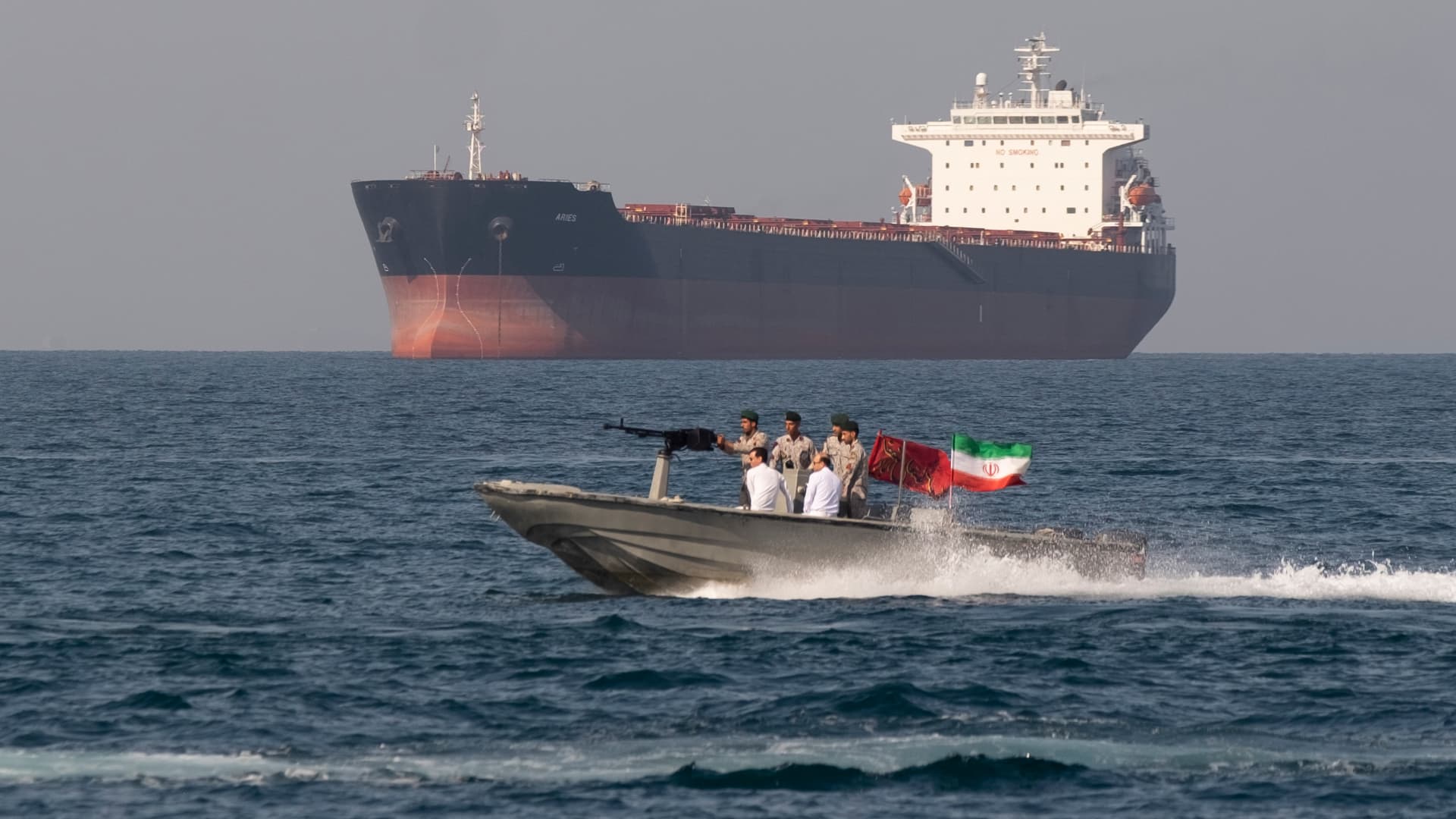
The joint U.S. and Israeli attack on OPEC member Iran risks a major oil supply disruption in the Middle East that, in a worst-case scenario, could trigger a global economic recession.

Iran is the fourth-largest oil producer in OPEC at just over 3 million barrels per day in January. The Islamic Republic shares a coastline with the Strait of Hormuz, the world’s most important waterway for the global oil trade.

The oil market has long shrugged off the risk of an oil supply disruption in the Middle East. Traders are underestimating the threat that Iranian retaliation to the U.S. attack poses to the market, said Bob McNally, a former White House energy advisor to former President George W. Bush.

“This is the real deal,” said McNally, founder and president of Rapidan Energy. Crude oil future prices will likely rise by $5 to $7 per barrel when trading opens at 6 p.m. ET Sunday as the market prices in some risk, he said.

On Friday, Brent crude prices settled at $72.48 a barrel, up $1.73, or 2.45%, while U.S. West Texas Intermediate crude finished at $67.02 a barrel, up $1.81, or 2.78%.

Iran could try to scare President Donald Trump by making the Strait of Hormuz unsafe for commercial traffic, which could spike oil prices above $100 per barrel, McNally said. The market does not appreciate the fact that Tehran has large stockpiles of mines and short-range missiles that could seriously disrupt traffic in the waterway, he said.

More than 14 million barrels per day flowed through the Strait in 2025, or a third of the world’s total seaborne crude exports, according to data from energy consulting firm Kpler. About three-quarters of those barrels went to China, India, Japan and South Korea. China, the world’s second-largest economy, receives half of its crude imports from the Strait.

“A prolonged closure of the Strait of Hormuz is a guaranteed global recession,” McNally said.

More than 20 million barrels of crude have been loaded for export today in the Gulf from Saudi Arabia, Iraq, the United Arab Emirates, Kuwait and Qatar, said Matt Smith, an oil analyst at Kpler. Some tankers have been observed diverting from passing through the strait, Smith said.

The world’s spare oil capacity comes from the Gulf states and would be unable to pass through the strait in the event of a closure, effectively sealing it off from the market, McNally said. About 20% of the world’s liquid natural gas exports also flow through the strait, mostly from Qatar, and would be unable to be replaced, he said.

“What you would see is hoarding, especially by Asian countries that were big importers of oil and gas when they realized that Hormuz is closed,” McNally said. “You would see the mother of all bidding wars.”

Oil prices would have to rise high enough to trigger an economic downturn that reduces demand to balance the market, the analyst said. “There just isn’t enough discretionary or elastic demand for oil,” he said.

Only a small fraction of the crude that passes through the strait might be able to be redirected, McNally said. The Saudis have a pipeline that spans the country from the East to its Western coast on the Red Sea. The UAE has a pipeline that terminates at the Gulf of Oman, bypassing the Strait of Hormuz.

Iran has launched missile strikes on U.S. bases in Qatar, Kuwait, the UAE and Bahrain, according to state media reports. These attacks could affect traffic through the Strait of Hormuz, said Tom Kloza, principal at oil and gas consulting firm Kloza Advisors.

“The attack by Iran on other neighbors in the Persian Gulf changes the calculus and the extent of the assaults put pressure on insurers to either aggressively raise tanker rates for Strait of Hormuz travel or balk at underwriting any traffic,” Kloza said.

The Trump administration could tap the Strategic Petroleum Reserve if oil prices spike, said Kevin Book, managing director of Research at ClearView Energy Partners. The reserve currently has an inventory of about 415 million barrels, according to data from the Department of Energy.

“But we’ll say it again: in supply crises, duration matters. Scale does, too,” Book told clients in a note Saturday. “A full Hormuz crisis could outstrip offsets provided by strategic stocks in the U.S. and International Energy Agency (IEA) members.”


Source link

Share. Facebook Twitter Pinterest Bluesky Threads Tumblr Telegram Email
omc_admin
  • Website

Related Posts

Jack Dorsey made the loudest case yet AI is already replacing jobs

February 27, 2026

U.S. and Iran wrap up ‘most intense’ nuclear talks with no deal — more negotiations ahead

February 27, 2026

Trump says Big Tech needs to bring its own power. These stocks benefit

February 26, 2026
Add A Comment
Leave A Reply Cancel Reply

Top Posts

Federal Reserve cuts key rate for first time this year

September 17, 202513 Views

Inflation or jobs: Federal Reserve officials are divided over competing concerns

August 14, 20259 Views

Oil tanker rates to stay strong into 2026 as sanctions remove ships for hire – Oil & Gas 360

December 16, 20258 Views
Don't Miss

How will strikes on Iran affect global energy flows?

By omc_adminFebruary 28, 2026

Iran still has an outsized ability to rattle global energy markets.Markets will not reopen until…

Bilfinger awarded UK North Sea maintenance contracts with Ithaca Energy, Wood

February 27, 2026

Venezuela cancels Halliburton asset sale after U.S. intervention to support oil sector restart

February 27, 2026

Equinor explores sale of offshore Angola assets as Brazil and U.S. output grows

February 27, 2026
Top Trending

Winter getting shorter in 80% of major US cities, new data shows | US weather

By omc_adminFebruary 27, 2026

Trump officials move to kill system that protects US from chemical disasters | US Environmental Protection Agency

By omc_adminFebruary 27, 2026

LEGO Group Invests in Nature and Technology-Based Carbon Removal Projects

By omc_adminFebruary 27, 2026
Most Popular

The 5 Best 65-Inch TVs of 2025

July 3, 202515 Views

AI’s Next Bottleneck Isn’t Just Chips — It’s the Power Grid: Goldman

November 14, 202514 Views

The Layoffs List of 2025: Meta, Microsoft, Block, and More

May 9, 202510 Views
Our Picks

Tankers Halt Near Hormuz After Attacks

February 28, 2026

Equinor to Trim Angolan Holdings

February 28, 2026

Crude Jumps as Iran Risks Mount

February 27, 2026

Subscribe to Updates

Subscribe to our newsletter and never miss our latest news

Subscribe my Newsletter for New Posts & tips Let's stay updated!

Facebook X (Twitter) Instagram Pinterest
  • Home
  • About Us
  • Advertise With Us
  • Contact Us
  • DMCA
  • Privacy Policy
  • Terms & Conditions
© 2026 oilmarketcap. Designed by oilmarketcap.

Type above and press Enter to search. Press Esc to cancel.