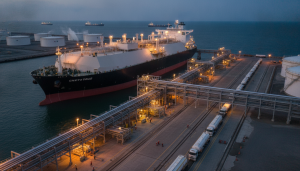
The recent passage of the SPEED Act by the House of Representatives, while explicitly championed as a catalyst for artificial intelligence infrastructure, holds profound and largely underestimated implications for the broader energy sector, including traditional oil and gas. For discerning investors, this bill’s true significance lies not just in its support for data centers, but in its direct attack on the bureaucratic inertia that has long plagued energy project development across the spectrum. By overhauling the cumbersome 1969 National Environmental Policy Act (NEPA), Congress has signaled a crucial shift towards expediting vital infrastructure, a move that could unlock significant value for energy companies positioned to capitalize on a more efficient regulatory environment.
Permitting Reform: A New Horizon for Energy Infrastructure
The core of the SPEED Act is its targeted reform of NEPA, a legislative framework that has, for decades, extended project timelines and inflated costs across various sectors, including energy. The bill’s provisions are striking: it tightens NEPA review timelines and dramatically shrinks the statute of limitations for NEPA litigation from an onerous six years down to a mere 150 days. While the immediate focus is on powering AI’s expansion, these reforms establish a powerful precedent. The same federal review processes that have ensnared clean energy projects—and, crucially, many oil and gas pipelines, LNG terminals, and refining expansions—are now on the chopping block. For investors, this represents a potential easing of a major bottleneck to capital deployment and project execution. Reduced permitting delays mean faster cash flow generation, lower development risk, and improved project economics for companies across the energy value chain, from upstream producers requiring new gathering infrastructure to midstream operators planning critical pipeline expansions.
AI’s Insatiable Energy Demand and the Grid’s Call for Reliability
The underlying impetus for the SPEED Act—the “national imperative” to power AI computing for civilian and military use—underscores a burgeoning demand shock that will reverberate throughout the energy markets. Power-hungry data centers are already placing an increased strain on electric grids, a trend that is only set to accelerate. This escalating demand for reliable electricity is a direct tailwind for all forms of power generation, particularly natural gas. As intermittent renewables continue to grow, the need for dispatchable, base-load power sources becomes even more critical for grid stability. Natural gas, with its flexibility and lower emissions profile compared to coal, is poised to fill much of this gap. Expedited permitting processes, as envisioned by the SPEED Act, could facilitate the rapid development of new gas-fired power plants and the necessary midstream infrastructure to supply them, presenting a compelling long-term demand catalyst for natural gas producers and pipeline operators.
Navigating Current Market Volatility Amidst Policy Shifts
While the long-term outlook for energy infrastructure development brightens with permitting reform, investors must remain grounded in current market realities. As of today, Brent crude trades at $91.87 per barrel, representing a significant daily decline of 7.57% and a substantial drop from $112.78 just two weeks ago. Similarly, WTI crude stands at $84, down 7.86% on the day, while gasoline prices have also retreated to $2.95 per gallon. This recent bearish sentiment, which has seen Brent shed over $20 per barrel in less than three weeks, highlights the inherent volatility of the commodities market. Investors are keenly watching these price movements, with many asking about the trajectory of oil prices by the end of 2026. While short-term macroeconomic concerns and speculative flows can drive significant price swings, the structural demand increases driven by AI and the potential for smoother infrastructure development could provide a more robust long-term demand floor and supply efficiency, partially offsetting immediate market pressures.
Forward-Looking Catalysts and Investor Priorities
The intersection of policy reform and immediate market dynamics creates a complex but opportunity-rich environment for energy investors. With a critical OPEC+ Ministerial Meeting scheduled for tomorrow, April 18th, the market will be closely scrutinizing any signals regarding future production quotas. This meeting is particularly pertinent given the recent price declines; any indication of further supply management could provide a near-term floor. Following this, the market will turn its attention to the API and EIA Weekly Crude Inventory reports on April 21st and 22nd, respectively, which will offer crucial insights into short-term supply and demand balances. These events are integral to answering investor questions about future oil price predictions. While these near-term catalysts will dictate immediate market movements, the House’s action on permitting reform represents a foundational shift. It signals a governmental recognition of infrastructure bottlenecks and a commitment to address them, providing a long-term bullish undercurrent for energy investments, particularly those in sectors poised to benefit from reduced project timelines and the burgeoning energy demands of new technologies like AI. Companies with a strong pipeline of shovel-ready projects could be significant beneficiaries as the regulatory landscape becomes more conducive to development.