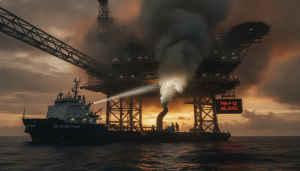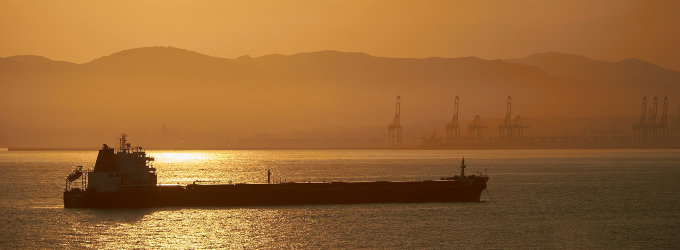
The recent strike on Iran has fundamentally reshaped the geopolitical risk landscape for global oil markets, igniting concerns that stretch far beyond the immediate region. For investors, this moment demands a rigorous re-evaluation of exposure and potential market trajectories. While the immediate focus is on Iran’s direct production capacity, which contributes an estimated 3.0 to 3.3 million barrels per day (MMbpd) to global supply, the more profound and systemic risk emanates from the Strait of Hormuz. This narrow chokepoint is the critical artery for approximately 20% of the world’s crude oil and refined product flows, encompassing vital exports from powerhouse producers like Saudi Arabia, Iraq, Kuwait, the UAE, and Qatar. The market is now grappling with the specter of supply disruptions, prompting a recalibration of oil price forecasts and investment strategies amidst heightened uncertainty.
Immediate Market Reaction and Supply Vulnerability
As of today, Brent crude is trading at $93.92 per barrel, marking a 0.73% increase within the day’s range of $93.52 to $94.21. Similarly, WTI crude stands at $90.48, up 0.9%, oscillating between $89.71 and $90.70. This upward pressure comes after a period of significant volatility; our proprietary data reveals Brent crude experienced a notable decline of nearly 20% in the fortnight leading up to these tensions, plummeting from $118.35 on March 31st to $94.86 on April 20th. Today’s geopolitical shock, therefore, re-injects substantial upside risk into a market that had recently seen significant price erosion. Gasoline prices, currently stable at $3.13, are also closely watched for any ripple effects. The Strait of Hormuz remains the linchpin. Early indications of reduced tanker traffic through the strait have already surfaced, underscoring its vulnerability. While a full closure is generally considered a low-probability, high-impact event, even minor disruptions or increased shipping costs due to heightened risk perception can profoundly influence global supply chains and energy prices.
Escalation Scenarios and Infrastructure Resilience
The primary concern for oil market participants revolves around potential Iranian retaliation and its impact on regional energy infrastructure. Scenarios range from harassment of shipping vessels and GPS jamming within the Strait of Hormuz to direct strikes on critical energy assets. Key facilities like Kharg Island, Iran’s main oil export terminal, are particularly vulnerable. Should such an event materialize, the direct impact on crude transit could trigger sharp price volatility, far exceeding the current risk premium. While alternative export routes exist, they offer only partial mitigation. Saudi Arabia’s 5 MMbpd East-West pipeline and the UAE’s 1.5 MMbpd Habshan-Fujairah line provide some redundancy. However, these capacities would be insufficient to fully offset a sustained disruption to the 20% of global flows typically transiting Hormuz. The market is currently pricing in the risk of escalation, reflecting an expectation of heightened tensions rather than confirmed supply losses. This dynamic means that any concrete action affecting supply, however minor, could lead to a disproportionately strong market reaction.
Navigating Volatility: Investor Concerns and Forward Catalysts
Our proprietary reader intent data highlights that investors are acutely focused on immediate price movements, asking fundamental questions like “will WTI go up or down?” Given the current geopolitical backdrop, the immediate trajectory for WTI and Brent is skewed towards upward pressure, driven by the escalating risk premium. However, the magnitude and duration of this trend will heavily depend on future developments in the region. Beyond the short term, investors are also seeking clarity on “what the price of oil per barrel will be by the end of 2026.” While precise predictions are challenging amidst such fluid circumstances, a sustained disruption in the Strait of Hormuz could easily push crude prices well into triple digits, fundamentally altering the operating environment for energy companies. Conversely, de-escalation could see prices retreat, though likely settling at a higher floor than pre-crisis levels due to the embedded risk premium. For investors evaluating individual companies, similar to the interest expressed regarding “how well Repsol will end in April 2026,” the focus should be on operators with strong balance sheets, diversified asset portfolios, and robust hedging strategies that can weather potential supply chain shocks or sustained periods of higher operating costs.
Several upcoming energy events will offer crucial forward-looking guidance. Today, April 21st, the OPEC+ JMMC Meeting is underway. Any statements or policy adjustments from this gathering regarding supply management will be critical. The market will be keenly watching for any indications of increased output or a more cautious approach to supply in response to the geopolitical threat. Subsequent EIA Weekly Petroleum Status Reports on April 22nd and April 29th, alongside API Weekly Crude Inventory data on April 28th and May 5th, will provide vital insights into inventory levels and demand trends, which could either confirm or contradict the perceived supply tightness. Furthermore, the EIA Short-Term Energy Outlook on May 2nd will offer a revised official forecast that will undoubtedly incorporate the escalated geopolitical risks, providing a fresh baseline for investor expectations for the remainder of 2026.
Strategic Positioning for Oil & Gas Investors
In this environment of heightened geopolitical risk, shrewd investors must adapt their strategies. For those with exposure to upstream exploration and production (E&P) companies, the potential for sustained higher oil prices could translate into improved profitability and cash flows. However, this must be balanced against the risk of operational disruptions, particularly for companies with significant assets in the Middle East. Midstream operators, especially those with alternative pipeline infrastructure outside of the Strait of Hormuz, might see increased utilization and strategic importance. Investors should consider the geographical diversification of their portfolios, favoring companies with robust operations in less geopolitically volatile regions or those with strong hedging positions against price swings. Furthermore, companies with strong balance sheets and the capacity to invest in resilience measures or acquire distressed assets could emerge stronger. Monitoring not just price movements but also the nuanced language from international bodies, government officials, and the evolving tanker traffic data through critical chokepoints will be paramount for making informed decisions in this dynamic market.