

Geopolitical Currents Reroute Qatari LNG, Sparking Global Supply Concerns
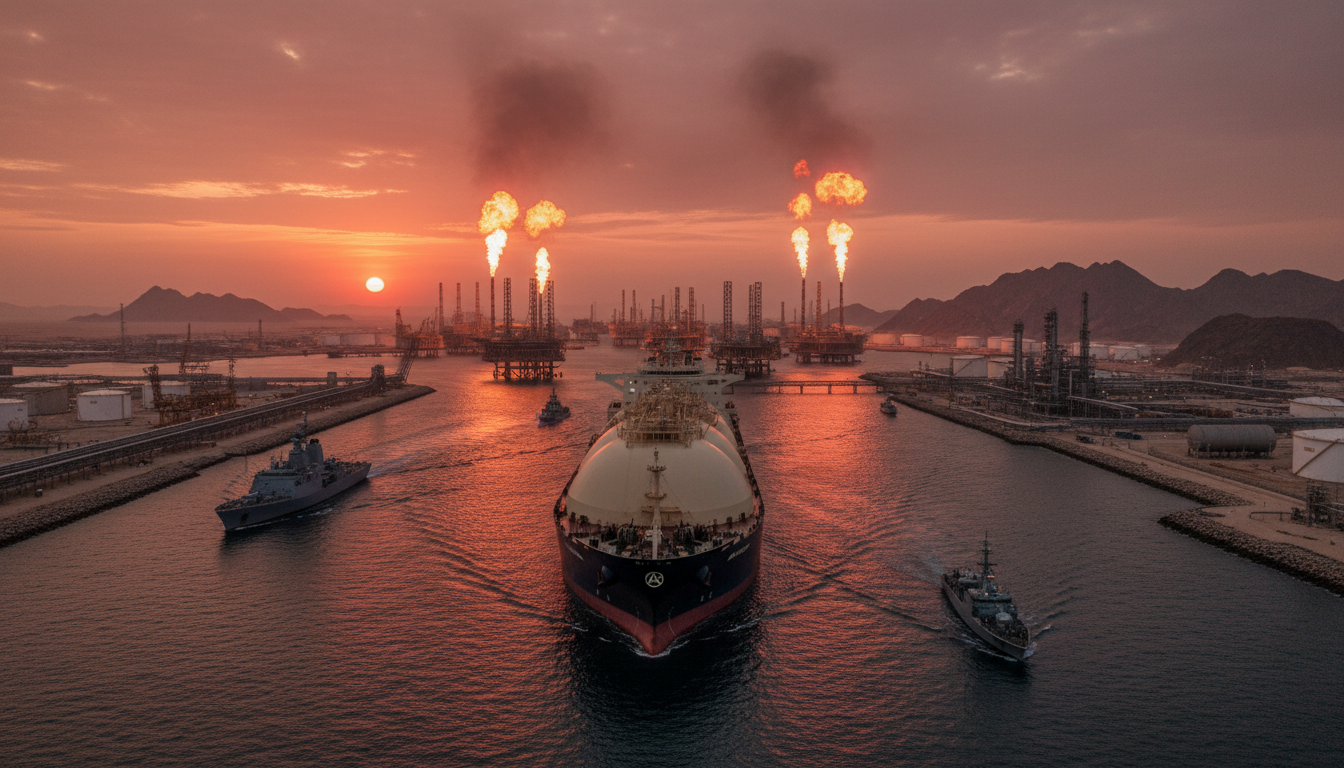
Geopolitical tensions in the Persian Gulf have directly impacted global liquefied natural gas (LNG) flows, creating significant ripples for energy investors and raising questions about the stability of vital shipping lanes. Recent maneuvers by two prominent Qatari LNG carriers underscore the mounting challenges to maritime security in the Strait of Hormuz, a critical chokepoint for international energy markets.
The vessels Al Daayen and Rasheeda, both laden with precious LNG cargo from Qatar’s formidable export facilities since late February, initiated what appeared to be an eastbound transit towards the Strait of Hormuz. However, ship-tracking data revealed an abrupt reversal in their course, with both tankers executing a distinct u-turn away from the strategic waterway. This marked the first observed attempt by loaded Qatari LNG carriers to navigate the Strait since military actions involving the U.S., Israel, and Iran intensified late last month, further highlighting the precarious state of regional shipping.
The effective constriction of the Strait of Hormuz, a narrow maritime passage bordered by Iran and the Arabian Peninsula, poses a severe threat to global energy security and supply chain resilience. This single waterway typically facilitates approximately one-fifth of the world’s total LNG supply. The inability of loaded tankers to pass through the Strait since the late February hostilities introduces considerable uncertainty into international gas markets, potentially impacting natural gas prices and global supply agreements for investors. Analysts note that no loaded LNG tanker has successfully navigated Hormuz since the U.S. and Israel began their recent strikes on Iranian targets.
Initially, the Al Daayen indicated a final delivery destination in China, a major Asian energy consumer and crucial market for Qatari exports. However, both vessels have now updated their intended ports of call to Pakistan. This significant shift is particularly noteworthy given Pakistan’s position as a major importer of Qatari LNG. Reports suggest Pakistan is actively exploring options, including allowing critical cargo to sail under its flag, following Iran’s reported agreement to permit up to 20 Pakistani-flagged vessels through the Strait of Hormuz. This could signal a diplomatic effort to de-escalate maritime blockades and secure essential energy deliveries amidst the escalating regional conflict.
Qatar, a powerhouse in global LNG exports, supplied nearly one-fifth of all LNG worldwide last year, making its operational continuity vital to market stability. Yet, its massive Ras Laffan export facility, recognized as the world’s largest LNG export plant, has reportedly faced disruptions for over a month due to ongoing regional hostilities. Unhindered transit through Hormuz would provide a crucial lifeline for Qatar, enabling the shipment of already loaded cargoes currently awaiting passage within the Persian Gulf or facilitating the offloading of fuels from storage inventories, alleviating pressure on the country’s energy infrastructure.
Investors must also consider the broader context of Iran’s selective policy regarding the Strait. Tehran has largely enforced a blockade on transit through the waterway since the U.S. and Israeli strikes commenced, permitting only its own vessels or those it explicitly approves. So far, no known energy tankers directly linked to Qatar have successfully navigated the Strait. Interestingly, recent days have seen Tehran apparently grant passage to vessels associated with nations perceived as having closer ties to the U.S., including France and Japan. This selective allowance adds a layer of complexity to the geopolitical chess game playing out in the Gulf, creating an uneven playing field for maritime commerce.
Adding to the challenges for market participants and analysts is the inherent imprecision in tracking vessel movements within the Persian Gulf. Electronic interference with ship signals and the intentional disabling of transponders by crews navigating high-risk areas can lead to discrepancies and delays in real-time data. Such operational realities compound the difficulties in accurately assessing supply chain disruptions and predicting future movements, underscoring the high-risk environment for energy shipping in the region. Seapeak manages the Al Daayen, while Nakilat owns the Rasheeda, but neither company has offered immediate public comment on the vessels’ altered courses or future plans, leaving market observers to speculate.
While two Qatari LNG shipments did reach Kuwait in recent weeks, ship-tracking data compiled by Kpler indicates these supplies likely loaded from Qatar’s storage tanks, circumventing the need to traverse the Strait of Hormuz. This illustrates Qatar’s efforts to maintain some level of regional supply, but also highlights the limitations when main export routes are compromised.
The rerouting of these Qatari LNG tankers decisively underscores the escalating risks to global energy supply lines emanating from the Persian Gulf. As geopolitical tensions persist, the stability and accessibility of critical maritime chokepoints like the Strait of Hormuz remain paramount for the international energy market. Investors should closely monitor these dynamic developments, as continued disruptions to LNG flows from a major exporter like Qatar could introduce significant volatility to global natural gas prices, impact long-term energy investment strategies, and further strain the resilience of global energy supply chains.
