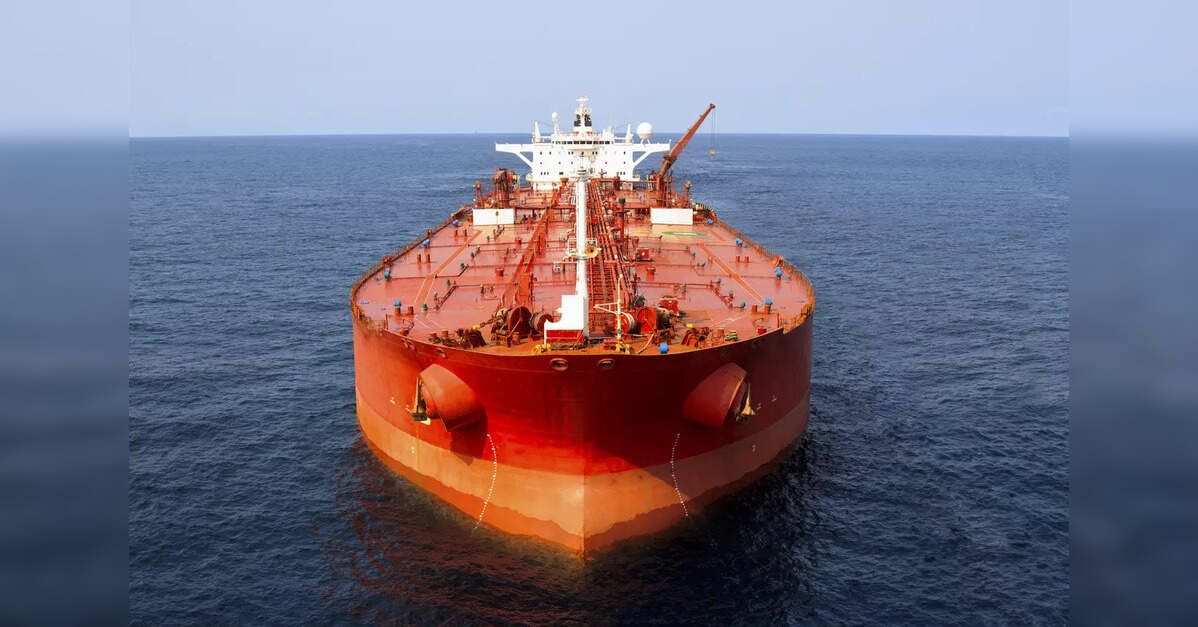
The geopolitical chessboard of global energy supply witnessed a significant move this week, as former President Donald Trump announced measures aimed at reinforcing the security of oil shipments through the Strait of Hormuz. On Tuesday, Trump stated that the United States Navy stands ready to escort commercial tankers through this critical chokepoint if necessary, a declaration made via Truth Social. Furthermore, he indicated that the United States International Development Finance Corporation (DFC) would extend political risk insurance and guarantees to shipping companies navigating the Gulf, particularly for energy cargoes. This proactive stance underscores the enduring strategic importance of the Strait of Hormuz, through which a substantial portion of the world’s crude oil passes, and its vulnerability to regional tensions. For oil and gas investors, this intervention introduces a complex layer of security assurance against a backdrop of persistent volatility, potentially reshaping risk premiums and supply chain dynamics in the near term.
Geopolitical Stability vs. Underlying Volatility
Trump’s directive for potential naval escorts and DFC insurance is a direct response to the heightened risk perception surrounding maritime trade in West Asia. The Strait of Hormuz, connecting the Persian Gulf to the Arabian Sea, remains an indispensable conduit for global energy flows, with any disruption having immediate and profound market impacts. The proposed insurance scheme aims to mitigate the financial exposure of shipping lines, potentially reducing their operational costs and encouraging continued transit through the region despite lingering security concerns. This move could, in theory, stabilize a key aspect of the global oil supply chain, providing a perceived safety net against potential attacks or impoundments that have previously plagued the corridor. However, investors must distinguish between a measure designed to *reduce* the symptoms of risk and a true resolution of the *underlying* geopolitical tensions that necessitate such interventions in the first place. While the US commitment to freedom of navigation is clear, the broader regional dynamics remain a complex web of rivalries and flashpoints, suggesting that while the immediate risk to shipping might be buffered, the specter of instability continues to influence long-term investment strategies.
Current Market Response and Price Dynamics
The immediate market reaction to such geopolitical pronouncements often serves as a barometer for investor sentiment regarding supply security. As of today, Brent Crude trades at $93.57 per barrel, showing a modest increase of 0.35% within a day range of $93.49 to $94.21. WTI Crude is similarly positioned at $90.12, up 0.5% with a day range of $89.71 to $90.71. These price movements suggest a relatively muted immediate bullish reaction to Trump’s statement, possibly indicating that the market has already priced in a baseline level of geopolitical risk, or that the practical implementation and effectiveness of these measures are yet to be fully assessed. Looking at the broader trend, Brent Crude has seen a noticeable decline over the past two weeks, dropping from $101.16 on April 1st to $94.09 on April 21st, representing a $-7.07 (or -7%) decrease. This downtrend suggests that while specific security enhancements are noted, other macroeconomic factors, perhaps demand concerns or inventory levels, have held more sway over crude prices recently. Gasoline prices, currently at $3.12 per gallon, are down slightly by 0.32% today, reinforcing the idea that broad market fundamentals, rather than immediate geopolitical risk premiums, are currently dominating price action.
Addressing Investor Concerns: WTI’s Trajectory and 2026 Outlook
Our proprietary reader intent data reveals a consistent focus on fundamental price direction, with many investors keenly asking about the future trajectory of WTI and the broader oil price outlook for the remainder of 2026. The question of “is WTI going up or down?” encapsulates the pervasive uncertainty. While Trump’s announcement offers a measure of supply-side reassurance for the Strait of Hormuz, it doesn’t fundamentally alter the demand picture or the broader macroeconomic landscape impacting crude. Investors are wrestling with a confluence of factors: potential global economic slowdowns, strategic petroleum reserve dynamics, and the ongoing energy transition narrative. The current WTI price hovering around $90 a barrel reflects a market grappling with these competing forces. Any significant upward movement would likely require a substantial and sustained tightening of global supply, either through more aggressive OPEC+ cuts, unexpected production outages, or a robust resurgence in global demand. Conversely, a significant downturn could be triggered by a deeper economic recession or a strategic pivot by major oil producers. While the DFC insurance might make shipping marginally cheaper and safer, it’s unlikely to be the sole determinant of WTI’s direction, which remains highly sensitive to demand elasticity and broader inventory trends.
Navigating the Next Fortnight: Key Calendar Events
While geopolitical events grab headlines, smart investors know that fundamental data often provides the clearest signals for short-term market movements. The next two weeks are packed with critical releases that will offer deeper insights into supply, demand, and inventory levels, potentially overriding the immediate impact of security announcements. Tomorrow, April 22nd, marks the release of the EIA Weekly Petroleum Status Report, which will provide fresh data on crude oil, gasoline, and distillate inventories in the United States. This will be followed by the Baker Hughes Rig Count on April 24th, offering a snapshot of North American drilling activity. Both the API Weekly Crude Inventory report on April 28th and another EIA Weekly Petroleum Status Report on April 29th will continue to refine our understanding of inventory changes. Looking further ahead, the EIA Short-Term Energy Outlook on May 2nd is particularly crucial, as it provides official projections for supply, demand, and prices, shaping market expectations for months to come. These reports are not just numbers; they are leading indicators that can confirm, contradict, or re-contextualize the impact of geopolitical developments, making them indispensable for any investor evaluating short-term positions in the volatile oil and gas market. Investors should monitor these releases closely, as significant deviations from expectations could trigger sharp price reactions, regardless of ongoing security assurances in vital shipping lanes.


