

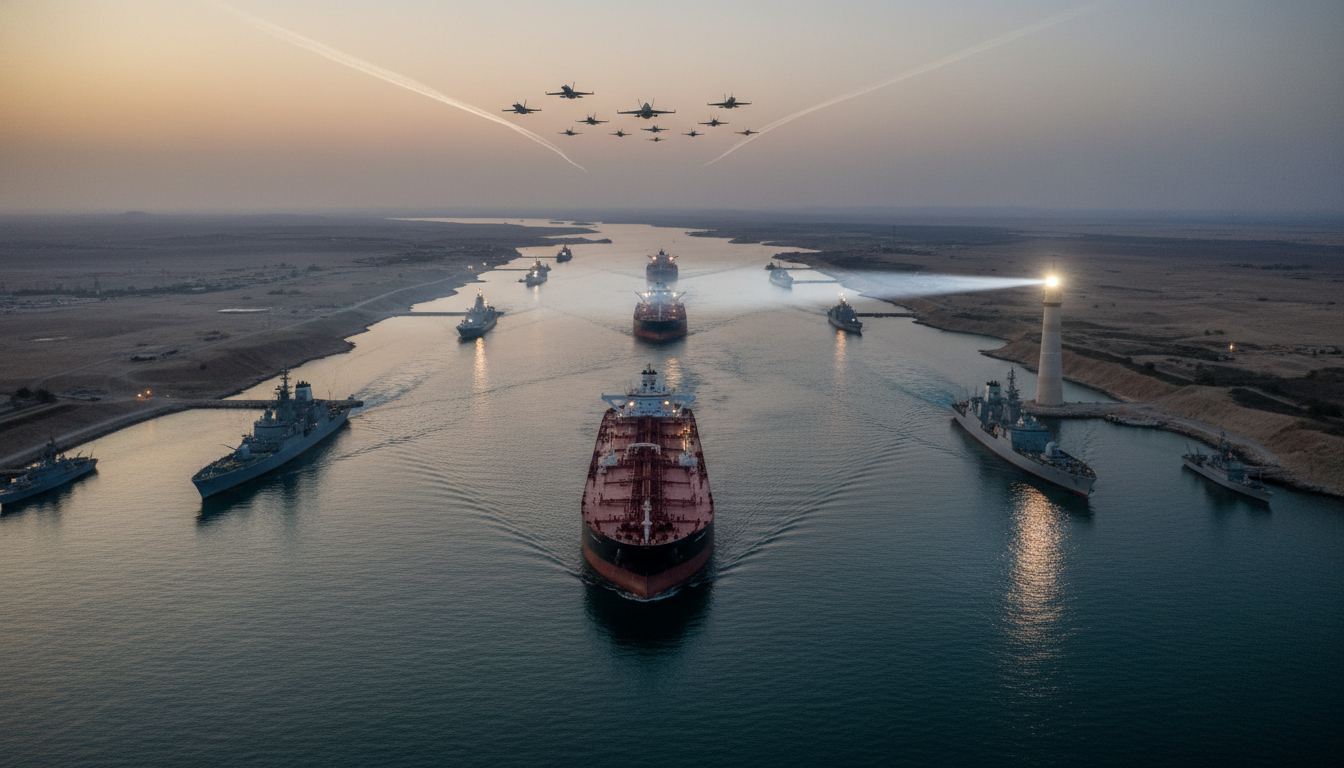
India’s Diplomatic Triumph Secures Vital Energy Lifeline Through Strait of Hormuz
In a period of heightened global volatility, India has expertly navigated a complex geopolitical landscape, achieving a significant diplomatic breakthrough that holds profound implications for global energy markets and investor confidence. By securing unimpeded passage for its merchant vessels through the strategically critical Strait of Hormuz from Iran, even amidst robust alliances with Israel and the United States, New Delhi has demonstrated the practical efficacy of its multipolar foreign policy. This crucial development offers a degree of stability for energy supply chains dependent on the volatile chokepoint and underscores India’s rising influence in international affairs.
Navigating a Geopolitical Minefield for Energy Stability
India’s position became particularly precarious as tensions between Israel, the U.S., and Iran escalated into direct confrontation. India’s growing collaboration with Israel, particularly in defense technology and intelligence, placed it squarely in proximity to one side of the conflict. Simultaneously, a substantial portion of India’s vast energy imports, predominantly crude oil and liquefied natural gas (LNG), transits directly through the Strait of Hormuz, a waterway controlled by Iran. Critics had previously expressed concerns that India’s perceived alignment with Israel and its cautious stance on escalatory events, including the assassination of high-ranking Iranian officials, might have alienated Tehran, jeopardizing its energy interests.
The global community observed closely as shipping routes faced disruptions, raising the specter of an energy crunch. Despite mounting international pressure to publicly align with a specific bloc, India maintained a posture of strategic restraint. This deliberate avoidance of public declarations, however, masked an intense period of backchannel diplomacy designed to safeguard its vital economic interests and ensure the continuity of its energy supplies.
Strategic Silence Paves the Way for Operational Relief
Behind the scenes, India’s diplomatic machinery worked tirelessly. External Affairs Minister S. Jaishankar reportedly engaged in sustained, high-level discussions with Iranian counterparts as regional tensions mounted. The turning point arrived with a direct intervention from Prime Minister Narendra Modi, who personally reached out to Iranian President Masoud Pezeshkian on March 12. This top-level communication signaled the utmost gravity India placed on its energy security and the safe passage of its vessels.
The diplomatic efforts yielded swift and tangible results. Within days of the Prime Minister’s outreach, Iranian authorities granted clearance for Indian-flagged commercial ships, including the ‘Shivalik’ and ‘Nanda Devi,’ to traverse the Strait of Hormuz, with a third vessel following shortly thereafter. The Indian government subsequently confirmed these movements, providing critical operational relief to the nation’s maritime industry. This understanding has now been formally institutionalized, with Iran’s foreign ministry officially categorizing India as a “friendly nation,” a designation it shares with strategic partners like China and Russia. For investors monitoring global crude oil transport and maritime security, this reclassification offers a significant de-risking factor for India-bound shipments.
Reigniting Energy Trade: Iran’s LPG Returns to India
Coinciding with this crucial diplomatic achievement is a parallel and equally significant development in energy trade. After a hiatus spanning several years due to international sanctions, India has recommenced imports of Iranian liquefied petroleum gas (LPG). Market reports indicate that a tanker, previously under sanctions, carrying Iranian LPG, is en route to Mangalore. This marks India’s first such acquisition since 2019, when Western sanctions compelled a reduction in Iranian energy purchases.
Remarkably, this specific cargo, initially destined for China, was redirected to India, underscoring both the urgency of India’s energy requirements and the newfound flexibility afforded by the diplomatic opening. This resumption of Iranian imports, facilitated by a temporary easing of U.S. sanctions, provides a crucial buffer against potential disruptions in India’s energy supply chain, which had begun to show signs of strain. For investors in the global LPG market and India’s burgeoning energy sector, this move signals a diversification of supply and a pragmatic approach to energy procurement in volatile times.
A Foundation of Enduring Relations
India’s ability to secure this vital cooperation from Iran is not a sudden occurrence but rather the culmination of decades of sustained diplomatic engagement. Bilateral ties, formalized by the 1950 Friendship Treaty, have demonstrated remarkable resilience through various ideological shifts and global alignments. A significant milestone occurred during the tenure of Prime Minister Atal Bihari Vajpayee, whose 2001 visit to Tehran led to the landmark Tehran Declaration, ushering in a new era of strategic collaboration. This was further solidified by Iranian President Seyyed Mohammad Khatami’s 2003 visit to India, which produced the New Delhi Declaration, deepening economic and political bonds.
Under Prime Minister Modi, this relationship has continued to evolve. His 2016 visit to Iran resulted in pivotal agreements, most notably the development of the Chabahar Port, a strategic project vital for India’s trade access to Central Asia, bypassing Pakistan. The subsequent visit of Iranian President Hassan Rouhani to India in 2018 further strengthened connectivity and economic partnerships. This historical continuity has endowed India with significant credibility in Tehran, even as its relationships with other key regional and global powers have intensified.
The Israel Nexus: Balancing Act in Action
India’s burgeoning partnership with Israel is undeniable, characterized by robust defense cooperation, intelligence sharing, and technological collaboration, establishing Israel as a key strategic ally. While the ruling Bharatiya Janata Party (BJP) has often been perceived as more openly supportive of Israel than its predecessors, India has consistently maintained a nuanced and independent West Asia policy. It continues to advocate for Palestinian statehood while simultaneously cultivating strong ties with Iran.
The recent crisis severely tested the limits of this balancing act. An initial impression of alignment with Israel arose from Prime Minister Modi’s visit to the country shortly before the outbreak of strikes on Iranian targets. However, subsequent reports clarified that the decision for these strikes was made after the Prime Minister’s departure from Israel, allowing India’s measured response thereafter to reflect a deliberate and autonomous approach rather than indecision or partisan alignment. This careful decoupling of relationships ensures India’s flexibility in managing regional complexities, a critical factor for investors assessing geopolitical risk in the Middle East.
Autonomy Delivers: Multipolarity in Practical Terms
Prime Minister Modi recently encapsulated India’s foreign policy doctrine, stating, “People often ask, ‘Whose side are we on?’ My answer is, ‘We stand with India. We stand with India’s interests. We stand with peace and dialogue.'” The developments concerning the Strait of Hormuz stand as a compelling, real-world validation of this philosophy. India has successfully safeguarded its essential energy lifeline without compromising its significant ties with Israel or alienating the United States.
Instead of succumbing to the pressure of choosing sides in a increasingly polarized global environment, India has pragmatically engaged with all parties, selectively pursuing its national interests. This episode marks a profound shift in perception. Where analysts once warned of India’s untenable position and vulnerability due to its dependence on Hormuz and strained ties with Iran, the narrative has now pivoted. By securing guaranteed passage through the Strait and resuming critical energy imports, India has transformed a potential crisis into an opportunity, reinforcing its diplomatic credibility and strategic autonomy. Iran’s decision to classify India as a “friendly nation” amid an active conflict is more than a mere tactical concession; it signifies a recognition of India’s long-term strategic value and consistent engagement despite external pressures.
For global oil and gas investors, this outcome offers valuable insight into the resilience of diverse supply chains and the potential for diplomatic solutions in volatile regions. India’s proven ability to maintain working relationships with competing powers is no longer merely an aspiration but a demonstrated capability, enhancing the stability outlook for a major energy consumer and contributing positively to the broader global energy market. The secure passage of Indian vessels through Hormuz concretely validates India’s multipolar strategic approach, solidifying its position as a reliable and autonomous player in the complex world of oil and gas geopolitics.
