

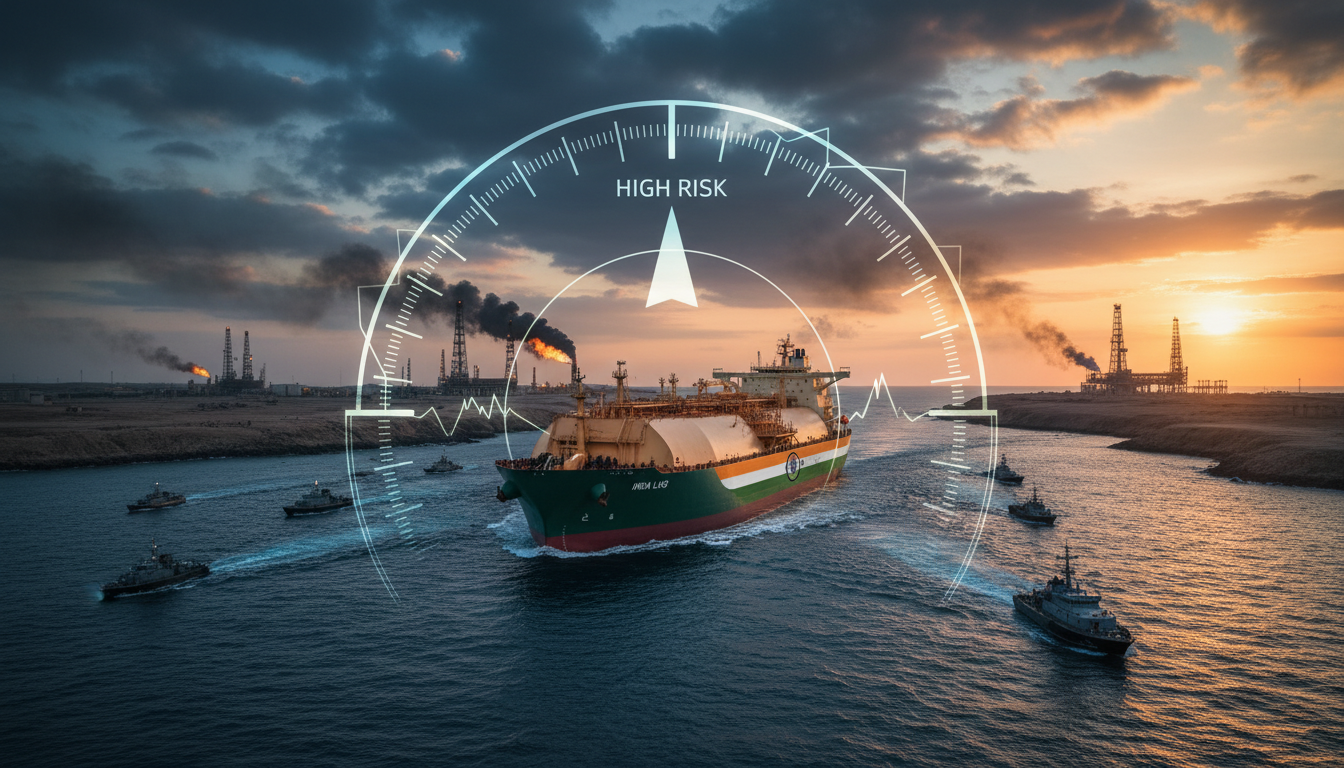
Geopolitical Tensions Drive Energy Market Volatility as India Navigates Critical Supply Routes
The global energy landscape finds itself increasingly tethered to the volatile geopolitical currents emanating from the Middle East. Recent high-level discussions between Indian Prime Minister Narendra Modi and US President Donald Trump underscore the profound concerns over regional stability and its direct implications for international energy security. Their dialogue highlighted the imperative of maintaining unfettered access through the Strait of Hormuz, a maritime chokepoint indispensable for a significant portion of the world’s oil and gas flows, and particularly vital for India’s burgeoning energy needs.
Prime Minister Modi publicly acknowledged the gravity of the situation, stating via social media that he engaged in a “useful exchange of views on the situation in West Asia” with President Trump. India’s official stance firmly supports de-escalation, advocating for the swiftest possible return to peace in the region. Modi emphasized that “Ensuring that the Strait of Hormuz remains open, secure and accessible is essential for the whole world,” a sentiment that resonates deeply within global energy trading circles. Both leaders committed to ongoing communication regarding efforts to foster stability and peace.
The Strait of Hormuz: A Lifeline Under Pressure
The ongoing conflict in the Middle East has unleashed a ripple effect across global commodity markets, directly disrupting the movement of crucial energy resources. Shipments of crude oil and liquefied natural gas (LNG) have experienced interruptions, creating upward price pressure and exacerbating market volatility. For nations like India, which depend heavily on imports from the region, the situation has proven particularly challenging, triggering supply disruptions across various industrial sectors.
India stands as one of the world’s largest importers of both LNG and refined petroleum products. The current regional instability has created bottlenecks impacting key industries, including the production of fertilizers, aluminum manufacturing, and even critical semiconductor fabrication. Such widespread disruptions pose a tangible risk of a prolonged drag on India’s economic growth trajectory, highlighting the interconnectedness of geopolitical events and industrial output.
Addressing the nation this week, Prime Minister Modi sought to reassure Indian businesses and consumers. While acknowledging the current strains, he affirmed that the country possesses ample energy supplies to meet domestic demand. Furthermore, the Indian government is actively engaged in diplomatic and logistical efforts to guarantee the safe transit of commercial vessels currently operating within the contested region. This proactive stance is crucial for an economy heavily reliant on imported hydrocarbons.
Challenging Navigation: Iran’s Fee Imposition and International Law
Adding another layer of complexity to the already tense situation, Iran has reportedly commenced levying transit fees on select commercial vessels traversing the Strait of Hormuz. This move by Tehran underscores its strategic control over one of the planet’s most critical maritime channels. For energy market participants and international policymakers, this development raises significant questions regarding freedom of navigation and the potential for increased costs and delays.
In response to these developments, India has taken decisive action, successfully securing the departure of four vessels laden with liquefied petroleum gas (LPG) through the Strait. On the diplomatic front, New Delhi firmly articulated its position on Tuesday, asserting that established international laws unequivocally guarantee the right of freedom of navigation through the Strait of Hormuz. Consequently, India maintains that no entity possesses the authority to impose or collect fees for the use of this vital international waterway. This principled stance aligns with the broader international consensus aimed at preserving maritime commons.
Supporting this perspective, US Ambassador to India, Sergio Gor, also commented on the Trump-Modi discussions earlier this week. In his own social media statement, Ambassador Gor emphasized that a key topic of their conversation revolved around “the importance of keeping the Strait of Hormuz open.” This shared commitment between Washington and New Delhi highlights the global imperative to safeguard this crucial artery for energy trade.
Investor Outlook: Navigating Geopolitical Risk in Energy Markets
For investors in the oil and gas sector, these unfolding events necessitate careful scrutiny. The specter of sustained geopolitical risk in the Middle East will likely continue to bake a risk premium into both crude oil and LNG prices. While short-term volatility offers trading opportunities, the underlying challenges to supply chain integrity and the potential for escalation demand a strategic, long-term view. Diversification of supply sources, strategic petroleum reserves, and investments in energy infrastructure resilience will become even more critical components of national energy security strategies.
The concerted efforts by major importing nations like India, coupled with diplomatic initiatives from global powers, underscore the fragility of current energy supply chains. As long as tensions persist in the Middle East, the Strait of Hormuz will remain a focal point for global energy markets, influencing everything from the price of a barrel of oil to the cost of industrial production in distant economies. Investors must remain vigilant, monitoring not only production figures and demand forecasts but also the nuanced geopolitical shifts that increasingly dictate the rhythm of the global energy industry.
Source
