

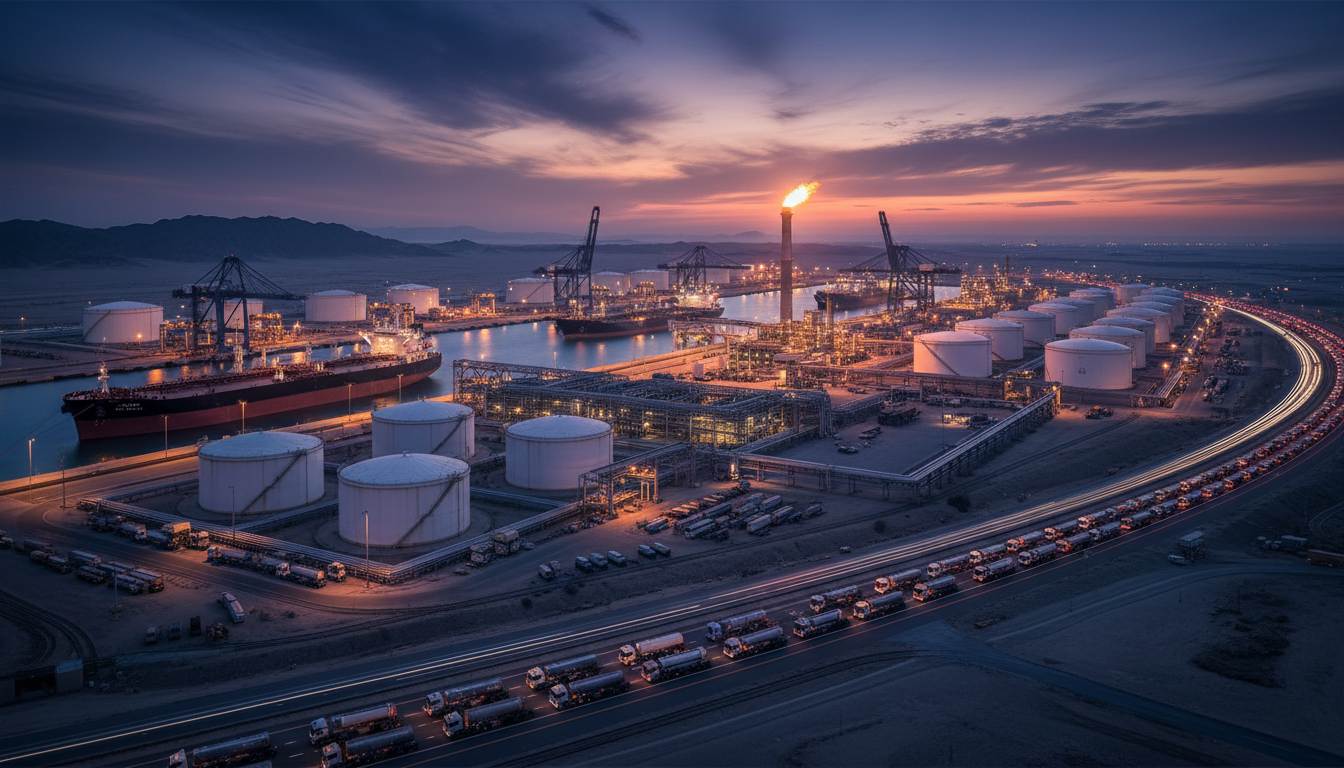
Asian Economies Pivot Amidst Hormuz Tensions, Redrawing Global Energy Maps
Geopolitical tremors originating from the Middle East continue to reverberate across global energy markets, forcing major Asian fuel importers to fundamentally rethink their supply chain strategies. With persistent uncertainty surrounding passage through the critical Strait of Hormuz, key Asian nations are increasingly redirecting maritime traffic to Saudi Arabian Red Sea ports, a move with significant implications for crude oil and liquefied natural gas (LNG) flows, and ultimately, for energy investors worldwide.
Since last month, Iran’s retaliatory actions against perceived US-Israel attacks have severely disrupted transit through the Strait of Hormuz, a choke point through which a substantial portion of the world’s oil and gas passes. Asian economies, with their profound reliance on Middle Eastern hydrocarbons, have borne the brunt of this blockade, facing unprecedented challenges to their energy security and economic stability. As the conflict shows little sign of abatement, the imperative to secure alternative pathways has become paramount.
Strategic Diversions: Taiwan Fortifies Its Energy Lifeline
Taiwan, a nation highly susceptible to energy supply disruptions, has swiftly implemented measures to safeguard its crude oil imports. Officials confirmed on Monday a decisive shift, rerouting shipments to Saudi Arabian ports situated on the Red Sea. This strategic adjustment aims to bypass the volatile Strait of Hormuz entirely, ensuring continuity for its vital energy supplies.
The island nation’s energy dependency paints a clear picture of its vulnerability: in 2025, the Middle East is projected to account for nearly 70% of Taiwan’s total oil imports. Saudi Arabia alone contributes almost 29% of this crucial supply, with other significant sources including the United Arab Emirates, Qatar, Kuwait, Oman, and Iraq. The United States supplies just over 28% of Taiwan’s crude requirements. Deputy Director-General Tsou Yu-hsin of the Industrial Development Administration, Ministry of Economic Affairs, detailed the twin-pronged approach: approximately 46% of disrupted oil exports are now handled by rerouting through the Red Sea, while the remaining 54% is being secured through immediate spot market purchases. These efforts have bolstered Taiwan’s strategic safety stock to an impressive level, currently exceeding 140 days of supply.
Beyond crude, Taiwan’s government expresses confidence in its LNG provisions through the end of June, with any potential shortfalls to be met via the agile spot market. Economic Affairs Minister Kung Ming-hsin recently revealed a pivotal development: a “major energy-producing country” extended a direct offer to “fully support” Taiwan’s natural gas needs. Furthermore, another nation signaled readiness to coordinate assistance should Taiwan require access to strategic petroleum reserves, underscoring the gravity of the situation and the international effort to stabilize energy flows.
South Korea’s Proactive Measures to Secure Crude Corridors
Mirroring Taiwan’s strategic pivot, South Korea is also taking aggressive steps to establish alternative crude oil supply routes. The nation plans to dispatch five Korean-flagged vessels to Yanbu port in Saudi Arabia’s Red Sea region. Lawmaker Ahn Do-geol emphasized the necessity of deploying Korean-flagged ships to these alternative routes to guarantee crude supplies that circumvent the Strait of Hormuz.
South Korea’s reliance on Middle Eastern crude is equally pronounced, with approximately 70% of its imports originating from the region. The severe economic implications of the energy crisis have prompted the government to propose a substantial $17.2 billion supplementary budget to mitigate the economic fallout, a move that President Lee Jae Myung likened to operating on a “wartime footing.” To address the strain, the energy ministry has issued public guidelines encouraging energy conservation, including measures like shorter showers and charging mobile phones during off-peak hours. In a move not seen since 1997, Seoul has also implemented a fuel price cap. In a diplomatic push, special envoys are slated to visit Saudi Arabia, Oman, and Algeria to secure additional crude supplies, highlighting the multi-faceted approach to energy resilience.
Hormuz: A Glimmer of Conditional Passage
While Asian nations scramble to reroute supplies, the Strait of Hormuz itself has seen a limited, conditional reopening for certain vessels, easing some market anxieties but not eliminating the underlying risk. Tehran has indicated it would permit “non-hostile vessels” to transit the waterway, provided they coordinate directly with Iranian authorities. Since this conditional allowance, a handful of tankers have successfully navigated the strait.
Notably, at least one Pakistani and six Indian fuel tankers have completed passage. This month, a Japanese shipping firm, Mitsui OSK Lines, confirmed its Indian-flagged LPG tanker, Green Asha, successfully crossed the strait and is en route to its South Asian destination, marking the third Japan-linked vessel to do so. Preceding this, the LPG tanker Green Sanvi, also owned by a Mitsui subsidiary, and three other tankers (one co-owned by Mitsui) had transited safely. Significantly, Mitsui’s Sohar LNG vessel became the first LNG tanker to traverse the strait since March 1. These successful transits, however, have not been via traditional international shipping lanes but through an Iranian-approved route near Larak Island, a passage already dubbed the “Tehran Toll Booth” by leading shipping journals, underscoring the continued control and inherent risks involved.
Broader Asian Strategies to Combat Energy Shortfalls
Despite these tactical successes in securing limited access and rerouting supplies, energy experts caution that Asian countries are grappling with the most severe impacts of the Middle East conflict on their energy security. The ripple effects are prompting varied and often drastic policy responses across the continent.
Nations like South Korea, India, Myanmar, Thailand, and the Philippines are increasingly turning to coal to buttress their energy security, a move that could set back climate goals but is deemed necessary in the face of immediate fuel shortages. Meanwhile, Taiwan has taken steps to shield its consumers from the full brunt of escalating energy costs by absorbing 75% of fuel price increases through a dedicated mechanism. The government has also frozen natural gas prices for households, though industrial users, including critical semiconductor manufacturers, will face a substantial 41.6% increase in electricity prices. Furthermore, Taiwanese airlines are implementing a steep 157% hike in fuel surcharges on international flights starting this week. Sri Lanka, another nation feeling the squeeze, has raised LPG prices by nearly 23%, though its supplies are reportedly sufficient through April.
Investment Implications in a Shifting Energy Landscape
For investors, the evolving energy landscape presents a complex mix of risks and opportunities. The strategic pivot towards Red Sea ports by major Asian economies underscores a heightened demand for shipping capacity on these alternative routes, potentially boosting tanker rates and infrastructure development in the region. Middle Eastern crude and LNG producers with Red Sea export terminals, particularly Saudi Arabia, stand to gain significant leverage and market share as buyers actively seek diversified supply points. This shift could also accelerate investments in pipeline infrastructure that bypass maritime chokepoints. Furthermore, the reliance on spot market purchases for both crude and LNG suggests sustained volatility in short-term prices, creating trading opportunities but also magnifying risk for energy commodity traders.
The broader move towards increased coal utilization in several Asian economies highlights a short-term setback for the energy transition narrative, indicating that energy security continues to take precedence over decarbonization goals amidst crises. Investors should monitor the sustained impact on global crude benchmarks, the viability of newly established shipping corridors, and the long-term strategic energy policy shifts as Asian nations strive to de-risk their energy futures in an increasingly unpredictable geopolitical environment. Companies involved in energy logistics, unconventional energy sources, and those with diversified geographic portfolios may be particularly well-positioned to navigate these turbulent waters.
