

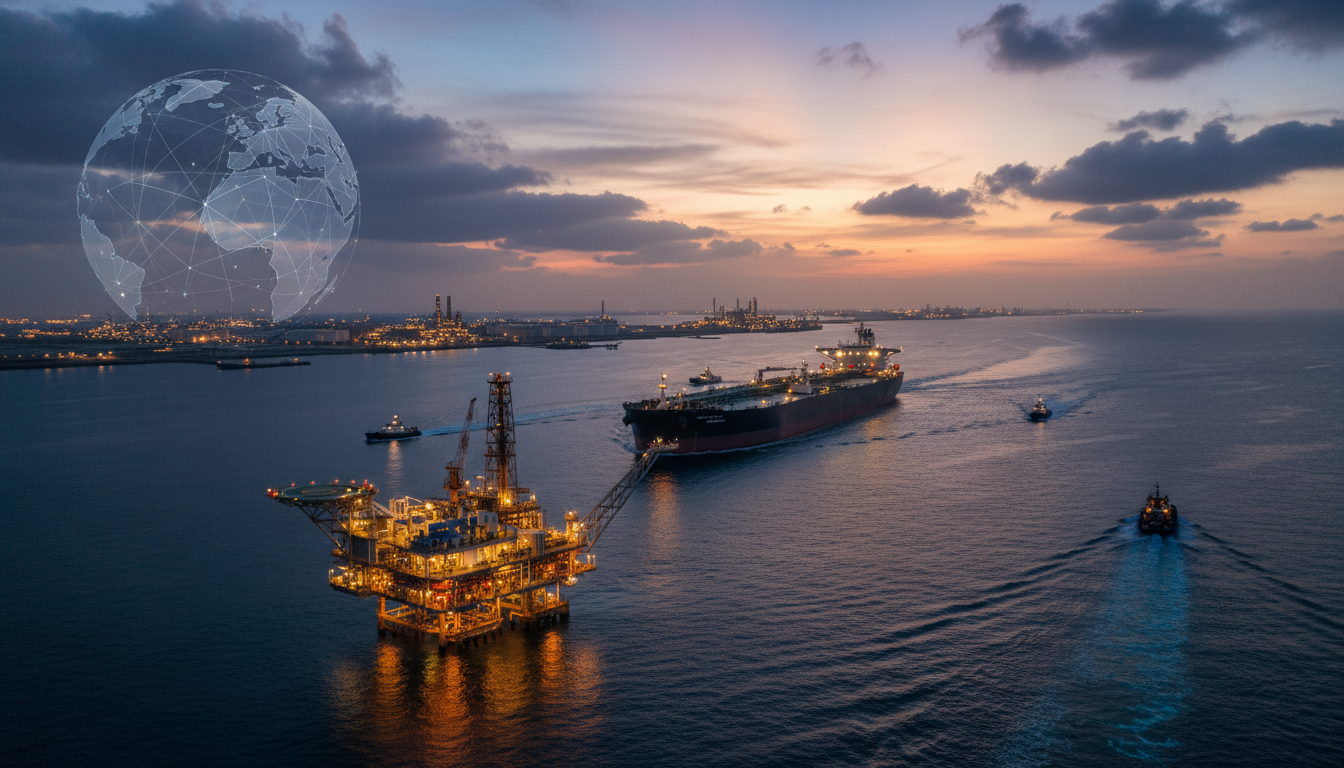
The global energy landscape is currently undergoing a profound stress test, fundamentally challenging established norms and demanding a strategic pivot from reactive measures to orchestrated international cooperation. Investors in the oil and gas sector must keenly observe these shifts, as the very foundation of energy security is being redefined.
The Geopolitical Chokepoint: Hormuz Under Siege
At the epicenter of this unfolding drama is the Strait of Hormuz, now subject to an Iranian blockade. This audacious move has effectively severed one of the world’s most vital energy arteries, triggering urgent diplomatic activity involving over 40 nations. Their collective discussions aim to restore unimpeded passage through this critical maritime chokepoint. The stakes are immense: approximately 20% of all global oil and liquefied natural gas (LNG) flows navigate this narrow passage. Even a partial disruption here has the power to send shockwaves through international markets, destabilizing prices and supply chains worldwide.
The immediate market response has been precisely what one would anticipate in a severe supply shock scenario. Following signals from President Donald Trump indicating further escalation against Iran, U.S. crude prices surged by more than 11%. This sharp upward movement vividly illustrates how rapidly markets re-evaluate risk when the fundamental ability to access energy, rather than just the availability of supply, comes under threat. Beyond the immediate price spikes, diplomatic initiatives are gaining traction, with Bahrain actively advocating for a revised resolution to address the Hormuz crisis. This highlights a growing international consensus for a coordinated response and the imperative to restore stability to global energy flows.
Beyond Barrels: Redefining Energy Security as Access Risk
What is emerging from this volatile situation is more than just a temporary blip; it represents a structural re-evaluation within the energy sector. Industry leaders are increasingly framing this challenge not merely as a localized conflict, but as a critical global economic issue. The CEO of ADNOC, for instance, has publicly called for concerted international action, unequivocally describing the disruption of Hormuz as a form of economic coercion. He emphasized its far-reaching consequences, impacting everything from fuel costs at the pump to the prices of essential goods like food and medicine.
This reframing is crucial for investors. The conversation has shifted from a preoccupation with the sheer volume of hydrocarbons to the indispensable ability to deliver them to market. For decades, the bedrock of energy security was primarily understood through the lens of proven reserves and production capacity. However, the current crisis exposes a different, equally critical vulnerability: the logistics and infrastructure required to move energy from its source to its ultimate consumers. Even when vast quantities of oil exist, the capacity to transport it reliably is becoming increasingly tenuous.
The challenges are multifaceted and tangible:
- Shipping routes are facing heightened constraints, leading to operational bottlenecks.
- Insurance premiums for transit through high-risk areas are escalating rapidly, impacting shipping economics.
- Transit times are increasing due to rerouting or enhanced security measures, adding to logistical costs.
- Critical energy infrastructure is increasingly becoming a potential target, elevating investment risk.
The cumulative effect is an energy system where supply disruptions are significantly amplified by logistical vulnerabilities. This mandates a fundamental rethinking of future strategy for both governments and energy companies, creating new parameters for investment analysis.
Strategic Investment Shifts for a Resilient Energy Future
The early indicators of this strategic shift are already evident. The collaborative efforts of dozens of nations on the Hormuz situation, coupled with the advancement of formal diplomatic solutions like Bahrain’s proposed resolution, signal a clear move towards collective energy security frameworks. This trajectory is poised to accelerate several long-term trends, presenting both challenges and opportunities for astute oil and gas investors:
1. Diversification of Supply Routes
Nations and major energy companies will intensify their pursuit of alternative export pathways. This includes robust investment in new pipelines designed to bypass chokepoints, the development of secondary port facilities, and the exploration of non-Hormuz shipping corridors. Investors should monitor companies involved in large-scale infrastructure projects and those with diversified shipping assets operating outside traditional high-risk zones.
2. Strategic Infrastructure Investment
The value proposition of critical energy infrastructure is set to soar. Pipelines, strategic storage facilities, and domestic refining capacity will become paramount, especially as global energy flows become increasingly uncertain. Companies with strong asset bases in these areas, or those poised for significant expansion in resilient infrastructure, could see increased investor interest and premium valuations. This includes midstream operators and refiners with strategic geographic positioning.
3. Regional Energy Alignment
Import-dependent nations are likely to deepen their energy ties with stable, geographically proximate suppliers. This may occur even if it entails accepting higher costs in exchange for enhanced reliability and security of supply. Such alignments could foster long-term contracts and stimulate investment in cross-border infrastructure projects within these newly strengthened regional partnerships, creating stable revenue streams for select operators.
4. Greater Role for Coordinated Intervention
Multinational responses, encompassing everything from increased naval protection for shipping lanes to the strategic deployment of emergency reserves and coordinated policy alignment, are set to become more commonplace. This proactive approach by international bodies and alliances could offer a degree of security for certain energy assets, but also underscores the inherent geopolitical risks that will continue to influence valuations.
The Investor’s New Compass: Prioritizing Resilience
History teaches us that major crises often do more than just temporarily move prices; they fundamentally reshape priorities. The current disruption in the Strait of Hormuz vividly reinforces a critical, yet sometimes overlooked, reality: true energy security hinges not merely on how much energy one can produce, but crucially, on whether that energy can be reliably accessed and delivered when it matters most. For discerning investors, this translates into a heightened focus on resilience.
The Hormuz situation is likely to accelerate strategic decisions that were already in motion, injecting a new level of urgency. For governments, it serves as an unequivocal wake-up call to fortify energy supply chains. For energy companies, it’s a powerful reminder that robust logistics and critical infrastructure are every bit as vital as upstream production capabilities. And for investors navigating the complexities of global oil and gas markets, this signals a clear shift in value: resilience, reliability, and strategic access are the new premiums. In today’s volatile market, the most significant risk isn’t necessarily a global shortage of energy, but rather the inability to reliably reach and transport what is available.
