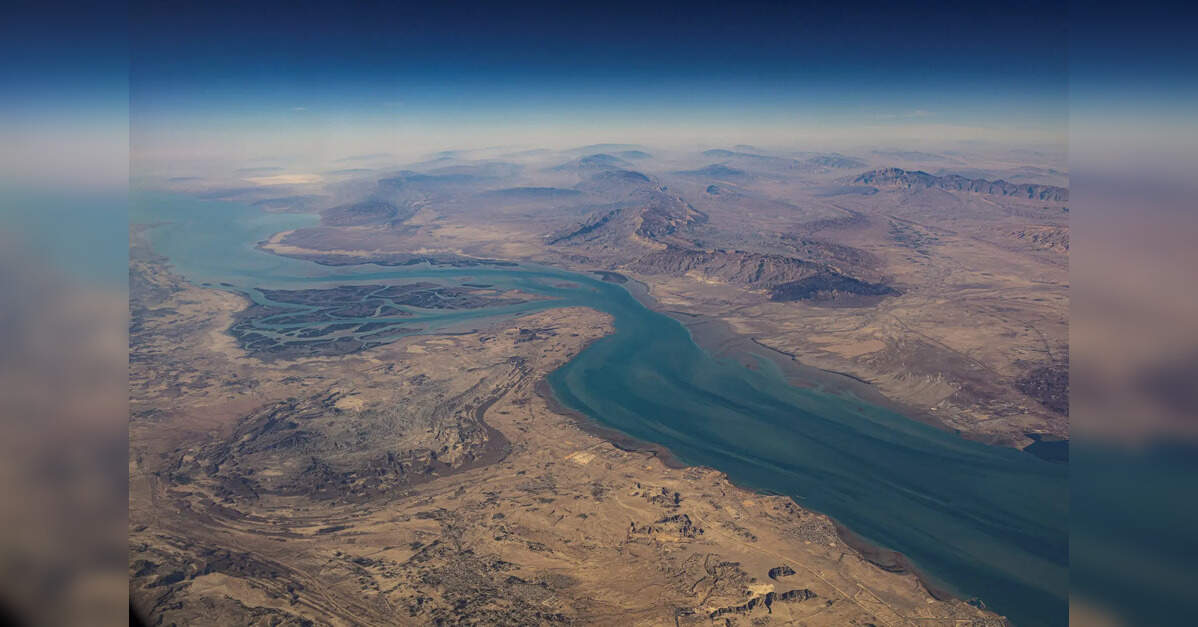
The Strait of Hormuz remains an indelible fulcrum of global energy security, a critical artery through which approximately 20% of the world’s total petroleum liquids consumption flows daily. Recent geopolitical flare-ups in West Asia, particularly involving direct confrontations between major powers, have once again thrust this chokepoint into the spotlight. While the immediate market reaction has been nuanced, the underlying risk of disruption to this vital waterway cannot be overstated for investors. Understanding the intricate balance between geopolitical tensions, actual supply dynamics, and broader market sentiment is paramount for navigating the volatile landscape of oil and gas investing.
The Undeniable Vulnerability of the Hormuz Chokepoint
The strategic importance of the Strait of Hormuz cannot be overstated. Connecting the Persian Gulf to the Gulf of Oman and the Arabian Sea, it serves as the sole maritime route for oil exports from major producers like Saudi Arabia, Iran, UAE, Kuwait, and Iraq. Estimates confirm that an average of 20 million barrels per day transits this narrow passage, making it one of the most critical chokepoints in global trade. The implications of any significant disruption are profound, with very few viable alternative options existing for moving such vast volumes of crude to international markets. Maritime industry executives have highlighted the immediate impact on shipping, noting that insurance premiums surge, and vessel operators re-evaluate routes, with some reports indicating hundreds of tankers have recently anchored outside the Strait, hesitant to enter the heightened risk zone. The direct involvement of global powers in recent regional conflicts differentiates the current scenario from historical skirmishes, amplifying the potential for widespread and sustained disruption.
Market Paradox: Geopolitical Tensions Versus Price Reality
Despite the heightened geopolitical temperature and the inherent risks to the Strait of Hormuz, the immediate market response has been complex, defying a simplistic “prices must surge” narrative. As of today, Brent crude trades at $93.83 per barrel, registering a modest gain of 0.63% within a daily range of $93.52 to $94.21. Similarly, WTI crude is priced at $90.43 per barrel, up 0.85%, fluctuating between $89.71 and $90.70. Gasoline prices hold steady at $3.13. This muted reaction, particularly in the context of recent volatility, presents a fascinating paradox for investors. Our proprietary data reveals that Brent crude has actually seen a significant drawdown over the past two weeks, falling from $118.35 on March 31st to $94.86 on April 20th – a substantial 19.8% decline. This downward trend suggests that other market forces, such as global demand concerns, inventory levels, or perhaps a market perception of de-escalation, have outweighed the immediate fear of a Hormuz closure. The market seems to be pricing in continued, albeit risky, operation of the Strait, rather than an imminent shutdown. This divergence between geopolitical risk and current price action demands careful scrutiny from investors.
Navigating Forward: Upcoming Events and Supply-Demand Signals
For investors seeking clarity on the future trajectory of oil prices amidst these tensions, a close watch on upcoming energy events is crucial. Tomorrow, April 21st, the OPEC+ Joint Ministerial Monitoring Committee (JMMC) meeting will take place. This gathering is pivotal, as the cartel will assess market conditions and current production policies. While no immediate change to output quotas is expected, any commentary on the geopolitical landscape or hints at future supply adjustments could significantly sway sentiment. Following this, the EIA Weekly Petroleum Status Reports on April 22nd and April 29th, alongside the API Weekly Crude Inventory data on April 28th and May 5th, will provide critical insights into U.S. inventory levels and demand. These reports will indicate if current supply is sufficient to meet demand, offering a buffer against potential disruptions or highlighting areas of vulnerability. Furthermore, the EIA Short-Term Energy Outlook on May 2nd will offer a more comprehensive forecast, incorporating geopolitical risks into its supply, demand, and price projections for the coming months. These events collectively form a crucial roadmap for understanding how fundamental supply-demand dynamics interact with geopolitical volatility, shaping investor expectations for the near term.
Investor Sentiment and the 2026 Outlook
Our reader intent data indicates a clear focus from investors on oil price direction, with questions such as “Is WTI going up or down?” and “What do you predict the price of oil per barrel will be by end of 2026?” dominating recent inquiries. While the immediate geopolitical risk in West Asia presents a powerful upside catalyst for oil prices, the recent 14-day Brent trend suggests that other factors are currently exerting downward pressure. The market is evidently grappling with a complex interplay of supply concerns, demand forecasts, and the perceived likelihood of a full-scale regional conflict. For the remainder of 2026, the outlook for oil prices will hinge on several key variables: the resolution or exacerbation of West Asian tensions, the pace of global economic growth and its impact on oil demand, and OPEC+’s continued commitment to supply management. A full closure of the Strait of Hormuz, while a low-probability event, would undoubtedly trigger an unprecedented price spike due to the severe supply deficit. However, international efforts to ensure safe passage, driven by the collective economic interest of all nations, suggest that such an extreme outcome would be met with swift and forceful diplomacy. Investors should maintain a balanced perspective, acknowledging the significant tail risk from Hormuz, while also considering the broader macroeconomic environment and the ongoing energy transition’s long-term influence on demand. Strategic positioning requires vigilance over both geopolitical flashpoints and the granular details of inventory and production reports, preparing for potential volatility on both the upside and downside.


