Hormuz Mines Raise Oil Supply Risk: A Deep Dive for Investors
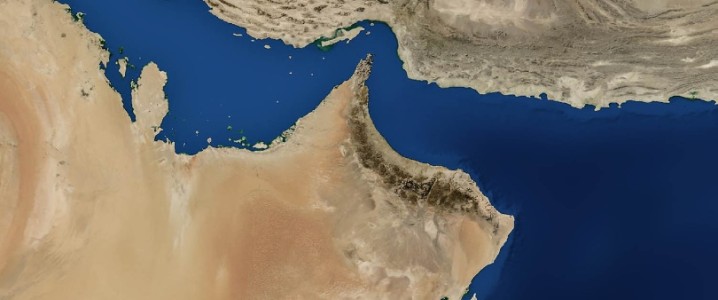
The strategic Strait of Hormuz, a critical artery for global energy flows, is once again a focal point of geopolitical tension, demanding immediate attention from oil and gas investors. Reports indicate Iran has begun laying naval mines in this vital waterway, an act that analysts warn could significantly extend an effective blockade and deepen disruption to a fifth of the world’s daily seaborne oil and liquefied natural gas exports. This escalation introduces a new layer of risk to an already volatile market, with potential for profound impacts on prices, inflation, and global supply chains. For investors, understanding the nuances of this developing situation, from immediate market reactions to future implications, is paramount.
Escalating Threats in the World’s Chokepoint
The recent mining activity, though currently limited to a few dozen mines deployed in recent days, represents a tangible escalation in Iran’s efforts to assert control over the narrow Strait of Hormuz. Intelligence sources suggest this is just the tip of the iceberg, as Tehran retains roughly 80%–90% of its small naval vessels and mine-laying craft, providing the capability to deploy hundreds more if it chooses to intensify its campaign. The Islamic Revolutionary Guard Corps (IRGC), now sharing oversight of the strait with Iran’s regular navy, possesses a range of asymmetric capabilities designed to threaten maritime traffic. These include scattered mine-laying craft, explosive-laden boats, and shore-based missile batteries, creating a complex and unpredictable array of threats to passing vessels. The IRGC has previously issued stark warnings, declaring that any ship attempting transit could face attack, effectively designating the passage a “death valley” for commercial mariners in the current heightened environment. Such actions have already triggered significant ripple effects, with tanker traffic through the strait experiencing a noticeable decline as shipping companies divert vessels and insurers escalate premiums to reflect the heightened risk.
Market Sensitivity and Investor Sentiment Amidst Volatility
The immediate reaction of global oil markets underscores the extreme sensitivity to developments in the Strait of Hormuz. We saw this acutely when U.S. crude prices initially plummeted by almost $10 on a now-debunked report of U.S. Navy escorts, only to rebound sharply after clarification. This incident highlights how quickly prices can swing on geopolitical news and even shifting official statements. As of today, Brent Crude trades at $92.9 per barrel, reflecting a slight dip of 0.36% within a daily range of $92.57-$94.21. Similarly, WTI Crude stands at $89.45, down 0.25% today, fluctuating between $88.76 and $90.71. These minor intraday movements, however, belie a more significant trend: our proprietary data reveals Brent Crude has actually fallen by over 7% in the past 14 days, from $101.16 on April 1st to $94.09 on April 21st, indicating that broader market pressures are at play even as specific geopolitical risks emerge.
Our first-party intent data from investors reveals a deep-seated anxiety regarding price direction. Questions like “is WTI going up or down?” and inquiries about year-end oil price predictions for 2026 are frequently asked, reflecting the uncertainty fueled by these geopolitical flashpoints. Investors are clearly grappling with how to position themselves in a market where fundamental supply and demand dynamics are increasingly overshadowed by the potential for sudden, severe disruptions. The ongoing situation in Hormuz, combined with the recent price trend, makes a clear forecast challenging, emphasizing the need for robust risk management and agile portfolio adjustments.
Strategic Ambiguity and the U.S. Response
Adding to market volatility is the current lack of a clear and immediate U.S. naval protection strategy for vessels transiting the Strait. Public confusion mounted after an erroneous social media post by the U.S. Energy Secretary claimed an escort had taken place, which was subsequently contradicted by the White House. While Press Secretary Karoline Leavitt affirmed that a Navy escort remains an option “if and when necessary,” no specific timetable or conditions for such an operation were provided. This strategic ambiguity, coupled with Iran’s demonstrated and growing mine and missile threat, leaves a significant vacuum regarding the future security of commercial passage. Military planners, including Chairman of the Joint Chiefs of Staff Gen. Dan Caine, have acknowledged that securing conditions for safe passage would be a critical evaluation if escort missions were tasked. However, the absence of an explicit, proactive plan for protecting oil shipments through the strait means that market participants must factor in continued uncertainty and elevated risk premiums for the foreseeable future.
Forward Outlook: Geopolitics, Inventories, and Key Data Points
Looking ahead, the trajectory of oil prices will remain a complex interplay between the escalating geopolitical risks in Hormuz and fundamental supply-demand indicators. Investors must maintain a vigilant watch on upcoming energy events, which could either cushion the impact of geopolitical shocks or exacerbate market movements. The EIA Weekly Petroleum Status Reports, scheduled for April 22nd, April 29th, and May 6th, will offer crucial insights into U.S. crude stockpiles, refining activity, and demand, providing a baseline for market health. Similarly, the API Weekly Crude Inventory releases on April 28th and May 5th will offer an early look at inventory trends. Any unexpected drawdowns could amplify price reactions to Hormuz headlines, while builds might provide some downside pressure.
Beyond inventories, the Baker Hughes Rig Count on April 24th and May 1st will provide a snapshot of U.S. drilling activity, hinting at future production capabilities. Finally, the EIA Short-Term Energy Outlook on May 2nd will offer updated forecasts on global supply and demand, which will be eagerly scrutinized for any revisions accounting for the heightened geopolitical risk environment. Should the situation in Hormuz escalate further, particularly with Iran’s stated capability to deploy hundreds more mines, the market could quickly pivot, with geopolitical concerns overshadowing even strong fundamental data. Prudent investors will therefore be continuously assessing their exposure, understanding that while these data points provide valuable context, the unpredictable nature of events in the Strait of Hormuz holds the potential for rapid and significant market shifts.


