

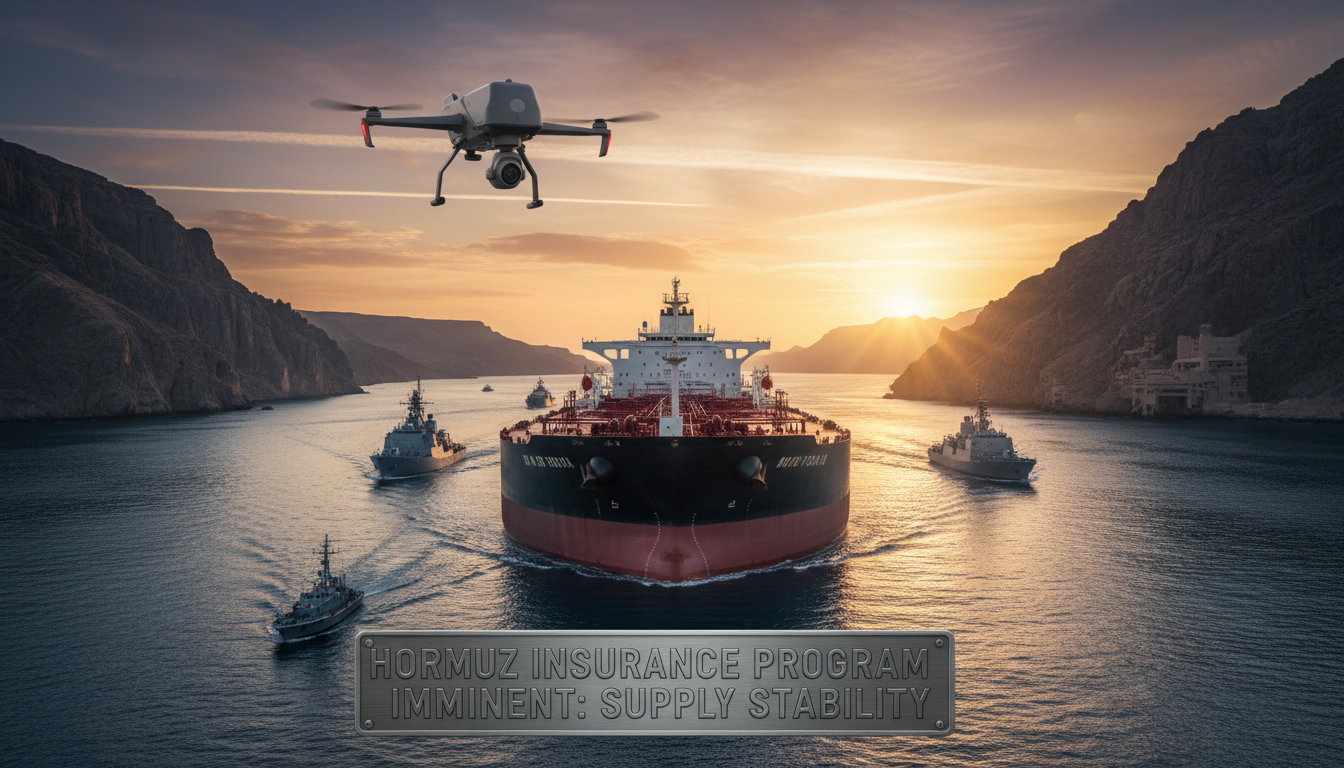
Investors closely monitoring global energy supply chains are watching intently as the United States prepares to roll out a new maritime insurance initiative aimed at bolstering the security of commercial shipping through the Strait of Hormuz. This critical waterway, a lifeline for a substantial portion of the world’s oil and gas flows, has faced unprecedented disruption amid escalating regional tensions. The program, designed to provide crucial guarantees and naval escorts, signals a proactive effort by the US administration to stabilize energy markets and mitigate geopolitical risks for crude and natural gas exports.
During a recent cabinet meeting, Treasury Secretary Scott Bessent confirmed the imminent launch of this US-backed insurance framework. The initiative involves the US International Development Finance Corporation (IDFC) offering insurance guarantees, a vital mechanism to encourage tanker traffic through the Strait. These guarantees will be complemented by naval escorts from US Central Command, forging a security umbrella intended to reassure wary shippers and ultimately restore confidence in transit through this volatile region. Bessent underscored the administration’s belief that “the oil market remains adequately supplied,” asserting that steps are being taken to ensure that “oil supplies currently awaiting transit are made available to the global market.” He further stated that this “maritime reinsurance program, in conjunction with Central Command, will soon provide shippers through the Gulf region with an unprecedented level of security.”
Navigating a Chokepoint Amidst Escalation
The urgency behind this program stems directly from the ongoing conflict in the Gulf, which commenced on February 28. The Strait of Hormuz, a narrow maritime passage through which roughly one-fifth of the world’s oil and gas supplies flow daily, quickly became a flashpoint. Despite the program’s initial announcement on March 3, concrete evidence of vessels benefiting from these new guarantees and escorts has yet to emerge. Since the conflict began, commercial vessels have largely opted to avoid the waterway, underscoring the severe security concerns. Recent attacks, attributed to Iranian forces, have also inflicted damage on vital refining and gas processing infrastructure in the region, pulling significant energy capacity offline and further complicating prospects for a swift de-escalation.
These developments unfold against a backdrop of escalating oil and gas prices, directly linked to the conflict and the persistent threat of supply shocks, even after active hostilities might cease. Earlier threats by former President Donald Trump to target Iranian power plants were met with a stark vow from the Islamic Republic: a complete closure of the Strait of Hormuz and strikes against regional energy facilities in retaliation. While the administration has claimed some tankers have successfully navigated the strait, the broader market narrative reflects deep apprehension among maritime operators.
Insurance Market Realities and Investor Concerns
For investors, understanding the real impediments to shipping is crucial. While Lloyd’s of London, a cornerstone of global maritime insurance, continues to offer coverage for vessels transiting the Strait, its Chief Executive Officer Patrick Tiernan has indicated that such coverage comes at an “extremely high cost.” This suggests that the fundamental barrier isn’t a complete absence of insurance options, but rather the prohibitive premiums and, more critically, the tangible threat of lethal military strikes from Iran. The presence of significant military risk far outweighs the availability of insurance in deterring commercial shipping, creating an elevated risk premium for all energy commodities reliant on this passage.
Despite these persistent challenges, Secretary Bessent conveyed an optimistic outlook regarding a pickup in tanker traffic. “We are observing increasing movements in and out of the Gulf today, surpassing yesterday’s levels, and this marks just the beginning,” he remarked. He expressed confidence that “shipping activity will continue its daily increase, even prior to the full securing of the straits.” Such a recovery in shipping volumes would be a welcome sign for global energy markets, potentially easing some of the upward pressure on prices.
Domestic Economic Pressures and Policy Responses
The soaring prices of crude oil and gasoline present a formidable economic and political challenge for the US administration. These elevated energy costs threaten to erode some of the economic gains achieved during Trump’s first year back in office and could create a significant political liability for Republicans vying to maintain control of Congress in the upcoming November midterm elections. Bessent, however, asserted that the US economy is in a stronger position to absorb short-term energy disruptions, attributing this resilience to the administration’s policies that have fostered increased domestic oil and gas production. He also suggested a broader public willingness to accept temporary price hikes for the sake of long-term stability: “Many underestimate the American people’s resolve to endure short-term volatility for the promise of fifty years of security that awaits us.”
In response to rising prices and supply concerns, the Trump administration has already taken several concrete steps. These include issuing waivers for maritime restrictions, effectively allowing non-US flagged or built ships to transport cargo between US ports – a temporary deviation from standard Jones Act provisions. Additionally, millions of barrels of crude oil have been released from the country’s emergency Strategic Petroleum Reserve (SPR), injecting immediate supply into the market to temper price spikes.
Strategic Options on the Table
Looking ahead, the administration continues to explore a range of policy options. Former President Trump himself alluded to the possibility of suspending the federal gasoline tax, a measure that would typically require legislative approval from Congress. “The gas tax is a concept that has been discussed,” Trump noted, adding, “It remains an option we hold in reserve should it become necessary.” Another dramatic, albeit vaguely defined, option mentioned by Trump was “taking control of Iran’s oil.” While details were scarce, market analysts interpret this as a potential reference to seizing or occupying Kharg Island, a pivotal hub for Iranian oil production and exports. Such a move would represent a significant escalation and carry profound implications for global energy security and geopolitical stability.
As the US initiative for the Strait of Hormuz takes shape, investors should closely monitor its implementation and effectiveness in fostering secure passage. The interplay of geopolitical events, the efficacy of the insurance program, and the US administration’s evolving policy toolkit will collectively shape the trajectory of global oil and gas markets in the coming months, directly impacting investment strategies across the energy sector.
