

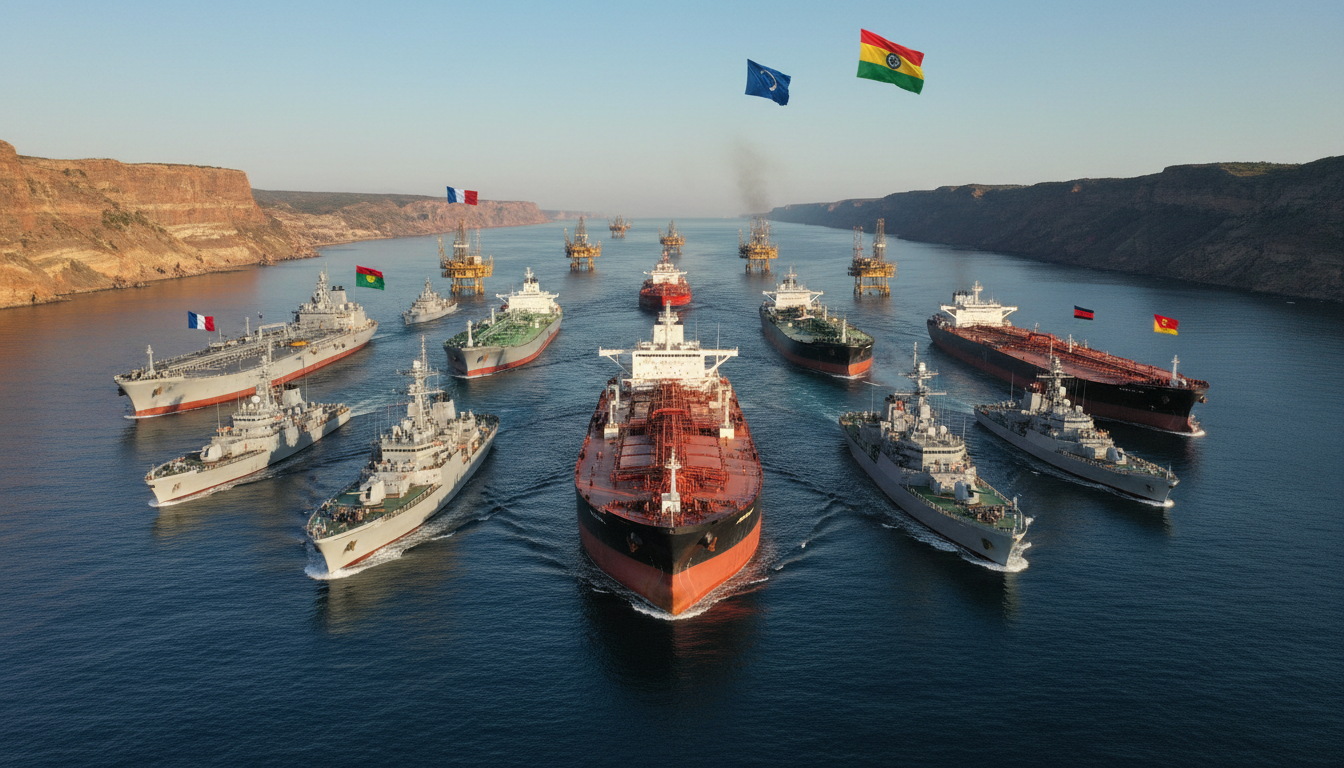
Global Powers Mobilize to Safeguard Hormuz: A Critical Juncture for Oil Markets
The global energy landscape is facing intensifying scrutiny as a broad coalition of international powers convenes to address escalating tensions in the Strait of Hormuz. Following assertive actions by Iran that have raised concerns over the free flow of maritime commerce, nearly 40 nations have initiated urgent discussions aimed at ensuring the unimpeded passage of oil and gas through this vital choke point. Industry observers and investors are closely monitoring these developments, recognizing the profound implications for crude oil prices, shipping costs, and overall energy security.
A senior representative from the United Kingdom articulated the gravity of the situation, characterizing recent Iranian maneuvers as effectively holding the global economy hostage by disrupting a crucial international shipping corridor. This stark assessment underscores the collective apprehension among nations reliant on the Strait for the transit of a significant portion of the world’s oil supply. For investors in the oil and gas sector, the stability of this waterway is paramount, directly influencing supply chain reliability and the pricing mechanisms of global commodities.
The initial high-level gathering, held recently, focused primarily on two critical areas: identifying which countries are prepared to commit resources and participation to a proposed international coalition, and exploring the full spectrum of diplomatic and economic levers available to persuade Iran to uphold the principles of free navigation. While the specifics of these closed-door deliberations remain confidential, the sheer number of participating nations signals a unified international resolve to mitigate the risks posed by geopolitical friction in the region. This collective engagement offers a degree of reassurance to energy markets, demonstrating that the international community recognizes the systemic threat.
Despite the absence of concrete agreements following the initial round of talks, a significant consensus emerged on two non-negotiable principles. Firstly, there was universal agreement that Iran must not be permitted to impose transit fees or any other charges on vessels utilizing the Strait of Hormuz. Such a move would introduce an unprecedented layer of cost and uncertainty for shippers and energy companies, inevitably translating into higher consumer prices for oil and gas products globally. Secondly, and perhaps more fundamentally, all participating nations underscored the inviolable right of all maritime traffic to traverse the waterway without hindrance. These declarations serve as a clear message, aiming to stabilize expectations for shipping companies and commodity traders.
The discussions are now set to enter a more operational phase. Military planners from the participating nations are scheduled to meet in the coming days to strategize on practical measures to secure the Strait. This upcoming session will delve into specific options, which notably include potential mine-clearing operations to neutralize any threats to safe passage, as well as the establishment of a robust reassurance force tasked with safeguarding commercial shipping. For energy investors, the deployment of such measures could introduce new complexities, ranging from increased insurance premiums for vessels operating in the region to the potential for heightened security expenditure for energy companies with assets nearby. However, these steps are also seen as vital to maintaining the flow of vital resources.
The Strait of Hormuz, linking the Persian Gulf to the open sea, remains the world’s most important oil transit choke point. Each day, millions of barrels of crude oil and petroleum products, along with a substantial volume of liquefied natural gas (LNG), pass through its narrow channels. Any significant disruption here could trigger a dramatic surge in crude oil prices, send global shipping costs spiraling, and introduce severe volatility into an already sensitive global economy. Oil and gas companies with upstream and downstream assets in the region, as well as those involved in tanker shipping, face direct exposure to these geopolitical currents.
As the international community seeks a resolution, investors must remain keenly aware of the evolving situation. The prospect of military involvement, even for defensive purposes, introduces an elevated level of risk. While the diplomatic front aims to de-escalate, the readiness to consider military options highlights the criticality of maintaining maritime security. The decisions made in the coming weeks will undoubtedly shape the trajectory of global energy markets, impacting investment strategies across the oil and gas value chain and demanding continuous vigilance from market participants.
