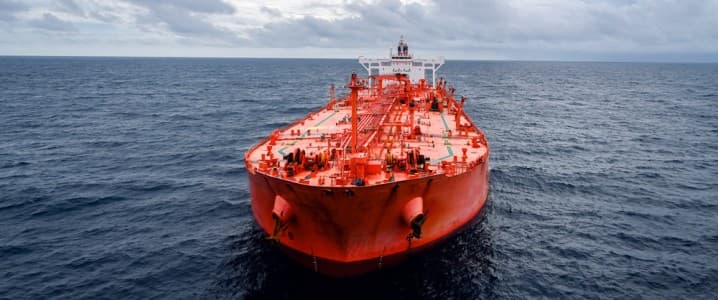
Hormuz Incident Reignites Supply Fears Amidst Already Tense Markets
A recent incident in the Strait of Hormuz, involving a cargo vessel struck by an unknown projectile, has ignited a fire onboard and forced crew evacuation. This event, reported by the United Kingdom Maritime Trade Operations (UKMTO) just 11 nautical miles north of Oman, serves as a stark reminder of the persistent and escalating geopolitical risks in the world’s most critical oil transit choke point. The Joint Maritime Information Center continues to assess the situation as “critical,” warning of likely attacks against commercial shipping and highly hazardous operating conditions. For energy investors, this is not merely a headline; it’s a direct challenge to global oil supply stability, occurring at a time when underlying market fundamentals already reflect deep uncertainty.
Geopolitical Volatility Meets Market Hesitation
The Strait of Hormuz, through which roughly one-fifth of the world’s total oil consumption passes daily, is once again at the epicenter of geopolitical tension. The incident itself, alongside reports of Iran commencing mine-laying operations and subsequent U.S. military actions to eliminate 16 Iranian mine-laying vessels, paints a picture of a region on the brink. This operational disruption is not new; recent incident patterns suggest a deliberate “campaign focused on operational disruption and uncertainty,” targeting vessels at anchor, drifting ships, and even support vessels responding to emergencies. Such actions significantly elevate the risk premium for oil transit and the broader energy supply chain.
As of today, Brent crude trades at $92.86, showing a marginal dip of 0.41% within a day range of $92.57-$94.21. WTI crude sits at $89.29, down 0.42% for the day. This relatively muted immediate price reaction, despite the gravity of the incident, masks deeper underlying concerns. Our proprietary data indicates that Brent has actually seen a more significant decline over the past two weeks, trending down from $101.16 on April 1st to $94.09 on April 21st, a 7% drop. This suggests that while today’s specific event might not have triggered a sharp spike, the market has been absorbing a period of decreasing risk premium or other bearish factors, making the current escalation a critical test for future sentiment. Significantly, the largest oil producers in the Middle East Gulf have already deepened production cuts by a combined more than 5 million barrels per day (bpd) as the de facto halt to tanker traffic in the Strait of Hormuz has started to affect upstream production. This unprecedented level of disruption translates into higher “port exception activity” across Saudi Arabia, Oman, and Pakistan, indicating widening logistical strains and a palpable tightening of tanker availability, reinforcing broader supply risk.
Addressing Investor Concerns Amidst Supply Chain Strain
The current environment is breeding significant investor anxiety, a sentiment clearly reflected in our first-party intent data. Investors are actively seeking clarity on market direction, with common queries such as “is WTI going up or down” and “what do you predict the price of oil per barrel will be by end of 2026?” dominating our reader interactions. These questions underscore the market’s craving for predictive insight in the face of unpredictable geopolitical events. The Strait of Hormuz incident directly impacts the risk premium embedded in oil prices, making long-term predictions particularly challenging.
Iran’s vow “not to let a litre” of oil be exported from the Middle East under certain conditions, contrasted with U.S. President Donald Trump’s reassurances, creates a deeply conflicting narrative for investors. The reality on the ground, with “energy market stress remaining acute” and “Gulf crude rerouting” due to heightened risk, suggests that the market is already pricing in significant logistical hurdles and potential for further escalation. This sustained disruption elevates operating costs for shipping and insurance, ultimately supporting higher oil prices by reducing effective supply and increasing the cost of delivery, even if the immediate spot price reaction appears contained.
Forward Outlook: Key Catalysts and Market Vigilance
Looking ahead, the ongoing crisis in the Strait of Hormuz will continue to be a dominant factor shaping crude oil markets, but investors must also weigh this against upcoming market catalysts. Over the next two weeks, several key data releases will offer critical insights into global supply-demand dynamics and their interaction with geopolitical risk. We urge investors to closely monitor the EIA Weekly Petroleum Status Reports scheduled for April 22nd, April 29th, and May 6th. These reports provide crucial data on U.S. crude inventory levels, refinery utilization, and product supplied, which will be essential for assessing the impact of Middle Eastern supply disruptions on global balances.
Furthermore, the Baker Hughes Rig Count on April 24th and May 1st will offer an updated perspective on North American production activity, indicating potential supply responses to current price levels and geopolitical premiums. The EIA Short-Term Energy Outlook, due on May 2nd, will be particularly insightful as it will likely incorporate updated geopolitical risk assessments and revise crude oil price forecasts for the remainder of 2026. A sustained de facto halt to tanker traffic in the Strait, leading to further production cuts in the Middle East, could manifest as tighter U.S. inventories or shifts in global refining patterns, potentially driving prices higher despite any prevailing bearish sentiment from other market segments. Investors must therefore remain agile, interpreting these data points through the lens of heightened geopolitical risk in the Strait of Hormuz.


