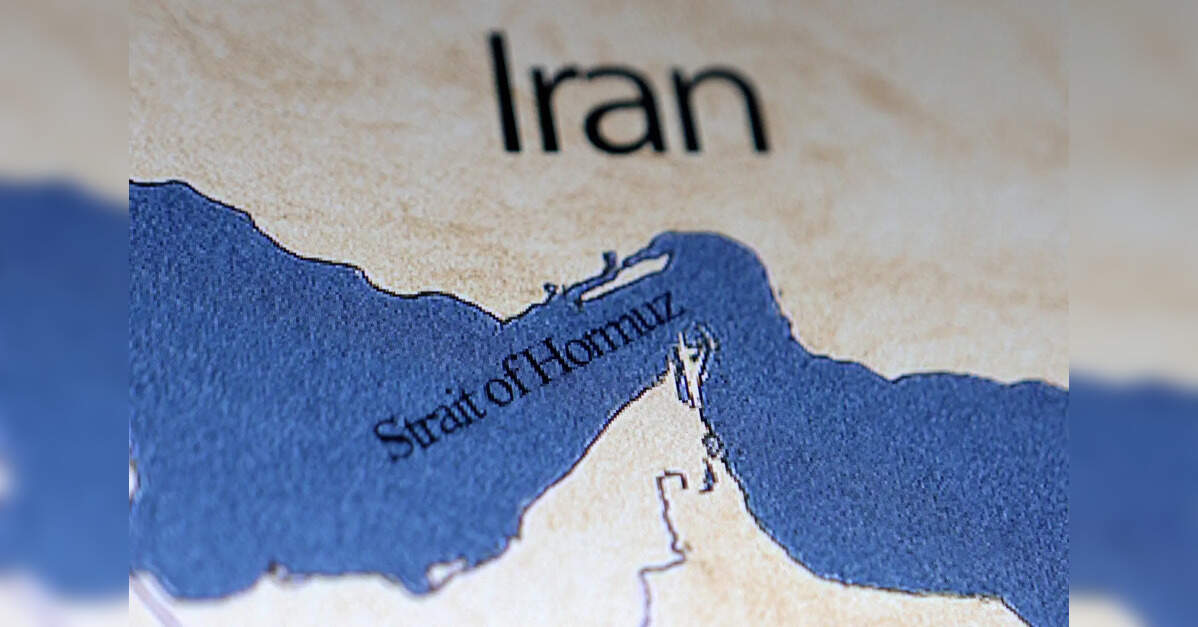
The Strait of Hormuz, a critical chokepoint for global oil flows, continues to cast a long shadow over the energy markets. Recent analysis suggests that Middle Eastern oil producers, responsible for a significant portion of the world’s crude supply, could sustain output for no more than 25 days if the strait were to experience a complete closure due to regional conflict. This stark assessment underscores the fragility of global energy security in the face of escalating geopolitical tensions. Our proprietary data pipelines, encompassing real-time market prices, an exhaustive event calendar, and granular insights into investor sentiment, provide a unique lens through which to dissect this high-stakes scenario and its implications for your portfolio.
The Hormuz Lifeline: A 25-Day Supply Window
The strategic importance of the Strait of Hormuz cannot be overstated. Roughly 19 million barrels per day of liquid fuels, including 16 million barrels per day of crude oil, transit this narrow passage. Should a complete closure occur, the immediate challenge for producers like Saudi Arabia, the UAE, Iraq, Kuwait, Qatar, Oman, and Iran, lies in their storage capacity. Estimates indicate approximately 343 million barrels of available onshore crude storage across these seven Gulf nations, providing a buffer of roughly 22 days of stranded production. While an additional 60 empty tankers in the region could offer a further 50 million barrels of floating storage, extending operations by another three to four days, the combined capacity still points to a critical 25-day operational limit before mandatory production shut-ins would become unavoidable. We have already observed a glimpse of this vulnerability, with tanker traffic effectively stalling recently, causing export flows via the route to plummet to around 4 million barrels per day of Iranian crude, a significant drop from typical daily rates four times that amount.
Geopolitical Headwinds and Current Market Dynamics
The market has been grappling with intense volatility driven by geopolitical events, including recent attacks between the US, Israel, and Iran, which sparked retaliatory barrages. As of today, Brent crude trades at $93.83 per barrel, showing a modest gain of 0.63% within a day range of $93.52-$94.21. WTI crude similarly stands at $90.43 per barrel, up 0.85% for the day. While these are today’s prices, it’s crucial to contextualize them against a backdrop of significant recent downturns. Our 14-day Brent trend data reveals a sharp decline from $118.35 on March 31st to $94.86 on April 20th, representing a substantial 19.8% drop. This suggests that despite the lingering risk of a Hormuz closure, the market has recently been pricing in a de-escalation of immediate conflict, or perhaps prioritizing other bearish factors. However, the underlying geopolitical tension remains a potent, unpriced tail risk that could swiftly reverse this trend, sending prices soaring far beyond current levels if the strait were to become impassable.
Investor Concerns: Navigating Price Trajectories and Long-Term Outlook
Our proprietary reader intent data highlights a clear focus among investors on price direction, with common queries like “is WTI going up or down?” and requests for “what do you predict the price of oil per barrel will be by end of 2026?” This reflects the deep uncertainty permeating the market. The Hormuz scenario is central to these questions. A full, sustained closure would undoubtedly trigger an unprecedented spike in crude prices, invalidating any current short-term price predictions. While nations like Saudi Arabia and the UAE possess some alternative pipeline routes, their capacity is limited and cannot fully compensate for a complete cessation of Hormuz traffic. The 25-day storage buffer offers only a temporary reprieve, meaning that any long-term closure would necessitate a fundamental re-evaluation of global supply and demand dynamics, pushing prices into uncharted territory. Investors must consider this extreme, though hopefully improbable, scenario when assessing risk and reward in their energy portfolios.
Upcoming Catalysts and Strategic Positioning
The coming weeks are packed with events that could significantly influence market sentiment and price action, all viewed through the lens of regional stability and supply security. On April 21st, the OPEC+ Joint Ministerial Monitoring Committee (JMMC) meeting will be a critical watchpoint. Any signals regarding production policy, particularly in response to current geopolitical tensions, could either calm or further roil the market. Subsequently, the EIA Weekly Petroleum Status Reports on April 22nd and April 29th will provide vital insights into U.S. crude inventory levels, which act as a crucial global buffer. Significant draws could amplify market sensitivity to Middle East supply concerns. The Baker Hughes Rig Count on April 24th and May 1st will offer a snapshot of North American drilling activity, hinting at future supply trends. Finally, the EIA’s Short-Term Energy Outlook on May 2nd will present updated forecasts for global supply, demand, and prices, incorporating the latest geopolitical developments. For investors, these events represent key decision points where new information can either confirm or challenge current market assumptions, especially regarding the vulnerability of supply from the world’s most critical energy chokepoint.


