

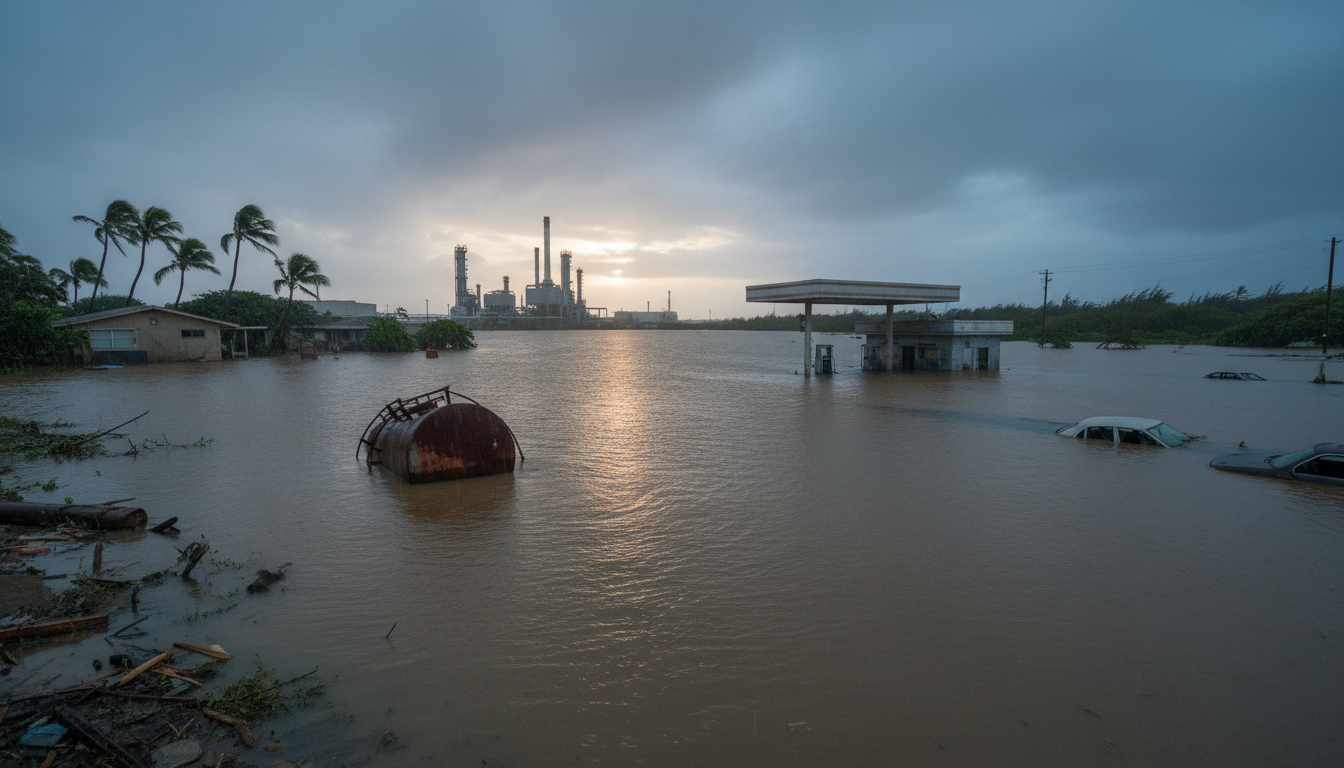
HONOLULU, HI – A sudden, intense downpour near downtown Honolulu this week has escalated the economic fallout from a relentless two-week barrage of storms and flooding across Hawaii. As damage assessments commence, investors are keenly observing the implications for regional infrastructure, supply chain resilience, and the broader energy demand landscape in a state heavily reliant on imported fuels.
The latest deluge, striking Monday, caught residents and even weather forecasters off guard. It unleashed several inches of rain on Oahu’s southern flank, specifically transforming Manoa Valley into a raging confluence of reddish-brown torrents that swept away parked vehicles and inundated entire neighborhoods just miles east of downtown Honolulu. This follows closely on the heels of the iconic North Shore grappling with its most severe flooding in two decades, an event that required extensive clean-up efforts and caused widespread disruption.
Weather analysts from the National Weather Service expressed surprise at the ferocity of Monday’s event. While they anticipated lingering instability from a powerful “Kona low” winter storm system could bring more rain, their predictive models struggled to accurately forecast the precise moisture retention within such systems. This highlights a persistent challenge for risk modeling, a critical factor for energy asset protection and insurance underwriting in vulnerable regions.
The rainfall intensity was remarkably localized, with measurements of 2 to 4 inches (5 to 10 centimeters) per hour in affected areas. One rain gauge in the upper Manoa Valley recorded a staggering 6 inches (15 centimeters) of precipitation, while the international airport, just a few miles away, received a mere one-hundredth of an inch (less than a millimeter). Such concentrated, high-impact events pose unique challenges for grid operators and fuel distributors, necessitating robust, localized emergency response protocols.
Although the Kona low system is now tracking eastward, reducing the immediate risk of similar bursts for Oahu, flash flood alerts regrettably persist for the eastern part of Maui. This continued threat underscores the extended nature of the meteorological challenges impacting the entire Hawaiian archipelago and potentially disrupting inter-island logistics vital for energy and goods distribution.
Mounting Economic Damages and Infrastructure Strain
While initial reports thankfully indicate no fatalities or severe injuries, the economic toll is rapidly accumulating. Hundreds of homes on Oahu’s North Shore had already suffered damage from prior week’s inundation, which occurred on ground already saturated by an earlier winter storm. The sheer volume of water dislodged houses from their foundations, floated vehicles out of parking areas, and left interiors caked in thick, reddish volcanic mud. Over 230 individuals required rescue, and evacuation mandates affected 5,500 people north of Honolulu, with some residents resorting to surfboards to navigate waist to chest-high floodwaters.
The agricultural sector has been hit hard, with farms across the state reporting more than $9.4 million in damage as of Monday. This figure is a direct indicator of immediate economic losses and highlights the vulnerability of local food supply chains, which in turn can influence shipping and fuel demands for importing alternatives.
Even before Monday’s surprise deluge, Governor Josh Green warned that the total cost of the storm system could easily surpass $1 billion. This substantial estimate encompasses critical public infrastructure, including vital airports, educational institutions, roadways, residential properties, and even a hospital in Kula, Maui. Governor Green characterized this sequence of events as the state’s most significant flood crisis since 2004, when similar inundation devastated homes and a University of Hawaii library in Manoa. Such extensive infrastructure damage necessitates massive reconstruction efforts, creating both demand for construction materials and a sustained need for transportation fuels and power generation.
Implications for Energy Markets and Investment
For investors monitoring the energy sector, the Hawaiian floods present several key considerations. Firstly, the disruption to transportation networks – damaged roads, potential airport closures, and port restrictions – directly impacts the efficient movement of refined petroleum products and other essential goods. Hawaii’s isolated geography means it is highly dependent on maritime transport for its fuel supply, making port operability paramount. Any sustained disruption can lead to temporary fuel shortages or price spikes, impacting local businesses and consumer spending, which in turn affects fuel demand.
Secondly, the massive reconstruction effort will stimulate demand for diesel fuel for heavy machinery, gasoline for construction crews, and increased power generation to support rebuilding. Companies involved in logistics, construction, and power infrastructure upgrades may see temporary upsides, but the overall economic strain on the state could temper long-term growth prospects without significant federal aid.
Thirdly, the heightened frequency and intensity of such “extremely unusual” weather events, as termed by the Oahu Emergency Management Agency, underscore the escalating climate risk profile for island economies. Investors in energy infrastructure, particularly those with assets in coastal or low-lying areas, must increasingly factor in climate resilience and adaptation costs. This includes upgrading pipelines, storage facilities, and power grids to withstand more extreme weather. The events in Hawaii serve as a stark reminder of the financial implications of climate change on physical assets and operational continuity.
Looking ahead, cleanup operations are now in full swing, with volunteers, public workers, and a specialized contract firm mobilized to manage the extensive debris removal. While officials express cautious optimism that the prolonged rainfall is finally subsiding, the long road to recovery has just begun. For energy investors, this situation highlights the imperative of assessing not just immediate market fluctuations, but also the long-term strategic investments in resilient infrastructure and adaptive supply chains necessary for stable returns in an increasingly volatile climate landscape.
