

Hawaii’s Billion-Dollar Deluge: A Wake-Up Call for Energy Infrastructure and Climate Resilience
Honolulu, HI – The Hawaiian Islands are grappling with the devastating aftermath of the most severe flooding in over two decades, an event that carries profound implications for the state’s economy, its critical infrastructure, and its long-term energy security. With initial damage estimates soaring past $1 billion, the widespread disruption to essential services and property presents a compelling case study for investors assessing climate risk, infrastructure resilience, and the evolving demands on the global energy sector.
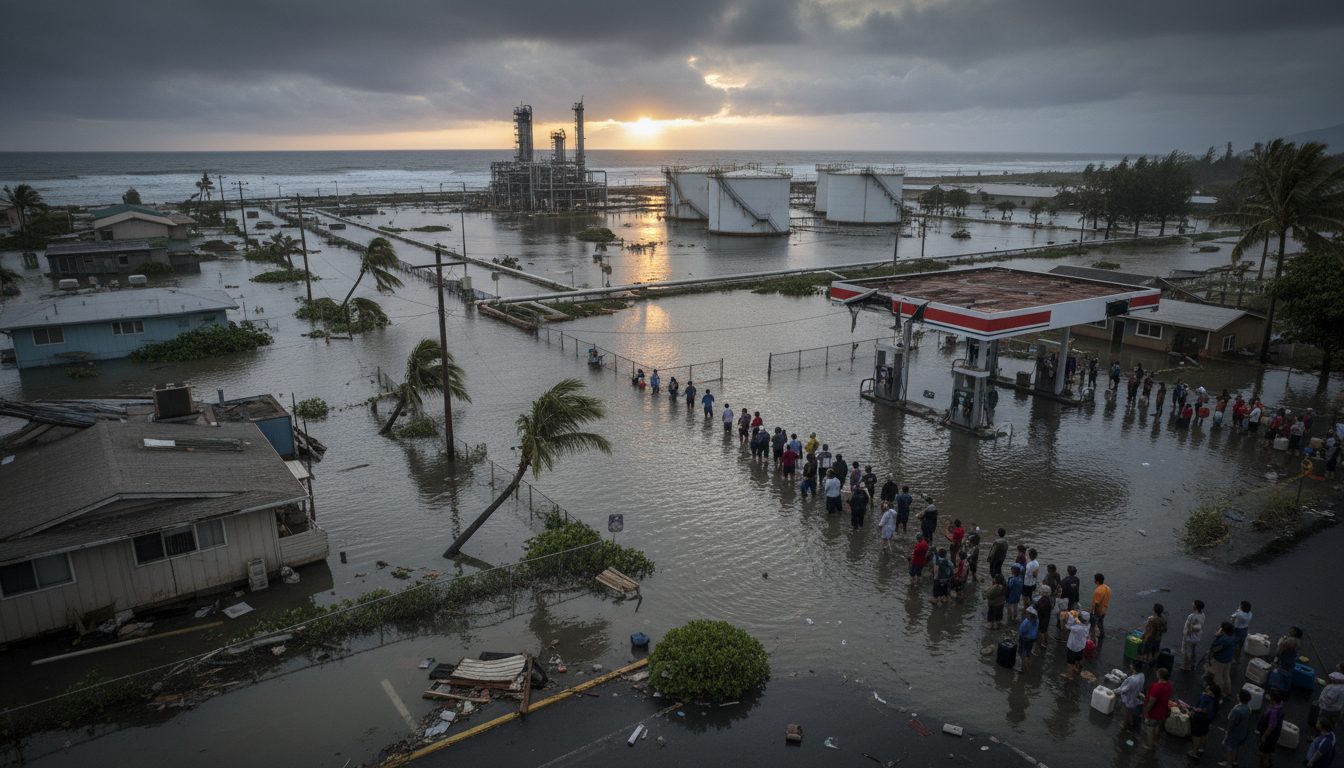
Unprecedented rainfall, intensified by persistent “Kona lows” and exacerbated by already saturated ground from prior storms, triggered a cascade of emergencies. Oahu’s North Shore, world-renowned for its powerful waves, found itself submerged under muddy floodwaters, displacing 5,500 residents from their homes and prompting urgent rescue operations. The island of Maui also faced significant challenges, with parts of Lahaina, still recovering from a catastrophic 2023 wildfire, experiencing new evacuation warnings as retention basins neared capacity. This dual impact underscores the increasing vulnerability of island economies to successive natural disasters, straining emergency resources and delaying recovery efforts.
Economic Fallout and Infrastructure Vulnerability
Governor Josh Green’s preliminary estimate of over $1 billion in damages highlights the profound financial shock to the state. This staggering figure encompasses not only immediate property losses but also extensive damage to vital public assets: airports, schools, and particularly, the extensive road network that crisscrosses the islands. Such infrastructure damage is not merely a local concern; it directly impedes supply chains, affecting the timely delivery of goods, including crucial refined petroleum products and other energy commodities upon which Hawaii, highly dependent on imports, relies. The disruption to transportation links directly translates into potential energy price volatility and challenges in maintaining consistent supply, a key consideration for institutional investors evaluating the stability of regional energy markets.
The tourism sector, a cornerstone of Hawaii’s economy and a significant consumer of energy, faces immediate and potentially lingering effects. Flight disruptions, damaged accommodations, and the general perception of a state in recovery can deter visitors, impacting airline profitability, hotel occupancy rates, and overall energy demand from the hospitality industry. For investors in travel and leisure, as well as the energy companies supplying these businesses, these events underscore the growing importance of assessing geographic concentration risk and climate-related exposure.
Energy Security in a Changing Climate
The intense and increasingly frequent heavy rains in Hawaii, which experts link to human-caused global warming, serve as a stark reminder of escalating climate risks facing energy assets worldwide. “Kona lows,” characterized by moisture-laden southerly winds, have been the culprits behind recent deluges. This pattern of more intense rainfall events poses direct threats to coastal energy infrastructure, including port facilities for fuel imports, power generation plants, and local distribution networks. While no major energy facilities were reported damaged, the broad-based infrastructure disruption severely tests the resilience of Hawaii’s energy system, which is almost entirely reliant on imported fossil fuels.
The imperative for enhanced energy resilience is clearer than ever. This catastrophe could accelerate Hawaii’s already ambitious push towards renewable energy independence. Investors should watch for increased capital allocation towards distributed renewable generation, energy storage solutions, and microgrids designed to withstand extreme weather events. Such investments not only bolster energy security but also align with global decarbonization efforts, presenting new opportunities for firms operating in the clean energy and grid modernization sectors.
The Wahiawa Dam: A Critical Case Study in Asset Integrity and ESG Risk
Beyond the immediate flooding, the Wahiawa dam on Oahu presented a grave, secondary threat, declared “at risk of imminent failure” by officials. This 120-year-old earthen structure, originally constructed in 1906 for sugar production by what became a Dole Food Company subsidiary, highlights systemic issues of aging infrastructure and corporate accountability. Despite its reconstruction in 1921 and its classification as having “high hazard potential,” state records show Dole received four notices of deficiency since 2009 and a $20,000 fine five years ago for unaddressed safety concerns.
While Dole asserts the dam continues to operate as designed, the situation underscores the growing importance of Environmental, Social, and Governance (ESG) factors for investors. The potential for catastrophic failure, resulting in “probable loss of human life,” carries immense reputational and financial risks for asset owners. This incident serves as a critical reminder for investors to scrutinize the long-term asset integrity management practices of companies, particularly those with extensive legacy infrastructure. Regulatory compliance, proactive maintenance, and transparent risk assessments are no longer just operational matters; they are fundamental components of investment viability and corporate social license, impacting insurance premiums and access to capital.
Investment Lessons from the Deluge
As Hawaii begins the arduous process of recovery and reconstruction, the events of the past weeks offer significant takeaways for the global investment community. The immediate economic impact, estimated at over $1 billion, underscores the financial vulnerability of regions exposed to intensifying climate phenomena. The disruption to supply chains and the threat to energy security highlight the urgent need for resilient infrastructure investment and diversification of energy sources. For institutional investors, this means a deeper integration of climate risk into portfolio analysis, a focus on companies committed to robust asset integrity management, and an eye towards emerging opportunities in climate adaptation and renewable energy technologies. Hawaii’s battle with the elements is a potent reminder that the physical impacts of a changing climate are already here, demanding a proactive and strategic response from the financial markets.
