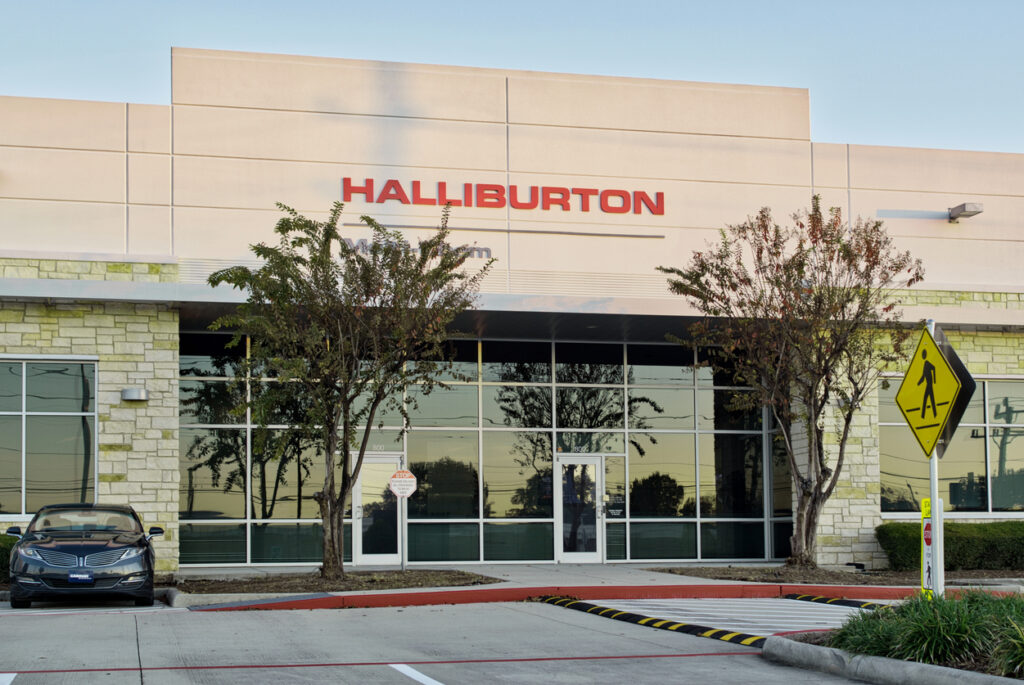
Halliburton’s recent multi-year deepwater contract awards from Petrobras in Brazil mark a significant strategic win for the oilfield services giant and offer crucial insights into the evolving landscape of global energy production. These agreements, which cover vessel stimulation, intelligent completions, and advanced safety valve systems across key offshore fields, underscore the enduring importance of deepwater exploration and production, even amidst fluctuating market conditions. For investors tracking the upstream sector, these contracts are more than just a revenue stream for Halliburton; they represent a powerful vote of confidence in Brazil’s pre-salt potential and the critical role technology plays in unlocking complex hydrocarbon resources safely and efficiently. Our analysis delves into the implications of these awards, connecting them with current market dynamics, upcoming industry catalysts, and pressing investor questions.
Halliburton’s Technological Edge in Brazil’s Deepwater Frontier
The core of these new contracts lies in Halliburton’s deployment of cutting-edge technology designed to optimize production and enhance operational safety in challenging deepwater environments. Specifically, the Búzios field, a cornerstone of Brazil’s pre-salt development, will benefit from Halliburton’s SmartWell® intelligent completion technology. This system enables real-time reservoir management, offering operators unparalleled control over production optimization and the ability to adapt to changing reservoir conditions without costly interventions. This level of dynamic control is a game-changer for maximizing recovery rates and extending the economic life of these massive assets.
Furthermore, the Séepia and Atapu fields are set to receive EcoStar® electric tubing retrievable safety valves (eTRSVs). These advanced safety systems are critical for ensuring well integrity and preventing potential incidents, directly contributing to improved safety and operational efficiency across Petrobras’ extensive deepwater portfolio. The inclusion of Halliburton’s Stim Star Brasil vessel for dedicated stimulation services further highlights the integrated approach to enhancing reservoir productivity and sustaining output. With these contracts slated to commence in 2026, Halliburton is strategically positioning itself at the forefront of Brazil’s next phase of deepwater development, securing a substantial revenue pipeline and reinforcing its competitive standing as a leading provider of integrated completion and stimulation technologies for complex offshore operations globally.
Brazil’s Enduring Deepwater Commitment and Production Outlook
These awards are a testament to the long-standing collaboration between Halliburton and Petrobras, a partnership spanning decades that has been instrumental in developing Brazil’s formidable offshore capabilities. More broadly, they underscore Brazil’s unwavering commitment to leveraging advanced subsea and completion technologies to not only sustain but also grow its offshore production. For investors eyeing the long-term supply picture, Brazil remains a critical player, with its pre-salt fields offering some of the most prolific and economically viable deepwater resources globally. The significant capital allocation by Petrobras towards these advanced services signals a clear intent to continue investing heavily in its core assets.
Our proprietary reader intent data reveals that investors are keenly interested in the future trajectory of oil prices, with many asking “what do you predict the price of oil per barrel will be by end of 2026?” While precise predictions are elusive, these deepwater investments, with their multi-year development cycles and production horizons, demonstrate a strategic vision by national oil companies like Petrobras that transcends short-term market fluctuations. They are betting on sustained global demand and the long-term value of reliable, technologically advanced production. Halliburton’s role in these projects effectively de-risks future production for Petrobras, aligning with the shared focus on improving asset value and efficiency, and providing a stable backlog for the services provider.
Navigating Market Volatility: Deepwater’s Resilience Amidst Price Swings
The timing of these significant deepwater awards comes amidst a period of notable volatility in the global crude markets. As of today, Brent Crude is trading at $90.38 per barrel, representing a substantial decline of 9.07% within a single day, with its intra-day range stretching from $86.08 to $98.97. Similarly, WTI Crude has seen a steep drop to $82.59, down 9.41%, trading between $78.97 and $90.34. This recent downward pressure is further highlighted by the 14-day Brent trend, which has seen prices fall from $112.78 on March 30, 2026, to the current $90.38, a significant -$22.4 or -19.9% correction.
Such sharp movements in benchmark prices often prompt investor caution. However, the multi-billion-dollar investments in deepwater projects like those in Brazil operate on a much longer time horizon than daily or even monthly price swings. These projects are characterized by extensive planning, development, and production phases that span decades, necessitating a strategic outlook less reactive to immediate market noise. While lower crude prices can impact profitability margins for new projects, the continued commitment by Petrobras to these high-tech services underscores the underlying economic robustness of Brazil’s deepwater plays and the essential nature of Halliburton’s technologies for optimizing their returns, even in a more constrained price environment. The resilience of deepwater investment in the face of recent market corrections signals a fundamental belief in the long-term demand for hydrocarbons.
Upcoming Catalysts and the Future Supply-Demand Equation
Looking ahead, the next two weeks hold several key events that could influence the broader energy market sentiment and, by extension, the strategic context for deepwater investments. Our event calendar highlights the upcoming OPEC+ Joint Ministerial Monitoring Committee (JMMC) Meeting on April 19, followed by the full OPEC+ Ministerial Meeting on April 20. Investors are actively querying “What are OPEC+ current production quotas?” and the outcomes of these meetings could significantly impact global supply expectations. Any decision to adjust production quotas, especially in response to recent price declines, will have ripple effects across the industry, influencing future investment decisions in high-cost, long-lead-time projects like those in deepwater Brazil.
Beyond OPEC+, the market will closely watch the API Weekly Crude Inventory reports on April 21 and 28, and the EIA Weekly Petroleum Status Reports on April 22 and 29. These provide crucial insights into U.S. supply and demand balances, which are significant global indicators. Furthermore, the Baker Hughes Rig Count on April 24 and May 1 will offer a snapshot of drilling activity, though deepwater operations often follow a different investment cycle than onshore shale. For investors, understanding these near-term market signals in conjunction with long-term strategic commitments like Halliburton’s Brazil contracts is essential. These deepwater projects, coming online in 2026, will become part of the future supply equation, influencing the very market dynamics that OPEC+ and inventory reports reflect today. Halliburton’s secured contracts provide a degree of revenue predictability, making them an attractive consideration for investors seeking exposure to the long-term energy transition while managing short-term market volatility.