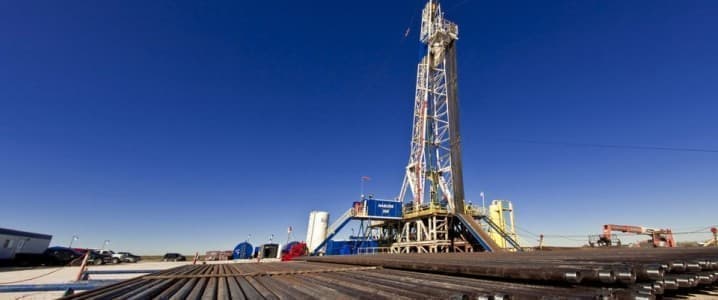
Halliburton Company’s third-quarter earnings have once again underscored the resilience of North American oilfield services demand, comfortably exceeding Wall Street expectations. While the headline figures paint a picture of strong operational execution, a deeper dive using OilMarketCap’s proprietary market intelligence reveals critical nuances for investors navigating today’s dynamic energy landscape. This isn’t merely a recap of a strong quarter; it’s an analysis of what Halliburton’s performance, alongside broader market signals, tells us about the strategic positioning of the oilfield services sector in an environment of shifting crude prices and evolving investor priorities.
North American Resilience Amidst Shifting Crude Dynamics
Halliburton’s adjusted net income of $0.58 per diluted share for Q3, surpassing consensus estimates of $0.50, was a clear victory. This robust performance was primarily fueled by its North American operations, where revenue climbed 5% sequentially to $2.4 billion, also beating the analyst consensus of $2.17 billion. The drivers were tangible: increased stimulation activity onshore the U.S. and Canada, coupled with higher completion tool sales and expanded wireline activity in the Gulf of America. This aligns perfectly with the recent record-setting U.S. crude oil production, which surged to 13.636 million barrels per day in the week ending October 10, marking an all-time high.
What makes Halliburton’s North American showing particularly compelling is its timing. As of today, Brent crude trades at $93.93 per barrel, reflecting a 1.62% decline, while WTI crude sits at $85.76, down 1.9%. More significantly, our proprietary data indicates a substantial retreat in Brent crude prices over the past two weeks, dropping nearly 20% from $118.35 on March 31 to $94.86 on April 20. This stark contrast – a strong quarter for oilfield services against a backdrop of softening crude prices – suggests that U.S. operators are maintaining robust activity levels, prioritizing efficiency and production even as commodity prices experience short-term volatility. Halliburton CEO Jeff Miller’s emphasis on “prioritizing returns, technology leadership, and working with leading operators” clearly resonates with this market dynamic, showcasing a strategic focus on value maximization rather than simply chasing volume.
Oilfield Services: Decoding Investor Sentiment and Forward Outlook
The positive trend in North American oilfield services isn’t isolated. Last week, SLB, the world’s largest oilfield services provider, also reported higher-than-expected Q3 earnings, with its North American revenue jumping 17% sequentially and 14% year-over-year. This confluence of strong results from industry leaders paints a consistent picture: the demand for drilling and completion services in North America remains robust, driven by a mature basin where efficiency and advanced technology are paramount.
Our analysis of investor inquiries this week reveals a deep interest in the underlying trajectory of the energy market. Questions like “is WTI going up or down” and “what do you predict the price of oil per barrel will be by end of 2026?” underscore the prevalent uncertainty around commodity prices. However, Halliburton’s performance offers a crucial insight: sustained operational demand for services can buffer the impact of crude price fluctuations, particularly for companies with strong regional exposure and technological advantages. This suggests that while crude prices remain a primary concern, the operational health of E&P companies, reflected in their ongoing capital expenditure on drilling and completions, provides a more stable indicator for the services sector. Investors are seeking clarity not just on prices, but on the durability of the activity that drives service company revenues.
Upcoming Catalysts: Shaping the Next Chapter for Energy Investments
The immediate future holds several key events that will further shape the outlook for oil prices and, consequently, the investment appetite for oilfield services. Our calendar of upcoming energy events highlights a busy fortnight, starting with the OPEC+ JMMC Meeting today, April 21. This gathering could signal potential supply-side adjustments, directly impacting global crude prices. Following this, the EIA Weekly Petroleum Status Reports on April 22 and April 29, along with the API Weekly Crude Inventory reports on April 28 and May 5, will provide critical insights into U.S. inventory levels and demand trends.
For oilfield services investors, the Baker Hughes Rig Count, scheduled for release on April 24 and May 1, will be particularly insightful. This direct measure of drilling activity will indicate whether the recent decline in crude prices has begun to influence E&P companies’ investment decisions. While Halliburton’s Q3 suggests continued activity, a sustained drop in rig counts could signal a future slowdown in demand for services. Furthermore, the EIA Short-Term Energy Outlook on May 2 will offer a broader perspective on market fundamentals, influencing long-term investment strategies. These upcoming data points are crucial for assessing the durability of the current North American services boom and whether international markets, which were flat for Halliburton at $3.2 billion, can pick up momentum.
Strategic Positioning in a Dynamic Services Market
Halliburton’s strategy to “Maximize Value” in North America, focusing on returns and technology, appears to be a winning formula in the current market. This approach allows the company to thrive even when the broader commodity market experiences headwinds, as evidenced by the significant recent drop in Brent crude. For investors, this implies that differentiation through technology and operational efficiency is increasingly critical for oilfield services companies. While international markets present different growth dynamics, Halliburton’s ability to offset declines in the Middle East and Asia with growth in regions like Argentina demonstrates its diversified operational footprint.
Ultimately, the performance of companies like Halliburton provides a granular view into the real-world operational decisions of E&P companies. Despite the ebb and flow of crude prices, the underlying need for efficient, technologically advanced drilling and completion services remains. Investors looking for exposure to the energy sector, particularly those asking about long-term price predictions, should consider how well service providers are positioned to deliver value regardless of short-term price volatility. Companies that can consistently execute on strategic priorities, leverage technology, and maximize returns in key basins will likely continue to outperform.


