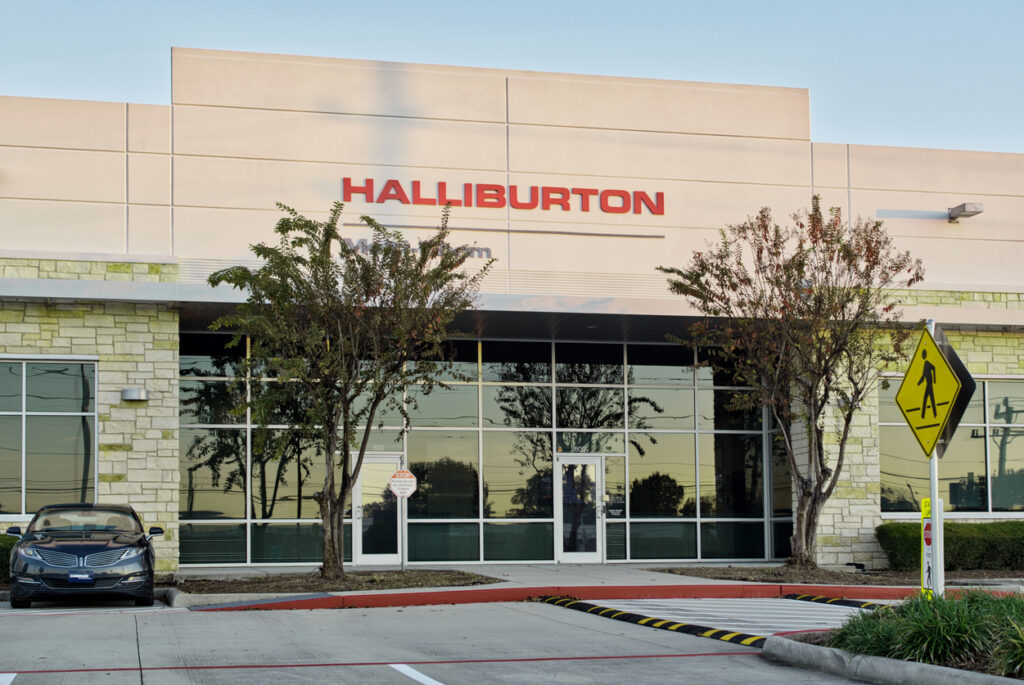
Halliburton’s latest earnings report offers a critical lens into the current state of the oilfield services sector, revealing a nuanced picture of resilience in North America juxtaposed against emerging challenges internationally. The company’s adjusted profit of 58 cents per share for the third quarter, significantly outperforming analysts’ estimates of 50 cents, underscores robust operational execution. While the headline beat is positive, a deeper dive into the segment performance and broader market signals provides essential insights for investors navigating a volatile energy landscape. This analysis leverages OilMarketCap’s proprietary data to offer unique perspectives on where the industry is heading and what investors should be watching.
North America’s Persistent Strength: A Closer Look at Activity Levels
The North American segment proved to be Halliburton’s bedrock, delivering $2.4 billion in quarterly revenue. This figure, while flat year-over-year, comfortably surpassed analyst expectations of $2.17 billion, signaling sustained demand for essential oilfield equipment and services. The gains were primarily driven by increased stimulation activity in both U.S. land and Canada, alongside higher completion tool sales and an uptick in wireline activity within the Gulf of America. This operational intensity suggests that despite broader market uncertainties, E&P operators in North America are continuing to optimize existing wells and enhance production, rather than solely focusing on new drilling. The North American rig count, an early barometer of future output, reinforces this stability, standing at 548 in the third quarter, an increase of 8 from the preceding quarter. However, it’s crucial to consider the insights from peers like SLB, who, despite also reporting strong North American demand, cautioned against expecting a significant pickup in broad drilling activity due to persistent high production costs in some shale basins. This implies a strategy focused on efficiency and high-return projects, rather than expansive growth, which plays well into Halliburton’s strengths in completion and production optimization services.
International Growth Engine Faces Headwinds Amidst Shifting Priorities
While North America continues to perform, the international segment, long touted as the industry’s next major growth driver, is showing signs of an uneven recovery. Halliburton reported an 8% year-over-year decline in revenue from its Middle East/Asia operations, a concerning indicator for investors banking on global expansion. Furthermore, the company projects its international revenue in 2025 to contract by mid-single digits compared to the prior year, specifically citing reduced activity in key regions such as Saudi Arabia and Mexico. This forward-looking guidance suggests a potential recalibration of spending by national oil companies and international operators, possibly influenced by evolving geopolitical considerations, domestic energy policies, or a strategic shift towards capital discipline. For investors, this divergence between regional performances highlights the importance of scrutinizing geographical exposure within oilfield services portfolios. Companies with a higher reliance on specific international markets might face greater volatility than those with a more balanced or North America-centric footprint.
Crude Volatility and Investor Sentiment: Navigating Price Swings
Halliburton’s solid operational results arrive amidst a notably volatile crude oil market. As of today, Brent crude trades at $90.38, experiencing a significant decline of 9.07% within the day, with its range spanning $86.08 to $98.97. Similarly, WTI crude stands at $82.59, down 9.41%, within a day range of $78.97 to $90.34. This sharp intraday correction follows a broader trend; our proprietary data indicates Brent crude has fallen from $112.78 on March 30th to its current $90.38, representing a nearly 20% drop in just over two weeks. Such dramatic price swings inevitably influence investor sentiment and E&P capital expenditure plans. Our first-party intent data from investors this week reveals a strong focus on crude price forecasts, with many asking, “What do you predict the price of oil per barrel will be by end of 2026?” and “What are OPEC+ current production quotas?” Halliburton’s ability to exceed profit estimates in this environment underscores the value of efficient, high-tech oilfield services that help producers maximize output even when prices are pressured. However, sustained lower prices could eventually lead to reduced drilling and completion budgets, impacting future service demand.
Upcoming Catalysts and Forward-Looking Analysis
The immediate horizon is packed with events that could significantly influence the trajectory of crude oil prices and, consequently, the outlook for oilfield services. Crucially, the OPEC+ JMMC Meeting on April 19th, followed by the OPEC+ Ministerial Meeting on April 20th, will be closely watched. Given the recent steep decline in crude prices and intense investor interest in production quotas, any decisions regarding supply levels could trigger substantial market reactions. A commitment to deeper cuts could provide price support, potentially encouraging E&P spending, while a more lenient stance might exacerbate downward pressure. On the North American front, the API Weekly Crude Inventory reports (April 21st, April 28th) and the EIA Weekly Petroleum Status Reports (April 22nd, April 29th) will offer fresh insights into domestic supply-demand dynamics and inventory builds, directly impacting short-term pricing. Furthermore, the Baker Hughes Rig Count, scheduled for April 24th and May 1st, will serve as a vital indicator of drilling activity, providing immediate feedback on whether North American operators are adjusting their plans in response to the current market environment. Investors should carefully monitor these upcoming events, as they will provide key signals for the sector’s performance in the coming months, particularly concerning how E&P companies might adjust their capital programs and, by extension, their demand for services from Halliburton and its peers.