The global energy landscape continues to present a complex mosaic for investors, characterized by both macro volatility and micro-level innovation. As of today, Brent Crude trades at $92.95, reflecting a -0.31% dip, while WTI Crude stands at $89.45, down -0.25% within a daily range of $88.76-$90.71. This follows a broader trend where Brent has retracted from $101.16 on April 1st to $94.09 by April 21st, a notable 7% decline. Amidst these fluctuating upstream benchmarks, the downstream sector quietly forges ahead with advancements aimed at optimizing last-mile delivery and enhancing consumer experience. A prime example is the recent rollout of India’s first LPG ATM in Gurgaon, a development that, while localized, signals significant strategic shifts in energy distribution and consumer engagement that warrant investor attention.
Downstream Agility Amidst Upstream Swings
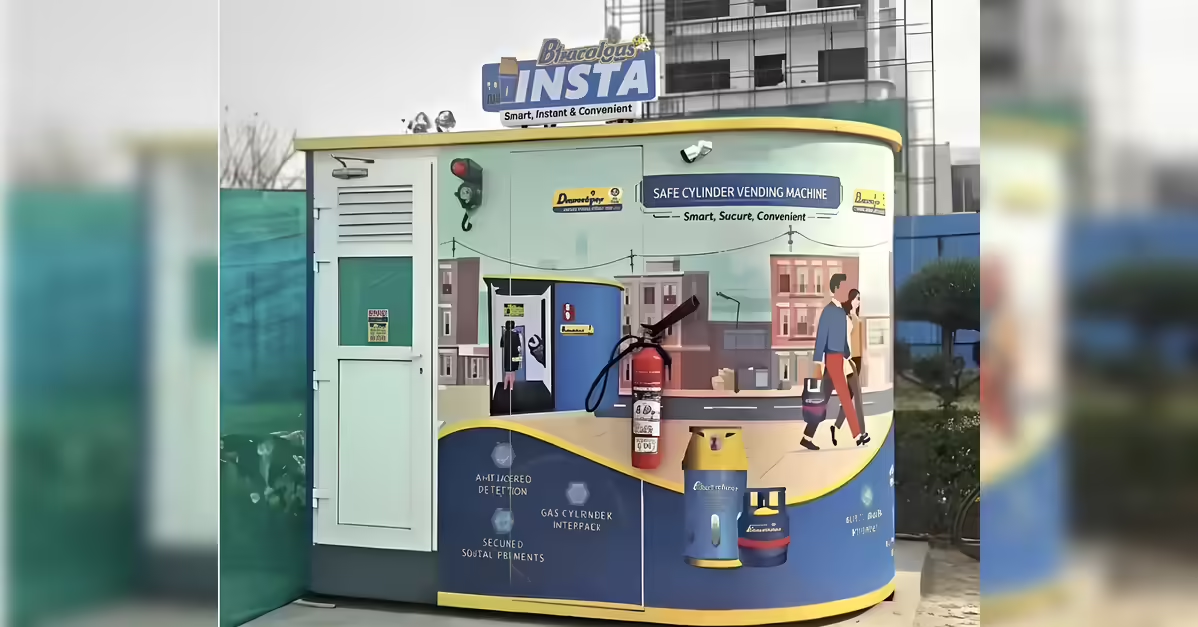
The introduction of the Bharatgas Insta LPG machine in Gurgaon’s Central Park Flower Valley, Sector 33, Sohna, represents a pivotal step in automating and decentralizing LPG distribution. This smart vending machine, capable of dispensing a filled composite gas cylinder in just two to three minutes, addresses a critical consumer need for faster and more convenient refill options. In a market where global crude prices remain sensitive to geopolitical events and supply-demand imbalances, exemplified by Brent’s recent retreat from over $101 to its current $92.95, downstream operational efficiencies become paramount. For investors, this innovation showcases how energy companies like BPCL (through their pilot project) are building resilience into their value chains, focusing on direct consumer touchpoints to secure market share and improve service delivery regardless of commodity price fluctuations.
The core of this innovation lies in the lightweight composite cylinders. Traditional metal cylinders typically weigh around 31 kg with 14 kg of gas, making them cumbersome. In stark contrast, the fibre-based composite version weighs a mere 15 kg for the same 14 kg gas quantity. This drastic reduction in weight not only improves handling for consumers but also has significant logistical benefits, potentially lowering transportation costs and increasing delivery efficiency for distributors. Furthermore, the transparent body of these cylinders allows users to easily check gas levels, a seemingly minor feature that dramatically enhances user satisfaction and reduces uncertainty, fostering brand loyalty in a competitive market.
Strategic Implications of Automated Distribution and Composite Cylinders
The fully automated and digital refill process employed by the LPG ATM underscores a strategic shift towards modernizing energy distribution. Consumers with a registered Bharatgas composite cylinder connection can execute the entire transaction by entering their mobile number, verifying with an OTP, scanning a QR code on their empty cylinder, and making payment via UPI or debit card. This seamless, contactless experience resonates strongly with contemporary consumer preferences for digital-first services and 24/7 availability. Residents, such as those in Central Park, highlight the freedom from delivery schedules as a major benefit, a convenience particularly valued by working families.
For investors, this points to several key advantages. First, automation reduces reliance on manual labor, potentially lowering operational costs and increasing scalability. Second, the 24/7 access broadens the customer base and enhances service reliability, a critical competitive differentiator. Third, the use of composite cylinders, which are dust-free, corrosion-free, and safer, minimizes product damage and enhances safety standards across the supply chain. While the initial adoption has been modest (only four cylinders dispensed initially due to low awareness), the strategic long-term play is clear: to establish a dominant, technologically advanced distribution network that can adapt to evolving urban consumer demands. This pilot, if successful, offers a blueprint for wider deployment, securing future revenue streams for downstream players.
Forward-Looking Analysis: Impact on Demand and Future Outlook
Many investors are actively tracking the pulse of the market, frequently asking “is WTI going up or down?” and seeking predictions for “the price of oil per barrel by end of 2026.” While a localized innovation like the Gurgaon LPG ATM won’t directly sway global crude prices, its broader implications for LPG demand within India are noteworthy. Should this model prove successful and scale across densely populated urban centers, it could significantly boost LPG consumption by making the fuel more accessible and convenient. This increased accessibility could stabilize and even grow demand for LPG, providing a more robust base for refiners and distributors, thereby insulating them somewhat from the volatility seen in upstream crude markets.
Looking ahead, upcoming energy events provide a broader context for evaluating such micro-innovations. The EIA Short-Term Energy Outlook, due on May 2nd, will offer comprehensive forecasts for global and regional energy demand, including LPG. While specific to the US, these outlooks often provide macro trends that can be extrapolated. Similarly, the frequent EIA Weekly Petroleum Status Reports (upcoming on April 22nd, April 29th, and May 6th) and API Weekly Crude Inventory reports (April 28th and May 5th) provide real-time insights into refinery utilization and product inventories. An expanding, efficient LPG distribution network, enabled by ATMs, could influence refiner’s product slate decisions, potentially favoring higher LPG yields to meet growing, accessible consumer demand. This creates a feedback loop: better distribution drives demand, which in turn signals refiners to optimize for specific product outputs, enhancing the overall profitability of the downstream sector.
Investment Horizons: Building Resilience in Downstream Energy
The investment thesis for the downstream sector increasingly hinges on resilience, efficiency, and customer-centricity. The Gurgaon LPG ATM is a tangible example of how energy companies are investing in these areas. By automating refills and utilizing advanced composite cylinders, companies can streamline their logistics, reduce operational costs, and improve customer satisfaction. This model also inherently supports a 24/7 service, a standard increasingly expected by modern consumers across all industries. The ability of the ATM to alert the nearest gas agency when stock falls to two cylinders ensures seamless replenishment, minimizing service disruptions and maintaining consistent availability.
From an investment perspective, these advancements represent a defensive growth strategy. In an environment where global energy demand patterns are evolving and competition is fierce, investing in robust, efficient, and consumer-friendly distribution infrastructure is crucial. Companies that successfully implement such innovations are better positioned to capture market share, build brand loyalty, and generate more predictable cash flows from their downstream operations. This not only mitigates some of the risks associated with volatile commodity prices but also creates a more sustainable business model for the long term, offering compelling opportunities for investors looking for stability and growth within the dynamic oil and gas sector.


