

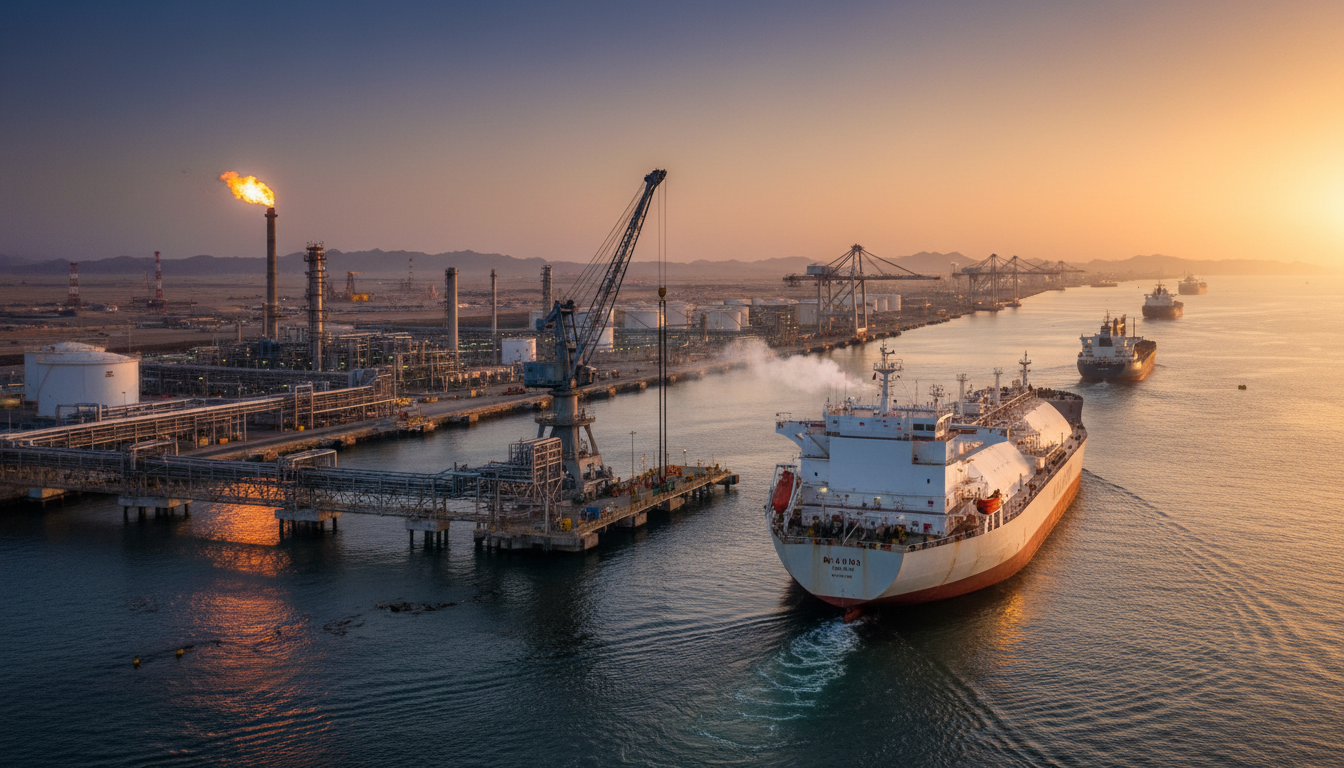
Geopolitical Tensions Strain Global LPG Supply Chains as India Navigates Critical Energy Crisis
As of April 6, 2026, the global liquefied petroleum gas (LPG) market remains on high alert, with critical supply routes from the Middle East experiencing unprecedented disruption. India, the world’s second-largest LPG importer, faces an escalating energy crisis, underscoring the severe implications of geopolitical instability on global commodity flows and national energy security. Recent developments indicate a precarious dance of vital tanker traffic through the Strait of Hormuz, a choke point that continues to command investor attention and anxiety.
Navigating Perilous Waters: Indian Tankers Under Scrutiny
In a closely watched series of movements, two Indian-flagged LPG tankers, the Green Asha and the Green Sanvi, have successfully exited the Arabian Gulf, carrying essential fuel destined for the subcontinent. These departures, tracked via sophisticated shipping data platforms, offer a glimmer of progress amid a fraught environment. However, a third crucial vessel, the Jag Vikram, continues its navigation in the western reaches of the Strait of Hormuz, its progress a focal point for market observers and Indian energy policymakers alike.
The successful transit of these vessels is not merely a logistical feat but a testament to the escalating risks within the region. The ongoing conflict involving the US, Israel, and Iran has cast a long shadow over the strait, significantly curtailing regular commercial shipping. While Iranian authorities have stipulated that “non-hostile vessels” may traverse the waterway provided they coordinate appropriately, the underlying tension translates directly into heightened insurance premiums, extended transit times, and an omnipresent threat of disruption for energy carriers.
The Green Asha and Green Sanvi, having navigated the hazardous Gulf area, are now positioned in the eastern sector of the Strait of Hormuz, joining a select group. Their passage brings the total number of Indian-flagged LPG carriers that have managed to traverse this critical maritime corridor to eight. This follows the earlier arrival of six other Indian vessels—the Shivalik, Nanda Devi, Pine Gas, Jag Vasant, BW Elm, and BW Tyr—all of which have safely reached Indian ports, delivering much-needed LPG cargoes.
India’s Deepening LPG Crisis: A Strategic Vulnerability Unmasked
These shipping movements occur against the backdrop of what many analysts are calling India’s most severe gas crisis in decades. The nation’s profound reliance on imported LPG, primarily for household cooking and increasingly for industrial applications, has created a significant strategic vulnerability. In response to the burgeoning shortfall, the Indian government has been compelled to implement drastic measures, including cutting gas supplies to various industries. This policy aims to safeguard household consumers from potential shortages of cooking gas, a commodity deemed essential for social stability and public welfare.
The sheer scale of India’s LPG demand underscores the gravity of the situation. Last year, the country consumed an astounding 33.15 million metric tons of LPG. Critically, approximately 60 percent of this vast demand was met through imports. Further compounding this dependency is the geographic concentration of these supplies: a staggering 90 percent of India’s LPG imports originated from the Middle East. This heavy reliance on a single, geopolitically volatile region exposes India to immense supply chain risks, particularly when key transit points like the Strait of Hormuz are under duress.
Adding another layer to India’s proactive measures, the nation is actively engaged in loading LPG onto its empty vessels that are currently stranded in the Gulf. This logistical maneuver aims to optimize the use of available fleet capacity and accelerate the transport of any accessible fuel back to India, mitigating the impact of the ongoing crisis.
Market Implications and Investor Outlook for Energy Commodities
For investors tracking global energy markets, India’s unfolding LPG crisis and the associated shipping challenges in the Strait of Hormuz present several critical considerations. The immediate impact is likely to manifest in continued upward pressure on global LPG prices, as supply uncertainty combines with robust demand from a major consuming nation. Shipping rates for LPG carriers are also poised to remain elevated, reflecting both the increased operational risks and the scarcity of available tonnage willing to navigate the region.
Beyond the immediate commodity price fluctuations, this situation highlights the imperative for greater diversification in energy supply chains. Nations heavily reliant on single regions or vulnerable transit points face amplified economic and social risks. Investors may increasingly scrutinize the energy security strategies of major importing countries, looking for commitments to strategic reserves, investments in domestic production capabilities, or the development of alternative import infrastructure, such as new port facilities or pipeline networks from less volatile regions.
Furthermore, the crisis underscores the ongoing relevance of geopolitical risk in energy investment decisions. Companies with significant exposure to Middle Eastern crude or gas production, or those heavily involved in shipping through the region, face a heightened risk profile. Conversely, this environment could create opportunities for upstream players in stable producing regions and for firms offering innovative solutions in energy storage, transport logistics, and supply chain resilience.
Future Trajectory and Mitigating Risk in a Volatile Energy Landscape
Looking ahead, India’s predicament serves as a stark reminder of the fragile balance within global energy markets. The immediate priority for India will remain ensuring the continuous flow of essential LPG to prevent further economic disruption and social unrest. Long-term, this crisis could accelerate India’s strategic pivot towards greater energy independence, potentially through increased investment in domestic exploration and production, faster adoption of renewable energy sources, or the forging of new energy partnerships with a wider array of global suppliers to diversify its import portfolio.
As of April 2026, the Strait of Hormuz remains a critical barometer of global geopolitical stability and its direct impact on energy trade. Investors must continue to monitor vessel movements, regional political developments, and policy responses from key consuming nations like India, as these factors will collectively shape the trajectory of LPG markets and broader energy security narratives in the months and years to come.
