

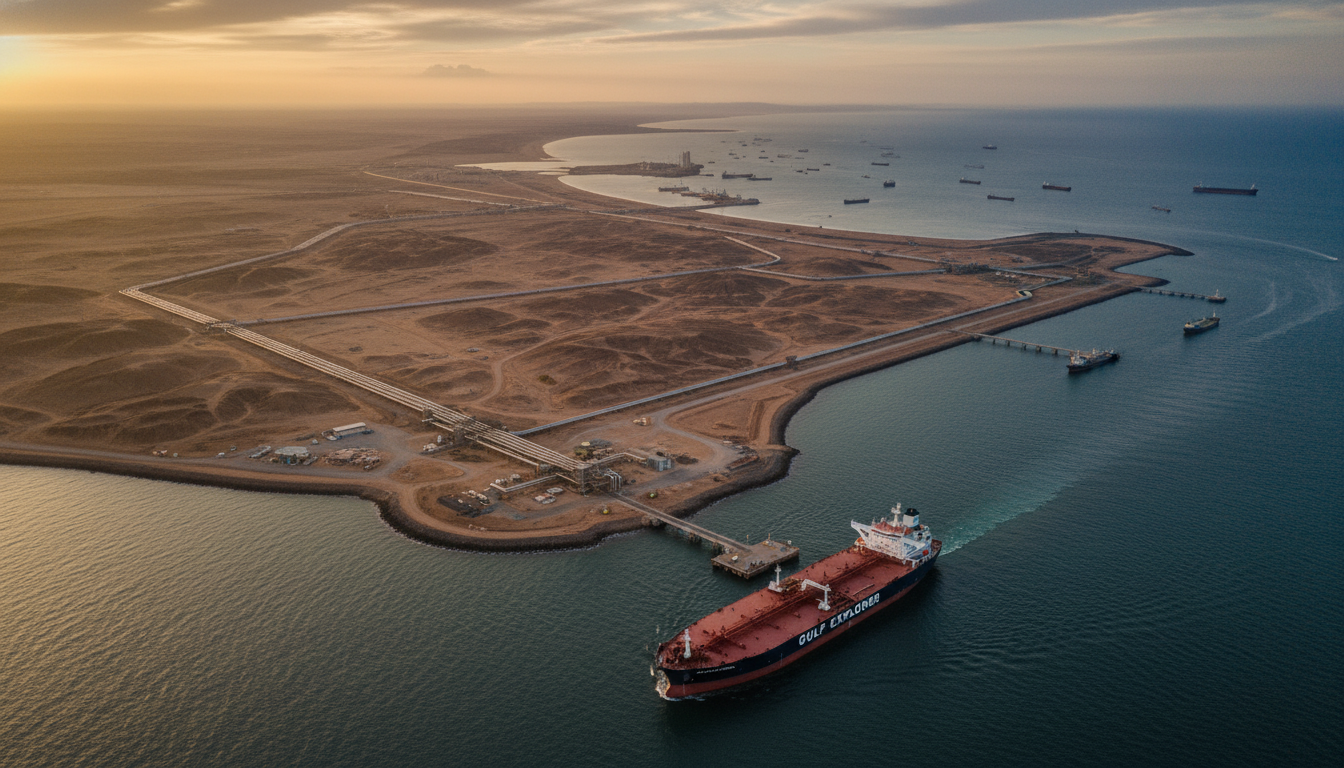
The global energy landscape is undergoing a profound strategic recalibration as major Gulf oil producers accelerate plans to circumvent the critical, yet volatile, Strait of Hormuz. Industry analysts and government officials are increasingly pointing to new pipeline infrastructure and integrated transport networks as the indispensable solution for guaranteeing consistent crude exports and mitigating escalating geopolitical risks in the region. This ambitious drive for diversification includes high-profile initiatives like the proposed India-Middle East-Europe Economic Corridor (IMEC), signaling a fundamental shift in regional energy architecture.
De-Risking the Lifeline: Why Bypassing Hormuz is Paramount for Investors
For decades, the Strait of Hormuz has functioned as the undisputed maritime superhighway for Middle Eastern oil. Its strategic position, however, renders it a perennial geopolitical flashpoint. Roughly one-fifth of the world’s daily oil consumption, encompassing approximately 20 million barrels per day, transits this narrow waterway. Any significant disruption, whether from regional tensions or direct confrontation, could instantaneously throttle global energy supplies, triggering dramatic price spikes and profound economic instability. Investors in the energy sector, therefore, face inherent, unquantifiable risk tied to this single choke point.
Gulf nations are keenly aware that their economic stability, and by extension, global energy security, hinges on minimizing this vulnerability. The current efforts represent a proactive strategy to insulate their export capabilities from regional unpredictability, ensuring that crude oil can flow unimpeded to international markets, regardless of political headwinds. This strategic pivot aims to build resilience into their energy export infrastructure, offering greater predictability for investors and consumers alike.
Saudi Arabia’s Strategic Advantage: The East-West Pipeline’s Proven Value
Saudi Arabia, the world’s largest oil exporter, already possesses a critical piece of the puzzle: its extensive East-West Pipeline system. This robust infrastructure allows crude oil from the Kingdom’s prolific eastern fields to be transported directly to Red Sea ports, effectively bypassing the Strait of Hormuz. This established route has historically provided a crucial safety valve, enabling sustained export operations even during periods of elevated regional tension, such as past disruptions in the Gulf.
Energy executives frequently acknowledge the foresight behind this monumental project. From an investment perspective, this existing capacity offers Saudi Arabia a distinct competitive advantage, enhancing the reliability of its crude supply and potentially commanding a premium for its de-risked exports. For global energy markets, it represents a tangible example of successful strategic infrastructure planning that directly addresses the vulnerabilities inherent in the Hormuz passage.
Forging New Pathways: Ambitions for a Mediterranean Connection
Beyond existing infrastructure, discussions are gaining traction for significantly more ambitious projects designed to create entirely new export corridors. One of the most compelling concepts involves linking the Arabian Peninsula directly to the Mediterranean Sea. This network could potentially incorporate Israel’s port of Haifa, establishing a direct, uninterrupted path for Gulf oil to reach European markets without navigating the Arabian Gulf or the Suez Canal.
These plans extend beyond single pipelines. The vision encompasses an integrated, multi-modal transport network, leveraging a combination of pipelines, railway lines, and upgraded road infrastructure. Such a comprehensive system would offer multiple export alternatives, drastically increasing flexibility and reducing reliance on any single transit point. Executives in the regional construction sector, like Christopher Bush, CEO of Lebanese firm Cat Group, have confirmed a notable uptick in inquiries regarding various pipeline developments, underscoring the serious consideration these projects are receiving at the highest levels.
IMEC: A Game-Changing Corridor with Geopolitical Hurdles
Central to these expansive strategic discussions is the India-Middle East-Europe Economic Corridor (IMEC), a landmark initiative backed by the United States. Unveiled during the G20 summit in New Delhi in September 2023, IMEC aims to forge an unprecedented logistical bridge connecting India, the Middle East, and Europe through an intricate web of ports, railways, and pipelines. Participating nations are expected to include the UAE, Saudi Arabia, Jordan, and Israel.
For energy investors, IMEC represents a potentially transformative project, offering enhanced trade routes, reduced transit times, and crucially, an alternative energy conduit. However, the corridor’s full realization hinges on successfully navigating complex geopolitical alignments, particularly Saudi Arabia’s diplomatic stance regarding the inclusion of Israeli ports like Haifa in the route. Despite these challenges, the long-term vision for IMEC underscores a commitment to fostering deeper economic integration and creating more resilient supply chains, including critical energy flows.
Israeli Prime Minister Benjamin Netanyahu has been a vocal proponent of these alternative energy routes, emphasizing that true, long-term stability in the region necessitates reducing dependence on the Strait of Hormuz. He has articulated that while military interventions might offer temporary relief from immediate threats, strategic infrastructure redesign, such as rerouting energy pipelines westward across Saudi Arabia to the Red Sea and Mediterranean, provides enduring security by bypassing Iran’s geographic choke point. This perspective highlights the strategic imperative driving investment into such large-scale infrastructure over short-term tactical responses.
India’s Prime Minister Narendra Modi has also actively championed IMEC and the I2U2 grouping (India, Israel, UAE, and the US) during his recent engagements, signaling a strong political will to advance these projects. The I2U2 group, established to foster joint ventures in critical sectors like energy, food security, and infrastructure, provides another crucial platform for developing the interconnected infrastructure necessary for a diversified energy future.
The Investment Outlook: Capitalizing on Energy Security and Diversification
The intensifying focus on alternative oil transport routes out of the Gulf presents significant investment opportunities while simultaneously re-shaping the long-term risk profile of regional energy assets. Companies involved in pipeline construction, engineering, logistics, and port development stand to benefit from these monumental projects. Furthermore, the diversification of export routes promises enhanced energy security for major consuming nations, potentially stabilizing global crude markets and reducing geopolitical risk premiums.
Historically, American leadership has underscored the global importance of securing energy transit. Years ago, US President Donald Trump urged nations relying on oil shipments through the Strait of Hormuz to take a more proactive role in safeguarding the crucial passage, while affirming US commitment to the safety of its allies in the Middle East, including Israel, Saudi Arabia, Qatar, the UAE, Kuwait, and Bahrain. This sentiment continues to resonate, reinforcing the collective interest in de-risking global energy supply chains.
Investors should closely monitor these developments. The construction of new energy corridors, particularly those that bypass traditional choke points, will fundamentally alter trade dynamics, elevate the value of participating nations’ energy infrastructure, and provide a more resilient framework for global oil flows. This shift represents not merely a technical adjustment but a strategic re-imagining of the global energy map, with profound implications for long-term investment strategies in the oil and gas sector.
