

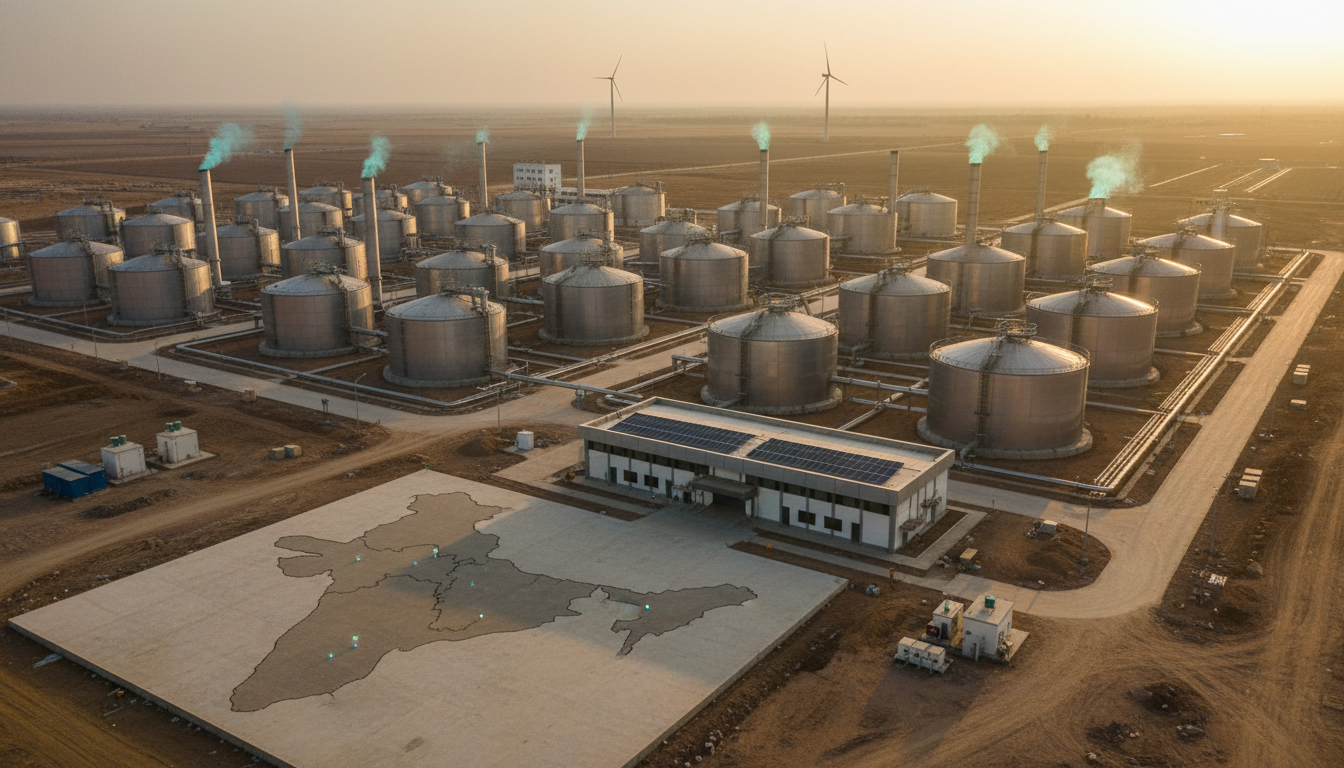
Gujarat Drives Biogas Revolution: A Strategic Investment in Decentralized Green Energy
Gandhinagar, India – Gujarat is rapidly solidifying its position as a frontrunner in India’s renewable energy transition, particularly through an aggressive expansion of institutional biogas plants. In a significant move highlighting the state’s commitment to sustainable energy solutions, the government recently confirmed the operationalization of over 193 biogas facilities across various institutions within the past five years. These robust plants collectively contribute a substantial 13,995 cubic meters of biogas daily to the state’s energy mix, signaling a potent and growing market for decentralized green energy solutions.
This strategic pivot towards biogas is not merely an environmental initiative; it represents a tangible economic opportunity for investors eyeing India’s burgeoning clean energy sector. The Gujarat Energy Development Agency (GEDA) acts as a crucial enabler, providing essential subsidies that underpin the financial viability and accelerated deployment of these projects. This direct governmental support significantly de-risks initial capital outlay for project developers and institutional investors, fostering a more attractive investment climate.
Unpacking the Investment Landscape: Government Support and Growth Projections
The financial commitment from the state government further underscores the long-term potential in Gujarat’s biogas sector. For the fiscal year 2026-27, a substantial allocation of ₹12 crore has been earmarked specifically for institutional biogas projects. This significant provision is projected to facilitate the establishment of an additional 60 biogas plants during the same year, indicating a consistent growth trajectory and sustained policy support. For investors, this translates into a predictable pipeline of projects and a clear signal of the government’s enduring commitment to expanding this segment of the renewable energy market.
The institutional nature of these projects – primarily serving gaushalas (cow shelters), animal shelters, educational campuses, and charitable trusts – ensures a stable supply of feedstock and a captive demand for the produced biogas. This inherent market stability reduces operational risks often associated with nascent energy markets. The integration of waste management with energy generation offers a dual benefit, enhancing both environmental stewardship and energy security at a localized level.
Economic and Operational Efficiencies: The Core Value Proposition
The economic rationale behind Gujarat’s biogas push is compelling. These facilities harness readily available organic waste, including livestock manure and kitchen discards, through anaerobic decomposition. This process yields biogas, which serves as an inexpensive and reliable cooking fuel. For the institutions implementing these plants, this translates directly into significant reductions in operational expenditure by displacing more costly conventional fuels such as LPG or firewood. This cost-saving mechanism provides a strong incentive for institutions to adopt biogas technology, further boosting the market for project developers and technology providers.
Beyond direct fuel savings, biogas production contributes to better waste management practices, reducing methane emissions from decomposing organic matter – a potent greenhouse gas. Furthermore, the digestate produced as a byproduct serves as an excellent organic fertilizer, offering additional agricultural benefits and creating a circular economy model. These multifaceted benefits position biogas as a high-value investment in both financial and ESG (Environmental, Social, and Governance) terms, aligning with global trends towards sustainable investing.
Case Study in Scale: Sattadhar Dham’s Biogas Success
The successful implementation at Sattadhar Dham in Junagadh district stands as a powerful testament to the scalability and impact of biogas technology within Gujarat. This pilgrimage site hosts the largest biogas plant currently operating in the state, demonstrating the potential for significant energy generation from organic waste streams. With approximately 1,000 cows on-site, the facility efficiently processes about 8,000 kilograms of cow dung daily. This robust operation fuels the preparation of meals for an average of 10,000 visitors and pilgrims every day, showcasing a truly impressive example of self-sufficiency and resource optimization.
The Sattadhar Dham model provides invaluable insights for potential investors and project developers. It highlights the efficacy of integrating energy solutions with large-scale institutional operations that possess a consistent organic waste output. This practical demonstration of economic viability and operational efficiency serves as a blueprint for replicating similar large-scale biogas initiatives across other parts of Gujarat and beyond, opening avenues for significant market expansion.
Broader Implications for India’s Energy Transition
Gujarat’s proactive stance on biogas development is more than a regional success story; it offers a critical model for India’s broader energy transition strategy. By leveraging abundant agricultural and organic waste resources, the state is demonstrating a viable pathway towards enhanced energy security, reduced reliance on fossil fuels, and significant carbon emission reductions. This decentralized approach to energy generation empowers local communities and institutions, fostering economic resilience and environmental stewardship.
For investors, the initiatives in Gujarat represent a compelling opportunity to participate in a rapidly expanding sector supported by robust government policy and proven operational success. The blend of financial assistance, a consistent feedstock supply, and a captive end-use market creates an attractive ecosystem for long-term capital deployment in the waste-to-energy domain. As India continues its ambitious journey towards a sustainable energy future, Gujarat’s biogas sector stands out as a high-potential investment frontier, ripe for innovation and growth.
