

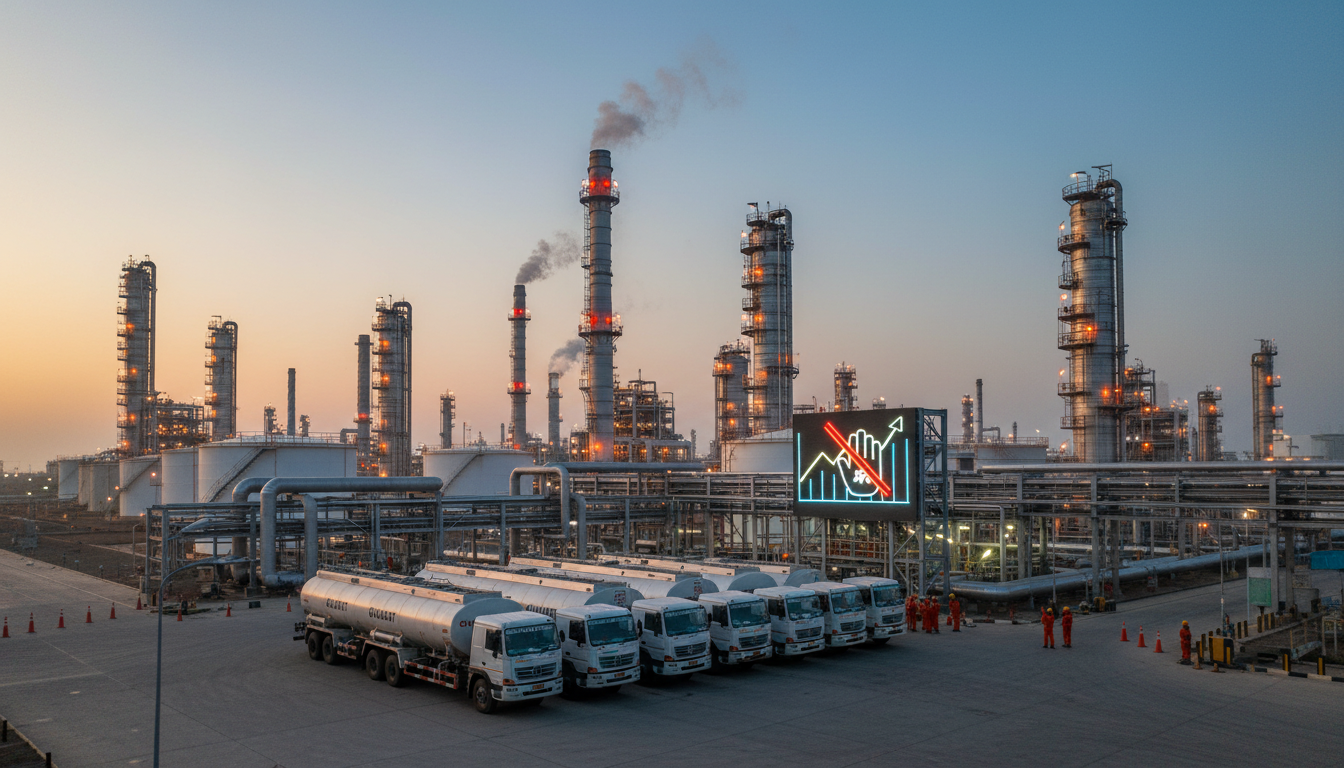
In a period marked by heightened geopolitical tensions in West Asia and persistent volatility across global energy markets, Gujarat’s Energy and Petrochemicals Minister, Rushikesh Patel, recently delivered a powerful message of stability and proactive management to investors and market participants. Addressing the legislative assembly, Patel firmly declared that the state faces no intrinsic fuel shortage, attributing recent public queues at petrol stations to speculative panic buying rather than any fundamental supply disruption. This assertion, coupled with a suite of strategic measures, paints a picture of a resilient energy infrastructure poised to withstand external pressures.
Navigating Fuel Market Dynamics Amidst Global Headwinds
The minister’s statement comes as a crucial reassurance for those eyeing the Indian energy landscape. Patel clarified that the unusual queues, observed recently, were primarily a consequence of rumors, not an actual scarcity. He highlighted a critical data point: during this period of “panic,” fuel pumps in the state sold volumes four to five times their normal daily averages. This extraordinary surge, absorbing significant demand, paradoxically underscored the inherent robustness of the state’s logistical networks and its deep-seated buffer stocks, demonstrating the system’s capacity to absorb exceptional spikes without faltering.
To further fortify supply chain integrity and prevent artificial scarcity, the state government has implemented strict guidelines. Fuel stations are now mandated to dispense petrol and diesel directly into vehicle tanks, curtailing sales in containers. Exceptions are limited to farmers, who can purchase up to 200 liters, and mobile tower operators, permitted up to 1,000 liters. Such proactive measures serve to fortify market integrity, preventing speculative hoarding that could distort pricing and supply dynamics for genuine consumers. Furthermore, the government has warned of stringent action under the Essential Commodities Act against any entity found hoarding fuel or attempting to manipulate supply, citing an FIR registered against a petrol pump in Rajkot as a clear deterrent. This commitment underscores a proactive approach to maintaining fair market practices and ensuring reliable fuel availability for the populace and industries.
Gujarat’s Robust Natural Gas Infrastructure and Strategic Growth
Beyond liquid fuels, Gujarat’s natural gas sector presents a compelling investment narrative. Minister Patel emphasized the state’s “strong gas infrastructure,” positioning it as a national leader in gas distribution network development. Despite global LNG trade disruptions stemming from geopolitical tensions, Gujarat remains remarkably well-prepared. The state boasts extensive pipeline connectivity through numerous city gas distribution companies, serving approximately 37 lakh domestic Piped Natural Gas (PNG) customers. This widespread adoption underscores a successful long-term strategy in diversifying energy sources and reducing reliance on more volatile alternatives.
To accelerate this transition and further enhance energy security, the government has launched the ‘PNG Welcome Benefit Offer,’ providing new consumers with a cashback of ₹500. This incentive has already yielded impressive results: in just the last ten days, roughly 12,000 new PNG connections were registered, with approximately 7,500 already operational. Priority for these connections is being given to essential sectors, including households, hotels, hospitals, canteens, and educational institutions. This strategic pivot toward PNG not only offers consumers a more convenient and potentially cost-effective energy source but also strengthens the state’s energy independence, a critical factor for investors observing long-term stability and growth in the energy sector. Extensive outreach campaigns, involving meetings, media engagement, and direct public interaction, are actively encouraging consumers in pipeline-accessible areas to transition from LPG cylinders to PNG.
Strategic Management of LPG Distribution for Market Stability
Addressing concerns surrounding Liquefied Petroleum Gas (LPG) supply, Minister Patel assured the assembly that there is no shortage of domestic cooking gas, asserting the government’s unwavering commitment to ensuring uninterrupted supply through close coordination with oil marketing companies. He affirmed that no cuts have been implemented in domestic LPG supply, prioritizing the essential needs of households across the state. This steadfast commitment to basic energy needs is a foundational pillar for social and economic stability, directly impacting the investment climate.
To guarantee meticulous oversight of LPG stock and distribution, over 1,000 teams, comprising police and revenue officials, have been strategically deployed at gas agencies statewide, monitoring operations from opening to closing hours. The state rigorously implements central guidelines on LPG allocation, ensuring full supply to critical sectors such as hospitals and hostels, while regulating distribution to other sectors based on priority. Commercial LPG supply is also being carefully rationalized, with 100 percent allocation for vital services like hospitals and educational institutions, and controlled distribution for industries and other establishments according to their respective categories. This tiered allocation system reflects a sophisticated approach to energy resource management.
Furthermore, to promptly address any grievances, a state-level helpline has been operational since March 13, resolving thousands of complaints efficiently. Police commissioners across the state have received explicit instructions to guarantee the unhindered movement of LPG transport vehicles, averting any logistical bottlenecks. Since March 5, district-level teams have conducted 2,945 inspections, complemented by 17 state-level checks on suspected hoarders, demonstrating a robust enforcement framework designed to maintain market integrity.
Investor Confidence and Future Outlook for Gujarat’s Energy Sector
While some opposition members, including Congress MLA Shailesh Parmar, raised concerns regarding the impact of commercial LPG restrictions and the adequacy of buffer stock in light of the West Asian crisis, Minister Patel’s responses aimed to instill confidence. He reiterated the government’s continuous monitoring of the evolving situation and its active coordination with the central government to ensure sustained supply. Importantly, Patel affirmed the state’s readiness to procure fuel at prevailing international prices if necessary, signaling a resolute commitment to preventing any disruption in the supply chain. This willingness to absorb potential cost increases underscores a dedication to operational continuity, a key factor for industrial investors.
Concluding his remarks, the minister strongly urged citizens to avoid panic, emphasizing the abundant stock of all fuels within the state. He reiterated that both state and central administrations are meticulously tracking the global energy landscape and undertaking all requisite measures to safeguard fuel availability. Gujarat’s comprehensive strategy, encompassing robust infrastructure, proactive policy measures, and stringent oversight, positions it as a resilient and strategically managed energy market, offering a stable environment for continued investment in its critical oil and gas sectors.
