

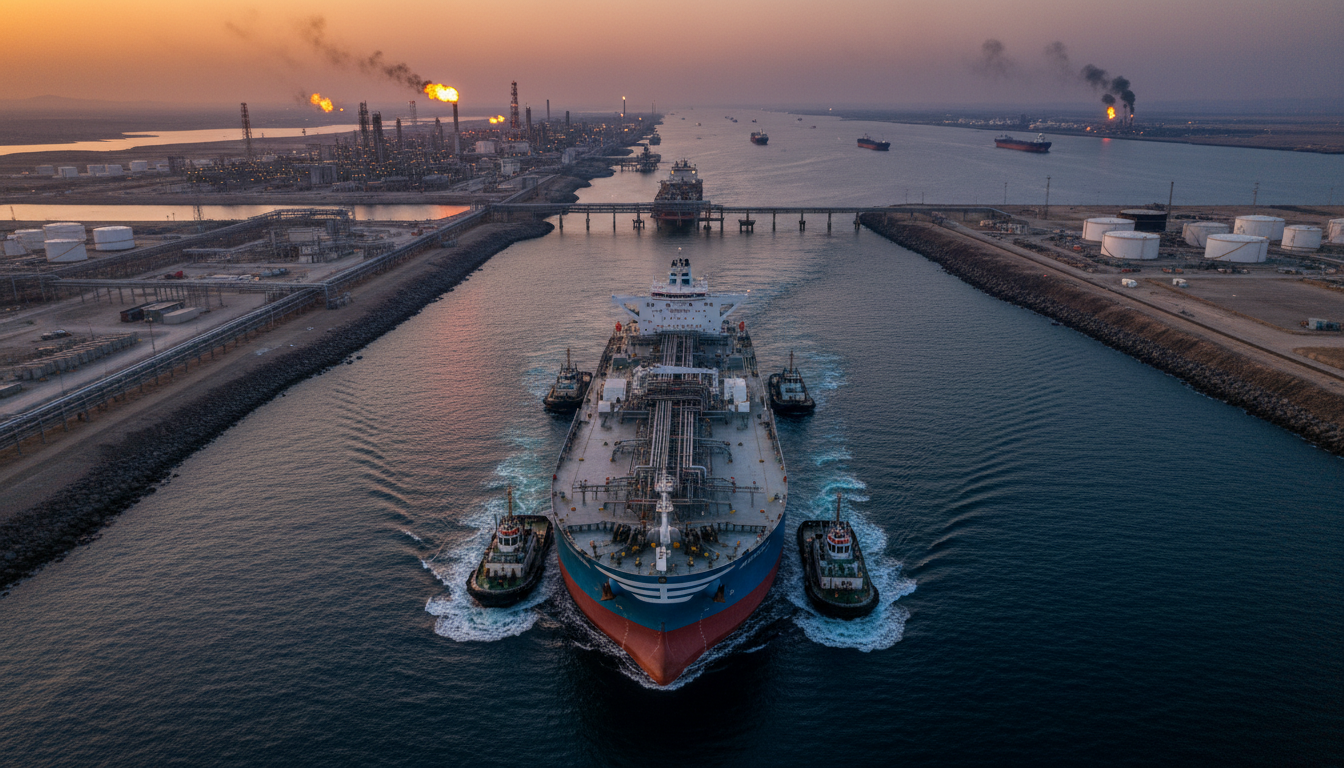
Navigating Perilous Waters: Tanker Transit Through Hormuz Signals Enduring Geopolitical Risk for Energy Investors
The global energy landscape remains acutely sensitive to geopolitical shifts, particularly within the Middle East. Recent maritime activity, notably the transit of a Greek-controlled oil tanker through the strategic Strait of Hormuz, underscores the complex risks and critical importance of this chokepoint for crude oil supply. This event marks the fourth such journey by a vessel from the same operator since heightened regional tensions began, signaling both a defiant continuation of trade and a sobering reminder of the hazards involved for oil and gas investors.
The suezmax tanker, identified as the Pola, recently reappeared on Automatic Identification System (AIS) trackers in the eastern Indian Ocean, near the vital maritime corridor off Indonesia’s Sumatra island, after deliberately disabling its tracking system in the Persian Gulf on March 10. This re-emergence confirms a successful traverse of the Strait of Hormuz, a narrow waterway that has experienced a marked reduction in commercial shipping activity amidst the ongoing geopolitical friction between the United States, its allies, and Iran. For investors monitoring global energy flows, such clandestine movements highlight the opaque nature of supply chain vulnerabilities in conflict zones.
The Pola’s Strategic Journey and its Investment Implications
Laden with approximately 1 million barrels of crude oil, the Pola is reportedly en route to Thailand, according to data from intelligence firm Kpler. The decision to disable its transponder, a common tactic in high-risk zones, allows vessels to navigate sensitive areas without revealing their precise location, thus theoretically reducing their exposure to hostile acts. However, this practice also introduces significant uncertainty for maritime insurers and cargo owners, potentially leading to higher premiums and increased operational costs that ultimately trickle down to the energy consumer and impact investment returns for shipping and logistics firms.
The ability of the Pola to pass through the Strait is a testament to the intricate diplomatic dance underpinning current maritime trade in the region. While Iran has explicitly barred what it deems “hostile” entities from traversing the strategic waterway, several Asian nations, including Thailand, have evidently secured specific bilateral agreements. These arrangements grant passage rights for certain tankers and cargo ships, showcasing a segmented and politically negotiated approach to maintaining crude oil flows. Investors should recognize that such bespoke agreements create a tiered system of access, potentially benefiting companies with strong state ties while exposing others to greater delays and disruptions.
Dynacom’s Operational Gambit: A Case Study in Risk Tolerance
The Pola’s journey is not an isolated incident but rather part of a pattern established by its management company, Dynacom Tankers Management Ltd. This Greek firm has now successfully navigated the Strait of Hormuz with four of its vessels — the Pola, Shenlong, Smyrni, and Marathi — all of which engaged in the same practice of switching off their transponders during their passage earlier this month. This repeated execution of a high-risk strategy suggests a calculated operational approach, potentially driven by contractual obligations or advantageous charter rates available for carriers willing to undertake such voyages.
For investors, Dynacom’s actions present a fascinating case study in risk management within the tanker sector. While successful transits demonstrate operational capability under duress, they also highlight the significant embedded risk. Any miscalculation or escalation of hostilities could lead to severe consequences, including asset seizure, damage, or even loss of life, directly impacting shareholder value in tanker companies operating in these volatile regions. Monitoring such company-specific risk-taking is crucial for those investing in the global shipping and logistics sector.
Elevated Maritime Security Risks and Broader Market Impact
The threat environment in the Persian Gulf remains exceptionally high. A stark reminder of these dangers came with a recent drone strike hitting a fully laden Kuwaiti tanker off Dubai. Such incidents underscore the escalating nature of regional conflicts and their direct implications for maritime security, freight costs, and the stability of global crude oil supply. For investors in oil and gas, these events translate directly into increased market volatility, potential spikes in crude oil prices due to supply fears, and rising insurance costs that erode profit margins for energy producers and transporters alike.
The persistent geopolitical tensions, which have led to what some characterize as an effective closure or extreme constraint on the Strait of Hormuz for certain commercial traffic, compel investors to scrutinize their portfolios for exposure to Middle Eastern crude oil production and shipping routes. The long-term implications could include a global reassessment of supply chain resilience, potentially accelerating investments in alternative energy sources or geographically diversified oil and gas assets. This ongoing saga in the Strait of Hormuz is more than just a shipping story; it is a critical barometer for the health and stability of the global energy market and a potent driver of investment decisions for crude oil, natural gas, and maritime logistics enterprises.
Investment Outlook: Adapting to Persistent Volatility
As long as the Middle East remains a hotbed of geopolitical contention, the Strait of Hormuz will continue to be a focal point for global oil and gas investors. The intricate dance between diplomatic agreements, operational risks taken by shipping companies, and the ever-present threat of military action creates an unpredictable environment. Investors must maintain a vigilant watch on diplomatic overtures, regional military postures, and the response of global maritime insurance markets. Understanding these interwoven factors is paramount for making informed decisions in an energy market where a single tanker’s journey can signify profound shifts in risk and opportunity. The resilience of crude oil supply through this vital chokepoint will continue to be a defining factor for energy market stability and investor confidence in the months ahead.
