

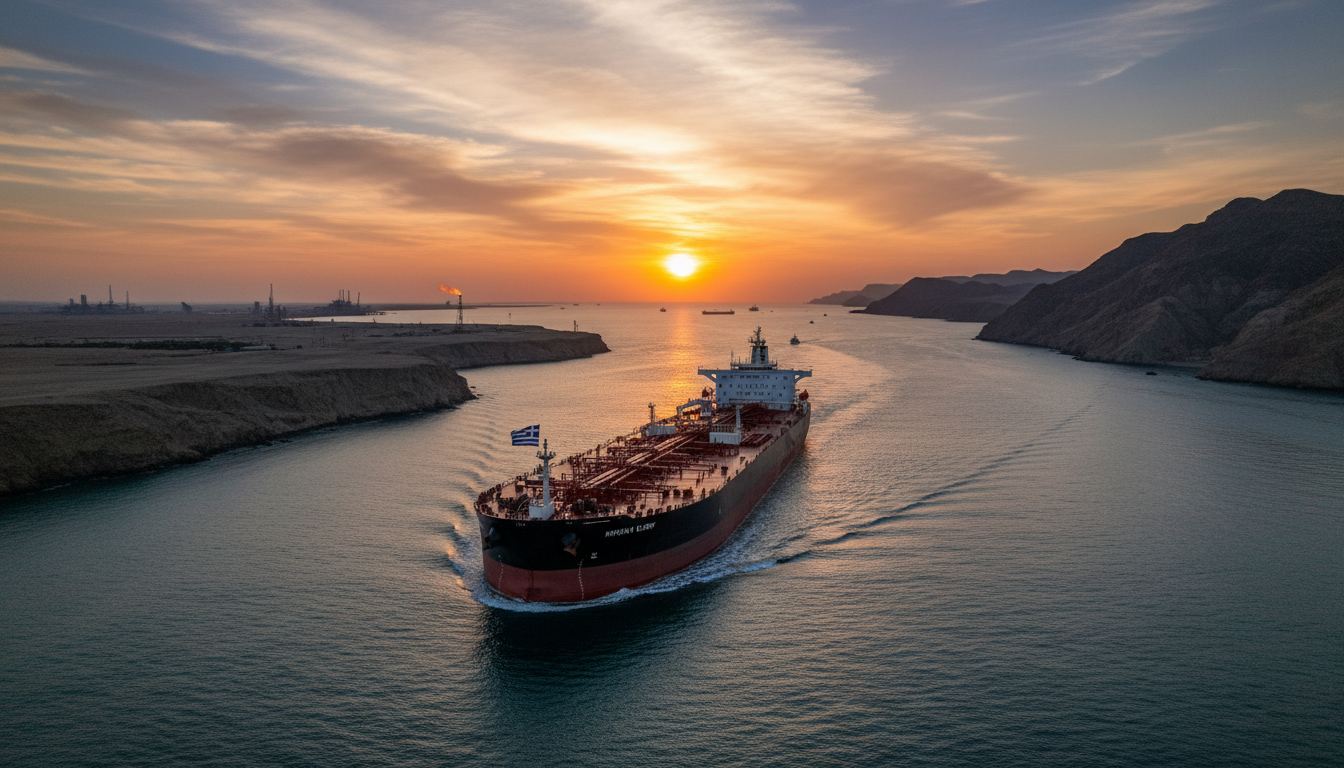
The global oil markets are once again fixated on the volatile waters of the Middle East, as another Greek-operated crude oil tanker has successfully transited the Strait of Hormuz. This incident marks the fourth such passage since escalating regional hostilities commenced, underscoring the persistent challenges and calculated risks facing energy logistics in one of the world’s most critical maritime chokepoints. For investors, these movements are not merely logistical updates but vital indicators of geopolitical risk, supply chain resilience, and potential market volatility in the crude oil sector.
The Suezmax-class vessel, identified as the Pola, reappeared on Automatic Identification System (AIS) monitors on Monday, navigating the eastern Indian Ocean near the maritime corridor off Indonesia’s Sumatra island. This detection followed a period starting March 10 during which the tanker’s tracking system was intentionally deactivated while it was within the confines of the Persian Gulf. Its subsequent re-emergence confirms a successful traverse through the Strait of Hormuz, a strategic artery that has experienced a notable reduction in commercial vessel traffic amidst heightened tensions between the United States, Israel, and Iran.
The Strategic Significance of the Strait of Hormuz for Global Oil Investing
The Strait of Hormuz stands as an indispensable conduit for global energy supplies, linking the oil-rich Persian Gulf to the open ocean. Approximately one-fifth of the world’s crude oil supply, along with significant volumes of liquefied natural gas, passes through this narrow waterway daily. Any disruption, perceived or actual, sends immediate ripples through international crude oil futures, impacting refining margins, transportation costs, and ultimately, consumer prices. For oil and gas investors, monitoring activity in this region is paramount. The current environment, characterized by what many observe as an undeclared conflict involving Iran, has transformed the Strait from a routine shipping lane into a geopolitical chessboard where every tanker transit is a high-stakes play.
The Pola, reportedly carrying a substantial cargo of approximately 1 million barrels of crude oil, is now bound for Thailand. This journey highlights a complex dynamic: while Tehran has declared the strategic waterway off-limits to entities deemed “hostile,” several Asian nations, including Thailand, have reportedly forged bilateral agreements to secure passage for their contracted oil shipments and cargo vessels. These arrangements suggest a fragmented and increasingly customized approach to navigating the fraught security landscape, allowing specific commerce to continue despite broader geopolitical friction. However, these bespoke solutions do not eliminate the systemic risks that continue to permeate the region, posing ongoing threats to supply stability and market predictability.
Navigating the Shadows: The Rise of Covert Tanker Transits
The deliberate deactivation of a vessel’s AIS transponder, often referred to as a “dark voyage,” is a practice that introduces a significant layer of opacity and risk into maritime operations. While not uncommon in certain illicit trade activities, its application in the Strait of Hormuz by commercial vessels underscores the extreme measures operators are willing to undertake to maintain crude oil flows in a perilous environment. The Pola’s journey is not an isolated incident for its operator. Dynacom Tankers Management Ltd., the firm overseeing the Pola, has reportedly facilitated three other similar voyages through the Strait of Hormuz earlier this month using the tankers Shenlong, Smyrni, and Marathi, all with their transponders switched off during critical segments of their passage. These repeated instances suggest a systematic strategy by some shipping firms to manage transit through a region where overt passage might invite scrutiny or hostile action.
For financial analysts and investors, these dark voyages complicate risk assessment. The lack of real-time tracking increases the potential for undetected incidents, raising questions about insurance coverage, liability, and the true cost of maritime transport in contested zones. While the immediate goal is to ensure delivery, the long-term implications for transparency and global shipping norms are significant, potentially eroding trust and driving up premiums across the board for energy-related maritime insurance.
Escalating Regional Tensions and Maritime Security Risks
The broader context for these maritime maneuvers is one of heightened regional instability. The phrase “war on Iran,” though undeclared in conventional terms, encapsulates a period of intensifying proxy conflicts, cyberattacks, and targeted strikes involving the United States, Israel, and Iran. This geopolitical backdrop directly translates into elevated security risks for shipping within the Persian Gulf and its environs. A stark reminder of these dangers came recently with reports of a drone strike impacting a fully laden Kuwaiti tanker off the coast of Dubai. Such incidents unequivocally demonstrate that the threat of direct engagement or collateral damage is very real, transforming commercial shipping into a potential flashpoint for broader military confrontations.
Investors in energy shipping companies, crude oil futures, and related logistical services must factor these escalating security premiums into their models. The costs associated with enhanced security protocols, increased insurance rates, and the inherent risks of navigating a contested zone can significantly impact the profitability and operational efficiency of maritime transport firms. Furthermore, any severe disruption to the Strait of Hormuz could trigger an acute supply shock, sending crude oil prices soaring and necessitating a re-evaluation of global energy supply strategies.
Investment Implications and Outlook for Oil Markets
The continuing ability of tankers like the Pola to navigate the Strait of Hormuz, even under such precarious conditions, offers a paradoxical signal to the market. On one hand, it confirms that oil flow, albeit often covertly, is being maintained, which might temper fears of immediate, catastrophic supply disruptions. On the other hand, the methods employed – such as turning off AIS – and the backdrop of ongoing hostilities, including drone attacks, underscore the extreme fragility of this supply chain. This delicate balance translates into persistent volatility for crude oil prices and a sustained risk premium for energy commodities.
For investors, the situation demands constant vigilance. Energy sector portfolios should be stress-tested against scenarios ranging from minor shipping delays to major chokepoint blockades. Companies with exposure to the Middle East, whether through exploration and production, refining, or shipping, face an elevated risk profile. Conversely, those with diversified global supply chains or strategic reserves may be better positioned to weather these geopolitical storms. The ongoing saga in the Strait of Hormuz is a powerful reminder that in the global oil market, geopolitical events frequently exert as much influence on prices and investment returns as fundamental supply and demand dynamics.
