

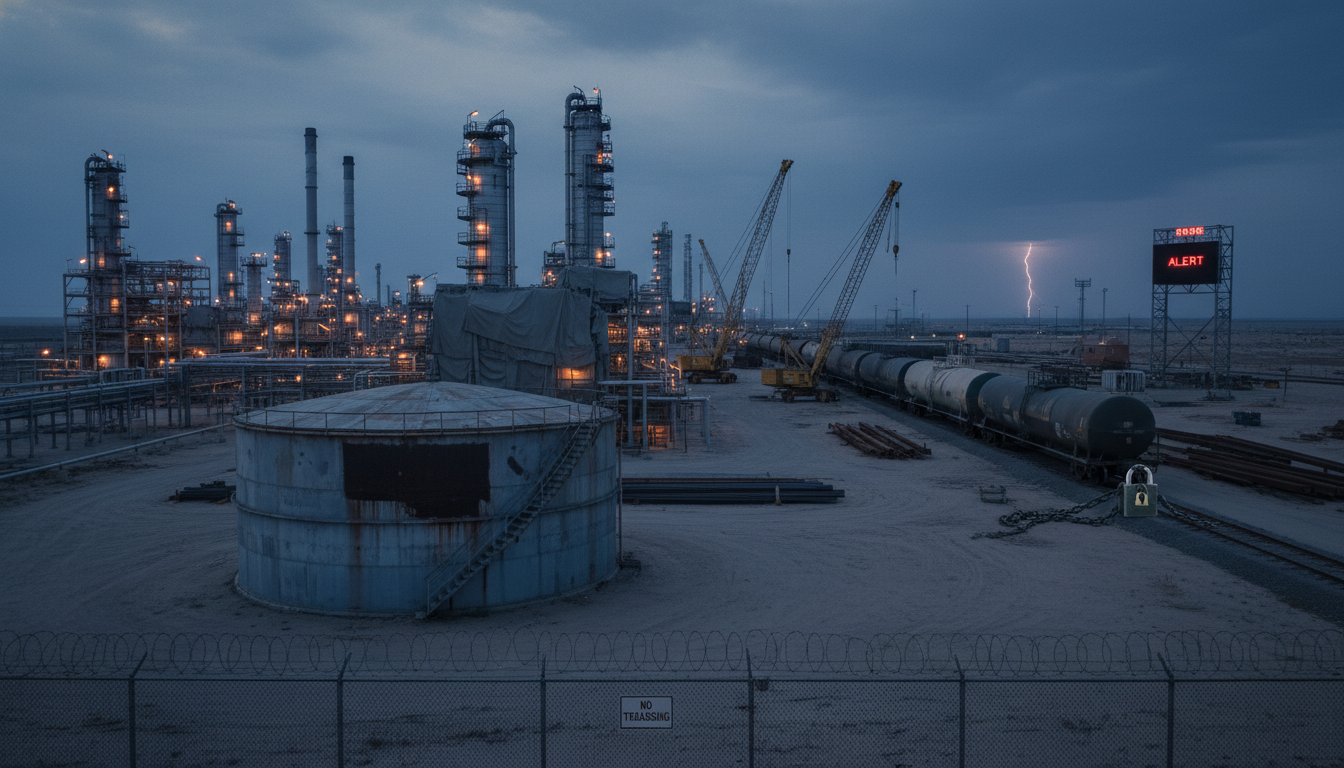
Crude Reality: WTI Surpasses Brent Amidst Spreading Rationing and Deepening Supply Fears
A rarely observed market dynamic unfolded this week as West Texas Intermediate (WTI) crude, typically trading at a discount, commanded a premium over the North Sea’s Brent benchmark. This inversion signals acute near-term supply anxieties, with market participants expressing skepticism that any anticipated relief later this year will materialize quickly enough to avert a widely feared outcome: significant demand destruction. Investors should closely monitor this structural shift, as it reflects a market under profound stress, grappling with immediate shortages that threaten global economic stability.
Global Scramble: Fuel Rationing Becomes a Present Danger
The implications of this supply crunch are already manifesting globally through explicit fuel rationing measures. Indonesia has initiated daily purchase caps of 50 liters per car for private consumers and has mandated civil servants to work from home to conserve fuel. Thailand is reportedly preparing similar rationing schemes. Bangladesh, heavily reliant on imports for 95% of its fuel needs, is already experiencing severe shortages, leading to university closures and a looming crisis despite existing rationing protocols.
This trend has now reached Europe, with Slovenia becoming the first European nation to impose a 50-liter daily fuel limit, mirroring Indonesia’s measure. While this volume might seem substantial for an average daily commute, its implementation sends a potent symbolic message. This is widely perceived as an initial step in demand management, a precursor to more stringent controls should the supply situation deteriorate further—a highly probable scenario. European diesel futures have already surged to $200 per barrel following reports of three U.S.-bound diesel tankers diverting course to Asia, underscoring the continent’s vulnerability. Indeed, the EU’s energy commissioner recently confirmed to the Financial Times that rationing is now a serious option under consideration to manage escalating energy shortages. The stark admission, “This will be a long crisis… energy prices will be higher for a very long time,” from Dan Jorgensen, paints a grim picture for investors banking on a swift return to normalcy.
Eroding Supply: Geopolitical Tensions Take a Staggering Toll
The current market dislocation is profoundly exacerbated by a precipitous decline in global oil supply. Kpler’s mid-March analysis revealed cumulative oil production losses of 133 million barrels attributed to the U.S.-Israel war against Iran. Daily production plummeted by 10.7 million barrels, a figure projected to escalate to 11.5 million barrels per day by the end of the month—a forecast likely realized. As hostilities persist, these supply deficits are only expected to deepen. Should the conflict extend beyond the current month, total losses could easily approach the 400 million barrels that the International Energy Agency (IEA) committed from strategic reserves to bridge the supply gap.
These staggering losses underscore the fragility of global energy markets and amplify inflationary pressures. Investors must recognize that such widespread and persistent supply disruptions fundamentally reshape the risk profile for energy commodities, potentially locking in elevated price levels for an extended period.
The Unwelcome Specter of Demand Destruction
The concept of demand destruction is well-understood, and deeply disliked, within the oil and gas industry. It occurs either when unforeseen events abruptly halt consumption, as witnessed during the 2020 COVID-19 lockdowns, or when prices soar to unaffordable levels. We are currently experiencing the latter. With over 11 million barrels per day of physical oil supply effectively removed from the market, alongside a significant portion of global natural gas output, energy costs are now exceeding the economic capacity of many consumers, inevitably leading to a reduction in demand.
Bloomberg’s Javier Blas outlined the progression of responses to severe supply loss. After initial releases from strategic stockpiles, followed by rerouting available supplies, and then further stockpile releases, the fourth and final step is the deliberate destruction of demand. This can manifest in two forms: government-orchestrated measures or spontaneous, market-driven declines due to prohibitive prices. Blas argues that unmanaged, market-driven destruction carries more severe economic consequences. However, even government-managed demand reduction ultimately translates to an economic contraction, merely a more controlled form of disaster rather than an unbridled one.
Navigating the Demand Abyss: Policy vs. Market Forces
Addressing the current imbalance would necessitate a minimum global oil demand reduction of 8 million barrels daily, according to Blas. While the IEA and EU have proposed measures such as lower highway speed limits, increased work-from-home directives, greater reliance on public transport, car-sharing initiatives, and boosts in fuel efficiency, the efficacy of these suggestions remains highly questionable. Even under ideal implementation, their collective impact is unlikely to meet the required demand reduction threshold.
Consequently, the market will likely witness a complex interplay of both deliberate policy-driven curtailments and involuntary, price-induced demand destruction. This dual dynamic ensures widespread economic pain, irrespective of where these shifts occur. Businesses and consumers alike face an environment of escalating costs and reduced consumption, with significant implications for corporate earnings and GDP growth.
Investor Outlook: A Protracted Period of Uncertainty
The critical question for investors revolves around the duration of this economic damage. Analysts currently suggest a return to “normal” conditions could take between three and six months, provided the current geopolitical conflicts resolve swiftly. However, the longer hostilities persist, the further this timeline recedes. Moreover, the inherent challenges of restarting shut-in oil wells—a process that becomes more complex and time-consuming the longer they remain dormant—will significantly extend recovery efforts.
Prospective investors should anticipate that the remainder of this year will present substantial challenges, characterized by sustained high energy prices, persistent supply-demand imbalances, and an elevated risk of economic contraction stemming from energy unaffordability. Prudent portfolio management necessitates a deep understanding of these prevailing headwinds and the potential for a prolonged period of market volatility.
